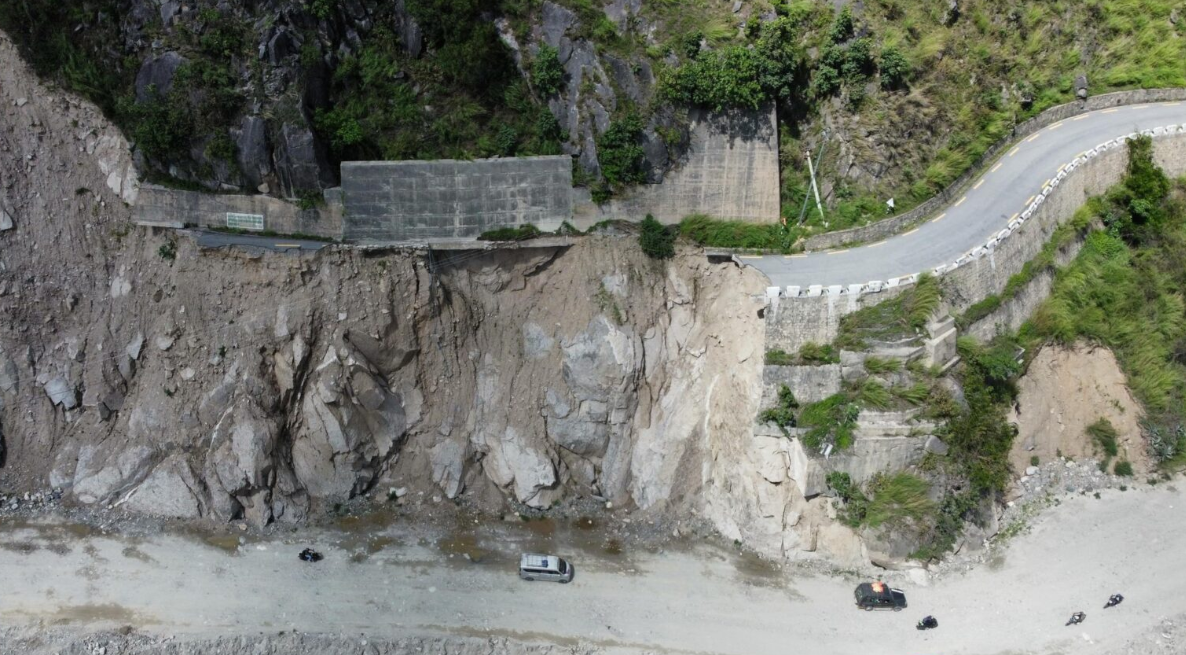
Landslide-induced slope failure and roadway collapse in Nepal’s mountainous terrain following extreme rainfall. Source: Nepal News (image by Nepal Photo Library)
Extreme weather patterns and climate-related hazards are increasing flood and landslide risks across Nepal, particularly in the Himalayan districts of Karnali Province, where fragile mountain terrain, glacial and permafrost-related hazards, and erratic rainfall are exposing many settlements to repeated disasters.
Recent flooding in Humla district highlighted the vulnerability of remote mountain communities. In Nepka village of Chankheli Rural Municipality, flash floods triggered by severe rainfall and hail swept away farmland, livestock sheds, homes and the Danfe Basic School, while crop fields belonging to 67 households were destroyed. Local officials warned that the destruction occurred before the monsoon season had fully started.
Similar incidents have affected Tilgaun in Namkha Rural Municipality, where a flash flood and mudslide damaged houses, swept away bridges and destroyed a micro-hydropower facility. Local officials linked the incident to glacial lake hazards in the upper catchment, while separate preliminary analysis cited by Nepal News pointed to thermokarst processes associated with permafrost degradation. Authorities said erosion from multiple sides of the settlement has weakened slope stability, while limited funding has constrained mitigation and relocation planning.
Climate researchers and disaster management officials increasingly associate these disasters with changing monsoon behaviour, rising temperatures and fragile Himalayan geology. According to Nepal’s Department of Hydrology and Meteorology, recent monsoon seasons have often arrived earlier, withdrawn later and produced more concentrated high-intensity rainfall events than historical averages.
The 2024 monsoon season was reported as Nepal’s wettest in 77 years, causing widespread flooding, landslides and infrastructure damage exceeding Rs46.68 billion. During a three-day extreme rainfall event in September 2024, 250 people were killed nationwide, while 18 were reported missing and 178 were injured.
Experts noted that Himalayan districts are particularly vulnerable because steep terrain, weak geology, frozen ground conditions and unstable slopes can amplify the effects of sudden rainfall and meltwater flows. Seasonal freeze-thaw processes and permafrost degradation can weaken mountain slopes, while glacial lake and supraglacial lake hazards are becoming a growing concern as regional temperatures rise.
Research cited in Nepal’s climate studies also indicates that prolonged droughts are emerging alongside extreme rainfall events. The National Climate Change Survey 2022 found that 65.4% of surveyed households reported experiencing drought conditions, while 87% observed changes in seasonal rainfall patterns.
Karnali Province remains one of Nepal’s most disaster-prone regions due to its steep terrain, weak geology and limited infrastructure resilience. According to the Karnali Province Planning Commission, 57% of the province’s land is steep terrain, and 3,671 landslides were recorded across its ten districts last year. A 2023 provincial study identified nearly 900 settlements as highly vulnerable to floods and landslides.
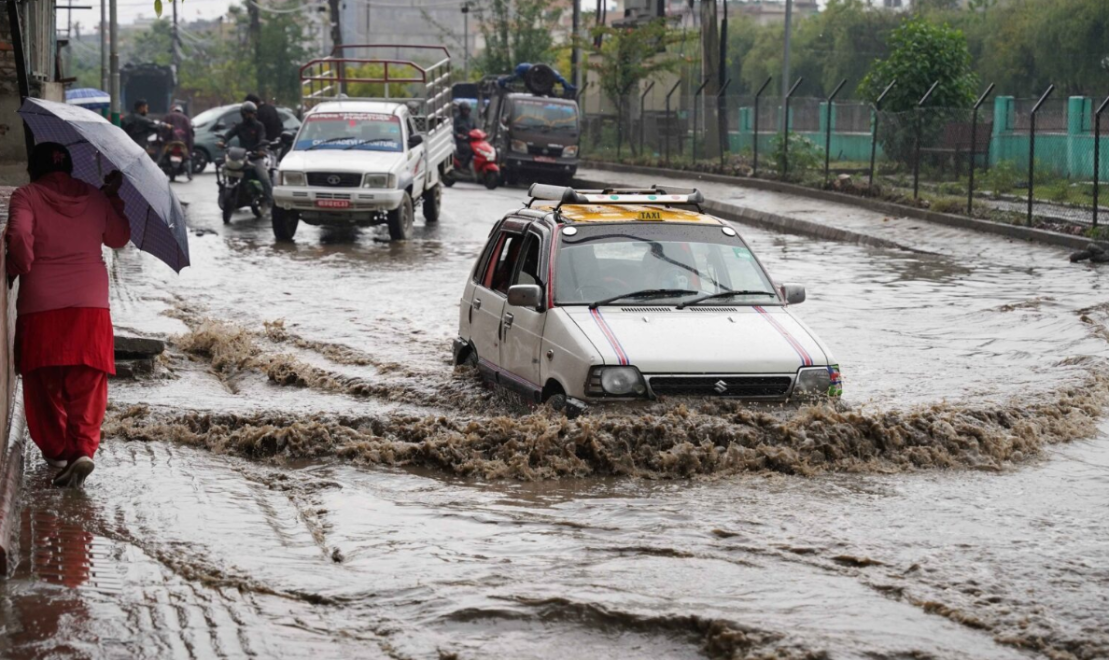
Urban flooding and stormwater inundation affecting transportation networks during intense monsoon conditions in Nepal. Source: Nepal News, image by Nepal Photo Library
Unplanned road construction, weak geological conditions, settlement expansion in high-risk areas and limited preparedness have further increased hazard exposure. Over the past decade, floods and landslides have caused losses estimated at nearly Rs10.94 billion in Karnali Province and claimed 617 lives.
Post-earthquake settlements in Jajarkot and Rukum West are also facing elevated landslide risks. Local officials and geologists reported that slopes weakened by the 2023 earthquake may be more sensitive to rainfall, with internally fractured ground increasing the chance of slope failure. Several temporary settlements built near forests, riverbanks, farmland edges and steep slopes have already experienced fatal flood and landslide incidents.
Specialists from ICIMOD and Nepal’s disaster authorities have warned that glacier retreat, supraglacial lakes and permafrost degradation are introducing new or emerging geohazards in the Himalayas, including thermokarst-related failures. These risks are expected to place additional pressure on transport corridors, hydropower assets and rural settlements in the coming years.
Geoengineer.org uses third party cookies to improve our website and your experience when using it. To find out more about the cookies we use and how to delete them visit our Cookies page. Allow cookies