The temblor struck about 92 kilometers east of Yurinaguas, a small town located in north Peru, at a relatively large depth (around 114 kilometers), a fact that mitigated its impact. It was felt in the capital of Peru, Lima, in Venezuela and Ecuador.
The earthquake was a result of a rupture that occurred either on a north- or a south-striking, moderately dipping normal fault. In the wider region of the fault, the Nazca plates moves against the South American plate (subducting at the Peru-Chile Trench) at a rate of 7 cm per year.
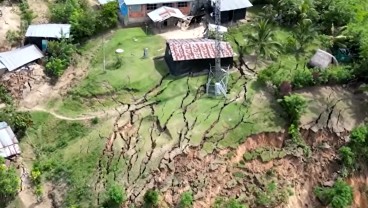
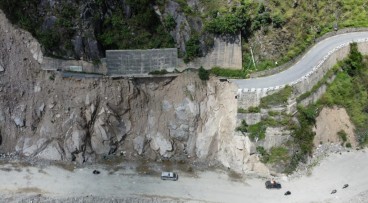
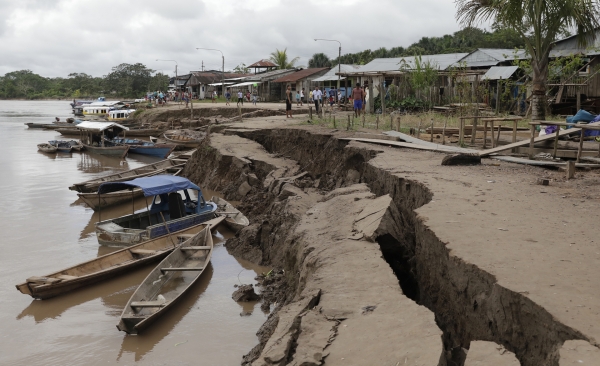
According to officials, a 48-year-old man was killed when his house was hit by a rockfall in Huarango district. Moreover, 11 people were injured in Peru and 7 in Ecuador. 27 residences, 3 schools, 3 hospitals and 2 churches suffered structural damage while 3 health centers and a bridge totally collapsed. The impact of the shock to infrastructure is still being evaluated. Ecuador's Emergency Management Agency reported landslides have occurred in many regions of the country but the damage caused is limited.
Peru President, Martin Vizcarra, and governmental officials urgently traveled to the town of Yurimaguas to coordinate the damage evaluation process. The president himself and the Transportation minister will investigate the damage caused to the road network while additional officials will assess the structural conditions of infrastructure. "We already have reports of injuries, of affected homes, collapsed highways and a bridge that connects Yurimaguas with Tarapoto has also collapsed. The country's civil protection agency is sending teams to the affected areas," President Vizcarra, stated.
Click the video below to see the infrastructure damage caused by the earthquake