
Rocscience Inc.'s Technical Workshop: Finite Element Modelling of Underground Excavations begins on Aug 26th 2026
Rocscience Inc.'s Technical Workshop: Finite Element Modelling of Underground Excavations begins on Aug 26th 2026
Create a free account and view content that fits your specific interests in geotechnical engineering Learn More
TunnelEngineering UrbanTransport GroundMovement SoftSoilChallenges SingaporeCCL
LTA begins wtrengthening of circle line tunnels to counter ground deformation

Singapore’s Land Transport Authority (LTA) has initiated a targeted strengthening programme for two Circle Line tunnels where progressive ground deformation, known as tunnel squatting, has been identified. The phenomenon is linked to underlying marine clay and can affect long-term tunnel performance if left unmanaged. Decade-long monitoring enabled LTA to pinpoint three localised sectors between Stadium and Paya Lebar stations that require intervention.
Construction of the Circle Line began in 2002 and progressed through phased openings from 2009. Its delivery demanded extensive technical effort to manage difficult ground conditions across the alignment. Specialised methods were required near Promenade and Nicoll Highway stations, where variable soils introduced stability concerns, and blasting was needed near Mountbatten to remove deep reinforced concrete and steel piles. Tunnelling was also executed through complex underground corridors containing existing MRT tunnels, sewerage systems and utility networks, which required precise control and, at times, manual excavation to safeguard adjacent infrastructure.
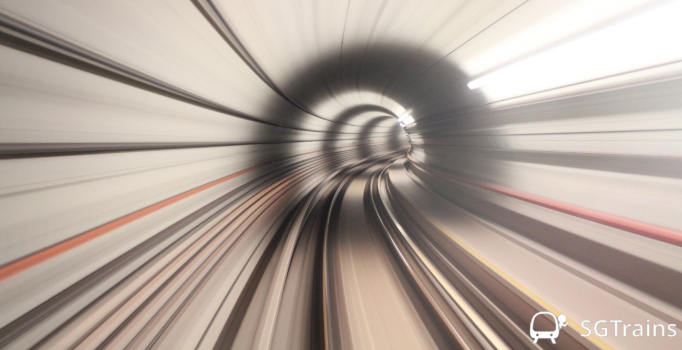
The current programme involves sequentially closing each affected tunnel section to install steel plates along the interior circumference. Assessments confirm that train operations can continue safely while works progress across the combined 450 metres of tunnel. LTA has drawn on international benchmarking from cities such as Shanghai, Taipei, Busan, Barcelona and Lisbon to refine the strengthening methodology. Service adjustments will occur during engineering hours, and commuters are encouraged to plan additional time during peak periods.
Sources: lta.gov.sg, tunnelsandtunnelling.com, .lta.gov.sg
Want to read more like this story?

Bentley Webinar | Modeling With Tunnel Designer in PLAXIS 2D & 3D
Mar, 21, 2023 | EventTunnels are created to make it easier to navigate through challenging topographical and geological...
Engineering Through Rock and Faults: Geotechnical Challenges of the Daliangshan Highway Tunnel
Oct, 19, 2024 | NewsIn an ambitious endeavor, engineers in Sichuan Province, China, are breaking new ground—literally a...

Photo gallery: 9 of the world's greatest tunnels!
Jul, 14, 2014 | News2014 is the year of the 20th anniversary of the opening of the Channel Tunnel linking France with th...

8 new U.S. tunnels under way: fascinating and challenging
Jan, 10, 2014 | NewsWhether you live in the U.S. or not you will find the following tunnels that are currently being bui...

Tunneling
Apr, 24, 2020 | EducationA tunnel is an underground structure which is constructed through the surrounding mass of soil or...
On This Day
August 26th 1833
READ MORE
Related Video

Trending

Apr, 23, 2020 | News
New crustal stress map of North America

Nov, 25, 2022 | News
Using Terzaghi’s Equation in Foundation Design

Sep, 15, 2021 | News
Parameters Variation: Model Customization and Sensitivity Analyses

Apr, 16, 2026 | News
UK geothermal projects expand from Cornwall power to Birmingham heating
Jun, 10, 2026 | News
Deadly mining landslide in Central African Republic raises safety concerns

Jun, 09, 2026 | News