Cannonsville Dam Emergency Remediation Sponsored
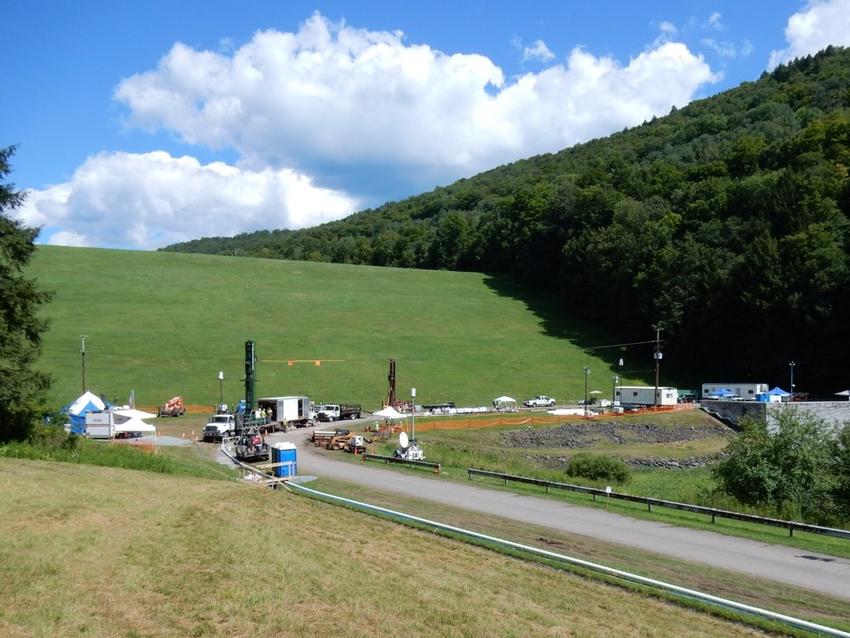
Keller’s rapid response to developing and implementing an emergency groundwater control plan was key to quickly resolving a subsurface issue threatening dam stability.
Cannonsville Dam is located on the West Branch of the Delaware River and impounds a reservoir used for water supply and recreation. Built between 1959 and 1964, this earthen dam has an impervious central and upstream core zone keyed into the glacial till foundation, a semi-pervious downstream embankment zone, and a rockfill toe. It is approximately 2,800 ft (853.4 m) long and 175 ft (53.3 m) high. The reservoir holds 95.7 billion gallons at full capacity.
The drilling of three exploratory boreholes in preparation for constructing a hydroelectric plant at the downstream toe area of the dam facility caused an artesian water release from an underlying permeable silty sand and gravel formation. This resulted in a turbid/muddy discharge in the tailwater, an indicator of piping (internal erosion) that could lead to dam failure if left untreated. Work was halted immediately, followed by intense 24-hour monitoring and reservoir draw down at a rate of a billion gallons per day. The owner sought input from the geotechnical community to design and develop an emergency remediation plan.
Keller developed and implemented a pressure relief deep well system to lower the hydrostatic head upstream of the three boreholes. This was followed by a grouting program to permanently seal off the artesian aquifer at the three boreholes. Mobilization to the site and initiation of well construction was accomplished within three days of notice to proceed. Seven wells were installed using the sonic drilling method due to its ability to install a relatively large diameter casing through rockfill quickly and with little or no water or air flushing, which could exacerbate the situation. Low mobility grouting (LMG) was used to displace and densify the soil within the borehole closure zones, effectively sealing not just the boreholes but also filling any potential voids and tightening loosened ground in the affected area.
Following close observations throughout well installation/pumping and drilling/grouting activities, careful evaluation of the ground conditions, and verification of instrument readings, the project team deemed the remediation program successful. The wells were deactivated, and the reservoir was restored to normal operations.
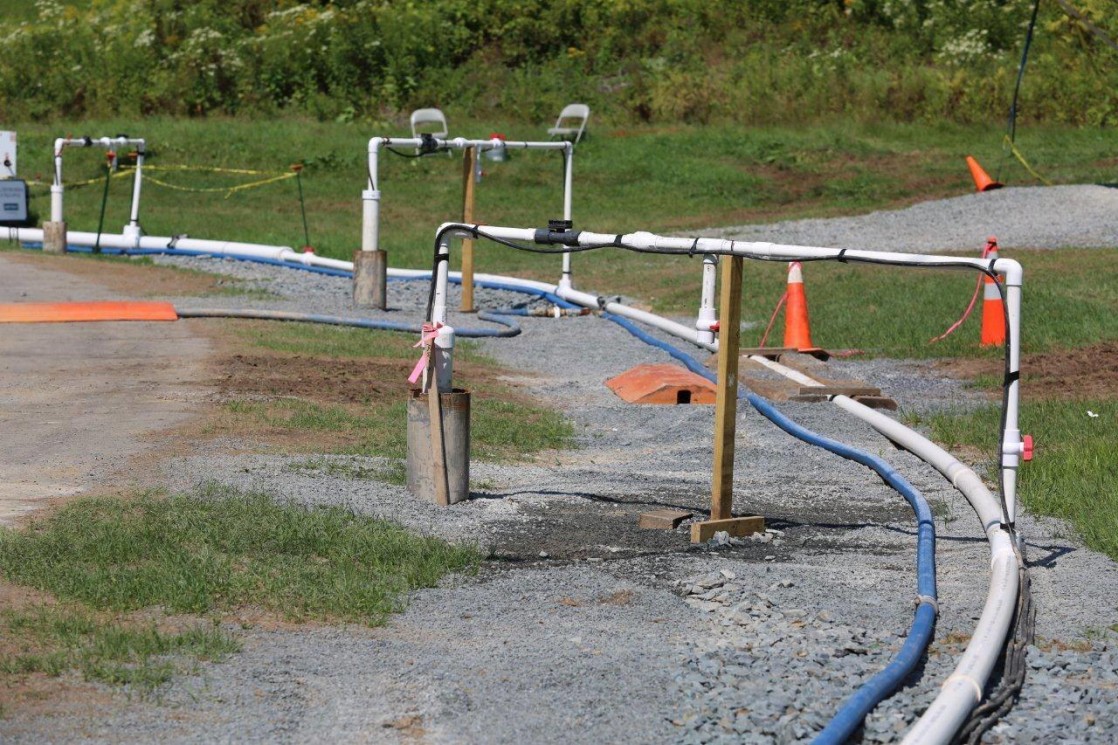
Source: Cannonsville Dam Emergency Remediation
Want to read more like this story?

Bear Creek Dam Dewatering and Excavation Support Project
Aug, 14, 2024 | NewsKeller performed construction dewatering and excavation support during the Bear Creek Dam remediati...

Isabella Lake Dam Safety Project
Sep, 30, 2024 | NewsDuring construction at an existing high-risk dam, Keller provided dewatering, enabling embankment a...

China's Three Gorges Dam under pressure: Flood hazard downstream
Jul, 28, 2020 | NewsAs China has been devastated by heavy rainfalls, the Three Gorges Dam is under heavy flood pressure...

Dam Engineering
Apr, 10, 2020 | EducationA dam is an infrastructure system that consists of several structures with the intent to collect,...
History of the Hoover Dam
Jun, 30, 2020 | NewsIntroduction Hoover Dam is the tallest arch dam constructed in the United States and forms one of...

Dam Safety Association Presents 2007 Annual Award Winners
Nov, 28, 2007 | NewsProfiles of 2007 Association of State Dam Safety Officials award winners: National Rehabilitation...

Beacon Hill Station Dewatering Project
Aug, 21, 2024 | NewsDewatering wells effectively lowered groundwater levels up to 60 ft before excavation of the shaft...

Crane Valley Dam dewatering system design project
Jun, 19, 2024 | NewsKeller North America worked closely with the geotechnical engineer to design a dewatering system ca...

Dam Vaiont Failure
Jul, 24, 2015 | NewsThe failure of the dam Vaiont is a catastrophic event not due to structural failure of the arched do...
Form
Looking for more information? Fill in the form and we will contact Keller for you.
On This Day
August 26th 2017
READ MORE
Related Video

Trending

Keller North America announces recent leadership changes

Fulgurite: A rare phenomenon

Life after gINT - Rethinking geotechnical data management for a new era
Stop Guessing, Start Designing: Introducing Support Designer in Slide2
Development program prepares new engineers for success