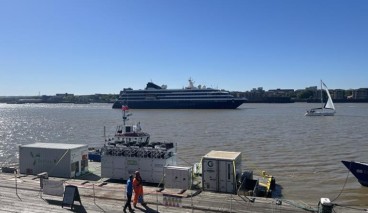
Florence hurricane may cause erosion in Southeast Atlantic beaches
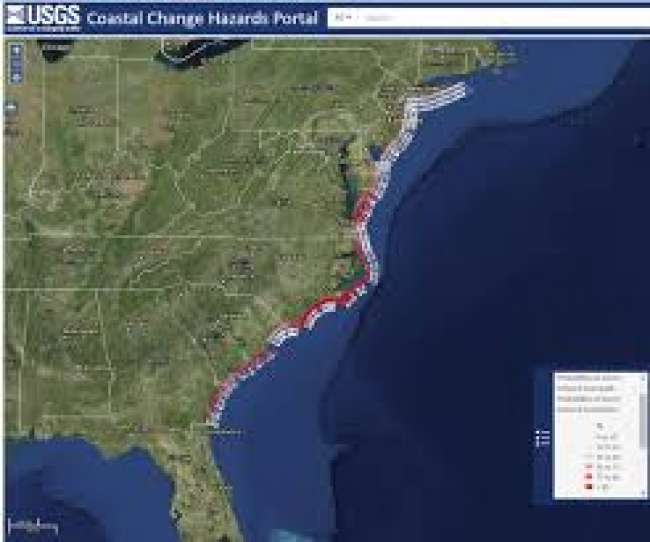
U.S. Geological Survey (USGS) models predict that Florence Hurricane can cause beach erosion along 3/4 of North Carolina among other areas.
Florence, a Category 4 hurricane, can provoke landfalls and influence about 15% of North Carolina's dunes. USGS team of Coastal Change Hazards investigates 2 different forecasts of coastal erosion, which combined together can evaluate the effect of the storm on the coast. In the first simulation, coast-wide beach impact is analyzed in order to determine the potential of dune erosion and overwash for a large area. In the second application, an experimental model that predicts the characteristics of elevated water levels at the coastline over long periods is utilized.
The impact of the hurricane on landfalls is predicted by the USGS Coastal Change Forecast model that is evolving since 2011. The simulation operates by using National Hurricane Center's storm surge predictions and National Oceanic and Atmospheric Administration wave forecast models as input. Then, detailed information about the geometry of the beach slope and dune heights is imported. This way, the course of high waves can be defined. Due to fact that these forecasts are depended on the storm-surge predictions, they often change. The simulation predicted erosion at the base of protective dunes on 75%, 53%, 29% and 4% of North Carolina's, Virginia's, South Carolina's Maryland's beaches, respectively.
Nevertheless, the storm has another significant impact, other than erosion, on landscape. If waves propagate over the top of dunes, overwash occurs. During this procedure, large sand deposits are transported across coastal area altering the landscape. Current predictions show that overwash can occur in 20% of beaches in Virginia, 15% in North Carolina, 12% in South Carolina and 3% in Georgia.
Kara Doran, a research oceanographer and leader of the USGS Coastal Change Hazards Storm Team based in St. Petersburg, Florida stated: "Our forecast is for Florence to cause a long-lasting coastal erosion process with more than one set of impacts to the Mid-Atlantic beaches. As Florence makes landfall its storm surge will cause some erosion at the base of the dunes from Georgia through Virginia. In most places it is not likely to overtop that protective row of dunes and cause damage to the communities and natural areas behind them – at least not at first. But if the storm lingers, and if high surge, higher than normal tides and strong waves persist over a period of days, the likelihood increases that the dunes could be overtopped and flooding could occur behind them."
Click here to view the most up-to-date forecasts for potential coastal change predictions.
Source: Usgs.gov
Want to read more like this story?

Texas beaches likely to erode, be overwashed, or inundated by Hurricane Harvey
Aug, 27, 2017 | NewsUSGS Coastal Change Forecast model predictions indicate that Hurricane Harvey is likely to cause sig...

iCoast: a new application from USGS to monitor coastal changes
May, 30, 2014 | NewsiCoast: Did the coast change? This is the question that users of the new crowdsourcing application l...

Nor’easter threatens U.S. east coast with major flooding and coastal erosion
Oct, 11, 2025 | NewsA powerful coastal storm, classified as a nor’easter, is rapidly intensifying off the southeastern...

North Carolina: a home collapsed into the ocean as rising seas eat away at the coast
Feb, 09, 2022 | NewsA beachfront home in North Carolina collapsed into the ocean, officials with the National Park Serv...

Sand, Storms, and Shorelines: Geotechnical Engineering Behind Jersey’s $73.5M Coastal Replenishment
Apr, 13, 2025 | NewsOcean County, New Jersey, is embracing one of its most ambitious coastal resilience projects yet—a...

Report indicates that sea level rise will make many US coastal areas prone to flooding
Jul, 23, 2014 | NewsNon-profit's organization survey and analyses on climate change, point out that South and...

Coastal landslide destabilizes cliffside Chalets in Devon as erosion risks intensify
Mar, 27, 2026 | NewsA coastal landslide along the East Devon coastline has destabilised several beach chalets at Bransc...

Around 1000 destructive landslides in Auckland as a result of Cyclone Gabrielle
Feb, 16, 2023 | NewsA geologist has called for a priority study of the city's vulnerability and risk, while an Auckland...

The impact of precipitation on mountains' landform
Oct, 16, 2020 | NewsIn a new study, scientists focus on how precipitation impacts erosion rates in mountainous terrains...
On This Day
August 18th 1550
READ MORE
Related Video

Trending

Seven Frequently Asked Questions about Helical Piles

Block caving: A new mining method arises

Categories of isolated foundation footings
Maharashtra's longest road tunnel to be completed soon

Carnian Pluvial Episode: That time when it rained for 1-2 million years

Asbestos remains a deadly infrastructure risk across the UK

Major earthquake in southern Philippines causes deaths and widespread damage