Nor’easter threatens U.S. east coast with major flooding and coastal erosion
A powerful coastal storm, classified as a nor’easter, is rapidly intensifying off the southeastern United States and is expected to move northward along the East Coast through early next week. Meteorologists warn that the system could bring tropical storm-force gusts exceeding 60 mph, heavy rainfall, and significant coastal flooding from North Carolina to New England.
As the storm strengthens, states including New Jersey, Delaware, and the Carolinas are under coastal flood alerts. Acting New Jersey Governor Tahesha Way has declared a state of emergency, urging residents to avoid unnecessary travel and prepare for hazardous conditions. Early impacts have already been recorded in South Carolina, where high tides and storm surge pushed seawater into city streets.
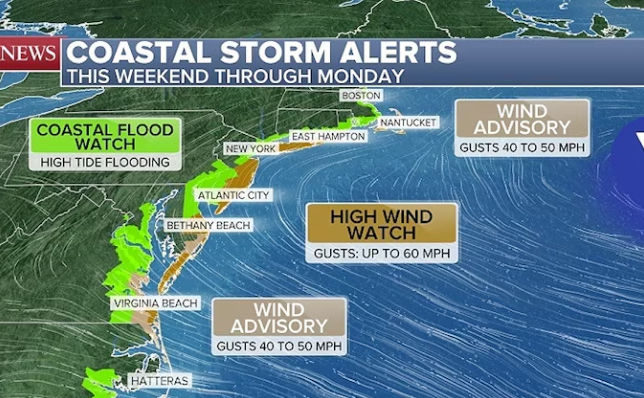
The National Weather Service expects major flooding along the Mid-Atlantic coastline, with some areas, particularly Atlantic City, New Jersey which is forecasted to experience water levels above 8 feet, the highest since Hurricane Sandy in 2012. The combination of strong onshore winds and high tides could lead to widespread inundation of low-lying roads and neighborhoods.
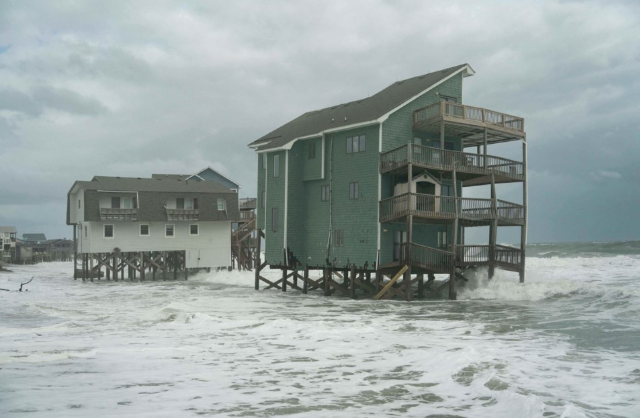
The storm also poses a severe erosion risk, particularly across the Outer Banks of North Carolina, where several homes have already collapsed into the Atlantic Ocean following previous storms. Continuous wave action and saturated soil are expected to accelerate shoreline retreat, threatening coastal infrastructure and properties.
Rainfall totals could reach up to 6 inches in coastal North Carolina and 3 inches or more further north, increasing the likelihood of flash flooding. High wind advisories have been issued from Delaware to Long Island, with gusts strong enough to damage power lines and trees. Emergency management agencies are monitoring tide levels and advising residents in flood-prone areas to move to higher ground.
More information on the following video.

Sources: edition.cnn.com, aol.com, abcnews.go.com
Want to read more like this story?

Report indicates that sea level rise will make many US coastal areas prone to flooding
Jul, 23, 2014 | NewsNon-profit's organization survey and analyses on climate change, point out that South and...

North Carolina: a home collapsed into the ocean as rising seas eat away at the coast
Feb, 09, 2022 | NewsA beachfront home in North Carolina collapsed into the ocean, officials with the National Park Serv...

Florence hurricane may cause erosion in Southeast Atlantic beaches
Sep, 21, 2018 | NewsU.S. Geological Survey (USGS) models predict that Florence Hurricane can cause beach erosion along 3...

iCoast: a new application from USGS to monitor coastal changes
May, 30, 2014 | NewsiCoast: Did the coast change? This is the question that users of the new crowdsourcing application l...

U.S. coastal areas will be frequently flooded if sea-level rise is not mitigated
Apr, 16, 2020 | NewsAccording to a new study, coastal cities in the United States may experience flooding incidents eve...

Portsmouth Coastal Scheme: colossal coastal protection project about to begin
Jan, 30, 2015 | NewsAn extended coastal protection project is about to begin in Portsmouth, UK, covering nearly 13km of...

The impact of coastal flooding on traffic resilience: The case of San Francisco Bay Area
Jul, 16, 2021 | NewsA new study suggests that coastal flooding and seawater level rise severely impact the traffic netw...

Texas beaches likely to erode, be overwashed, or inundated by Hurricane Harvey
Aug, 27, 2017 | NewsUSGS Coastal Change Forecast model predictions indicate that Hurricane Harvey is likely to cause sig...

Alaska’s coastal villages devastated by flooding from Typhoon Halong remnants
Oct, 13, 2025 | NewsThe remnants of Typhoon Halong brought destructive winds and catastrophic flooding to western Alask...
On This Day
August 18th 1983
READ MORE
Related Video

Trending
Brownfield success: Engineering excellence starts below ground


Scripting Comes to RS3: Automate, Customize, and Accelerate Your 3D Modelling

2D and 3D Analysis of Retaining Systems

Mine waste dam failure in Myanmar caught on video
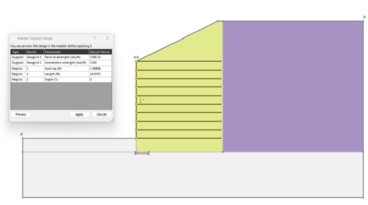
Stop Guessing, Start Designing: Introducing Support Designer in Slide2
Development program prepares new engineers for success