Research finds humans exceed climate as the main driver of Arizona’s groundwater loss

A recently published study indicates that human groundwater extraction in Arizona has become a greater factor in aquifer depletion than climate change alone. The research highlights that while climate conditions influence recharge, excessive pumping by municipalities, agriculture, and industry has disproportionately driven recent declines in groundwater storage.
The study integrates satellite observations, hydrologic modeling, and in-situ water level data to quantify how much groundwater loss can be attributed to human use versus climatic trends. It finds that in many parts of the state, anthropogenic withdrawal has taken a leading role in depleting aquifer reserves, challenging common narratives that portray climate change as the sole or dominant cause of water scarcity.
According to the authors, over the past two decades, regions of central and southern Arizona have exhibited the sharpest declines in subsurface water volumes, with rates of extraction exceeding rates of natural recharge under prevailing rainfall and temperature regimes. The imbalance raises concern about long-term sustainability and water security, especially in areas where drought conditions already stress supply systems.
While the warming climate reduces precipitation and increases evapotranspiration, the study emphasizes that human demand compels the system toward negative balance. In effect, climate factors exacerbate the problem, but are no longer the primary driver of decline in several aquifer sectors.
The authors underscore the importance of improved groundwater management policies, including regulated pumping limits, artificial recharge programs, and integrated water planning that reflects both demand pressures and climate constraints. They argue that without changes to extraction behavior, some aquifers may reach thresholds of irreversibility, where compaction or saltwater intrusion jeopardize future recovery.
This finding offers critical insight for policymakers and water managers, suggesting that mitigation efforts must address human demand alongside adaptation to climate stress.
Source: University of Arizona
Want to read more like this story?
Study presents new insights about the depletion of the world's groundwater storages
Aug, 27, 2020 | NewsAccording to a new study, the vast proportion of groundwater stores has not changed in recent years...

Soil hydraulic properties affected by climate change
Sep, 17, 2019 | NewsAccording to a new study, published in the journal Science Advances, soil hydraulic properties can...

New publication provides largest ever insight into world’s groundwater depletion rates
Jan, 24, 2024 | NewsA new study was recently published in the Nature journal, regarding the rates of groundwater level...

The Rising Threat of Groundwater Flooding: Risks and GeoEngineering Solutions
Feb, 28, 2025 | NewsGroundwater flooding is an often-overlooked hazard, but as climate change intensifies, its risks ar...

Satellite isotope landscapes reveal how rivers and snowmelt recharge aquifers in cold catchments
Nov, 05, 2025 | NewsA recent study published in Communications Earth & Environment shows that snowmelt and surface-...

California expands groundwater and subsidence monitoring statewide
Oct, 10, 2025 | NewsCalifornia’s Department of Water Resources (DWR) has launched a major expansion of its groundwater...

California is sinking
Aug, 26, 2015 | NewsCalifornia enters the fifth year of a drought and more and more water is pumped from the aquifer....

A sandstone fragment reveals valid information over climate change
Apr, 28, 2021 | NewsA cobble of green sandstone discovered near Antarctica has revealed crucial information regarding t...

Groundwater Project Showcase at Bangladesh Cox's Bazar Refugee Camp
Nov, 18, 2022 | NewsJo Knight from Seequent and Geraint Burrows from Groundwater Relief, presented a very interesti...
On This Day
August 12th 1848
READ MORE
Related Video

Trending

Tiebacks vs. soil nails: Choosing the right earth retention solution
When Dams Fail: The Growing Crisis of Tailings Management
Mexico City’s sinking crisis mapped by next-generation satellite
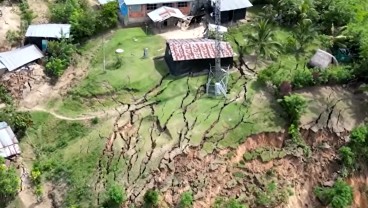
Landslide in Northern Peru Forces Evacuation of Over 170 Residents
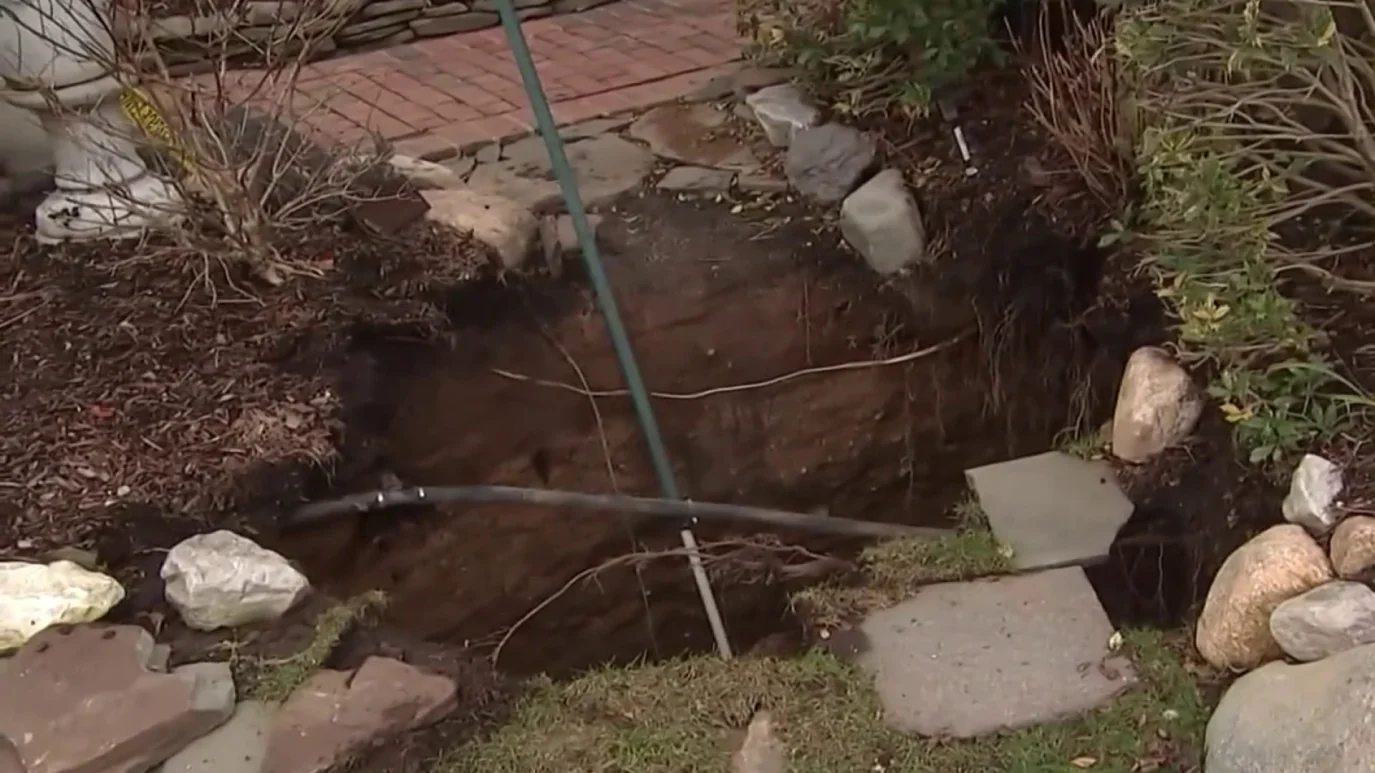
Sinkhole outside home in Huntington Station, on Long Island: 3 fall into
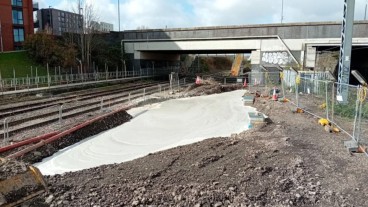
Emergency ground stabilisation protects rail works near Salford Central