
Underground telecom fiber-optic cables can be repurposed as geohazard sensors according to research

Researchers at Penn State University have shown that fiber-optic cables, already installed underground for telecommunications, can be repurposed as an early warning system for geohazards such as sinkholes. The study, led by geophysicist Tieyuan Zhu, used a four-mile stretch of fiber running beneath the University Park campus.
The team connected a distributed acoustic sensing (DAS) interrogator to the fiber. This device sends laser pulses through the cable and reads the backscattered signals caused by ground vibrations. In their trial, the researchers detected a low-density zone beneath the campus—an anomaly that could indicate a developing sinkhole. Campus geologic maps confirmed the area sits on karst terrain (limestone and dolomite). Facilities staff concluded the site was stable, but the test validated that the method could highlight anomalies of concern.
Unlike traditional geophones, which measure vibrations only at discrete points, DAS can transform long lengths of fiber into continuous sensing arrays. This gives engineers thousands of “virtual sensors” for near-real-time monitoring without installing new equipment underground.
The approach is part of a Penn State initiative called FORESEE (Fiber-Optic for Environmental SEnsEing). The project also involves testing the method in Pittsburgh, where dark fiber is being used to look for signs of failing pipes, soil shifts, and other underground risks in urban settings.
Researchers caution that the method has limitations. Fiber is most sensitive to strain along its axis, meaning vertical or cross-axis motions may not be captured as effectively. Signal quality also depends on how well the fiber couples with surrounding soils, and advanced filtering is required to distinguish geohazard signals from background noise.
Still, the test demonstrates how existing fiber-optic networks could be a low-cost surveillance tool against subsurface threats.
Source: Penn State University
Want to read more like this story?
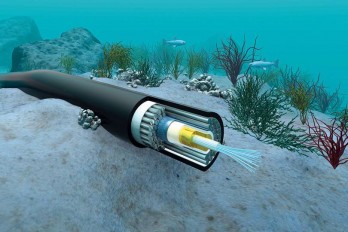
Earthquake monitoring network established using submarine communication cables
Feb, 07, 2020 | NewsResearches have managed to create a submarine seismic network by utilizing communications lines est...

Submarine Internet cables can monitor seismic activity and predict earthquakes
May, 27, 2022 | NewsA wide network of submarine cables could be used to detect earthquakes and tsunamis or monitor how...

Video: Digging smart tunnels under London - an underground high-tech lab!
Jun, 19, 2014 | NewsCrossrail - the largest infrastructure project currently under construction in Europe - wi...

Measurand: Is SAA really different from other inclinometer systems?
Feb, 03, 2016 | NewsMeasurand has been helping geotechnical people solve their slope and structure monitoring problems f...

New Formula Protects Tunnels From Fires
Jun, 08, 2015 | NewsThe researchers of Ruhr-Universität Bochum have developed a method of spraying steel-fiber-infused s...
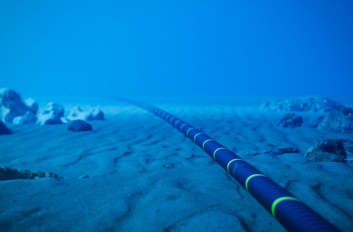
Layered seabed geology changes how subsea cables should be protected
Jul, 07, 2026 | NewsThe weakest part of a subsea cable route is not always the cable itself. Often, it is the ground mod...

New Technologies for Geotechnical Infrastructure Sensing and & Monitoring 2025
Sep, 17, 2025 | EventOn November 17-20 2025, UC Berkeley Faculty and collaborators will be offering again a short course...
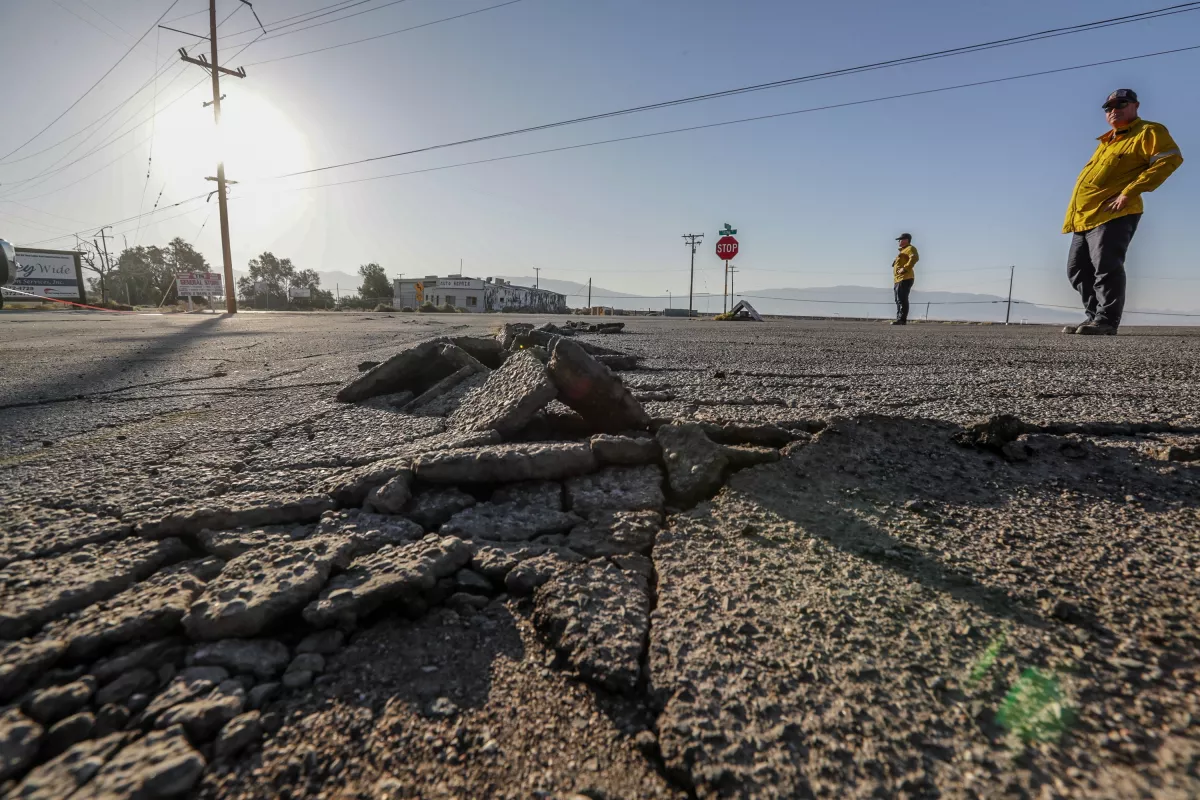
Changes in magnetic field along fault lines preceded major earthquakes in California according to a recent case-study
Oct, 13, 2022 | NewsResearchers have tried for decades to determine whether there is a reliable precursor that can act...
Vibration monitoring
Oct, 12, 2022 | EducationVibrations In simple words, a vibration is a rapid back and forth motion. Construction activit...
On This Day
August 24th 1832
READ MORE
Trending

Embankment Collapse on NH-66 in Kooriyad Triggers Engineering and Oversight Review

Fehmarnbelt tunnel advances with first element ready for immersion

Geotechnical Engineering 2032 Boom: Trends, Challenges, and Emerging Opportunities
Emergency protocols activated following offshore 7.7 magnitude earthquake in Japan
Asbestos remains a deadly infrastructure risk across the UK
Major earthquake in southern Philippines causes deaths and widespread damage