
Potential Mosul Dam Failure Puts Millions at Risk
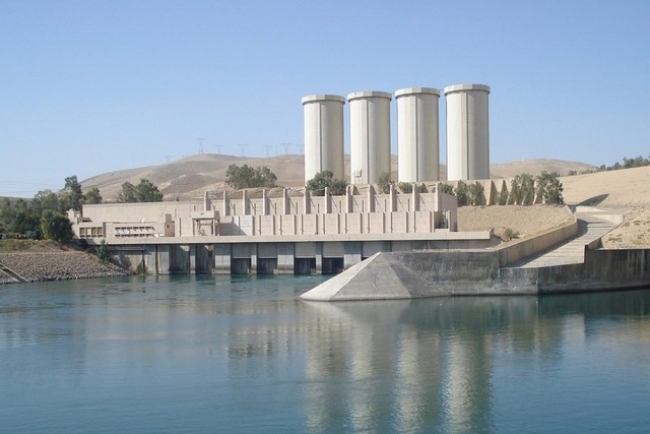
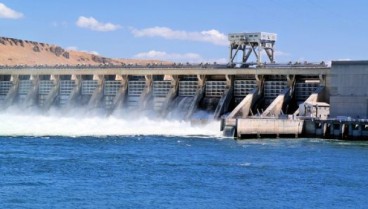
The Mosul Dam on the Tigris River in northern Iraq is the largest Dam in the country and provides power to nearly two million people. According to engineers, the dam is at serious risk of collapse and the resulting flood could result in over a million deaths.
Originally proposed in the 1950’s, construction of the Mosul Dam was put on hold due to the difficult geologic conditions of the northern Tigris River. The large proportion of the bedrock in this area is water soluble making it highly unstable. Construction began during the Hussein Regime. Vice-president Taha Yassin Ramadan fast tracked the project for political reasons. Foreign consultants informed the Iraqi government that the bedrock instability could be mitigated using grouting.
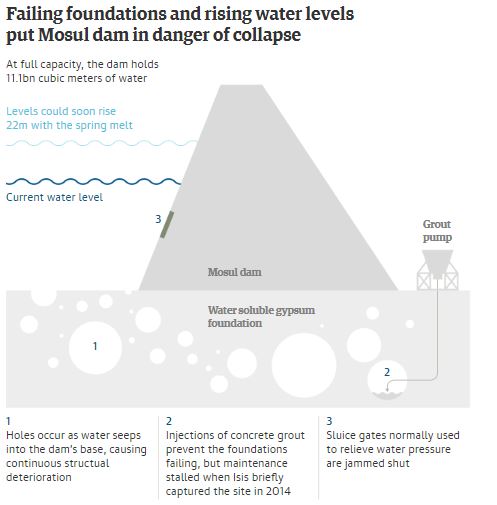
Construction of the dam was completed in 1984 and by 1986, water was leaking through the porous bedrock at a greater rate than consultants predicted. Constant maintenance is necessary to prevent the dam from collapsing. Crews worked 24 hours a day to fill the continuously forming voids with grout.
Serious damage occurred to the dam in 2014 when it was captured and held for several weeks by ISIS. During this time, no maintenance was performed resulting in structural damage. In addition, much of the grouting equipment was damaged or stolen.
Currently, the dam is under immense stress due to the spring’s snow melt, causing water levels in the dam to rise to dangerous levels. The weight of this water is putting more pressure on the already compromised foundation. Operators are unable to relieve the pressure normally because one of the sluice gates is jammed shut. The other gate cannot be used individually due to the risk of asymmetric flow which would increase erosion.
Initial casualty estimates for the dam failure were approximately 500,000 people, but more recent predictions indicate that over a million lives are at risk. In the event of a collapse, a 20 meter wave of water would reach Mosul, Iraq’s second largest city, in just four hours, making an adequate evacuation nearly impossible. The flood waters would continue to travel and would reach Baghdad in 45 hours.
Unfortunately, the response of the Iraqi government to this impending disaster has been inadequate. In place of a proper evacuation plan, the Iraqi government has recommended that anyone living in the potential flood path move approximately 6 km away from the river. This statement has been widely criticized as there is no infrastructure to support a population shift of this magnitude. The US embassy has recommended that any US citizens evacuate the area. In order to prevent mass casualties, an international conference was held in Rome in April to consider potential solutions and the Italian government has dispatched 450 troops to protect workers during repairs.
US and Iraqi governments issue warnings
Image Gallery



Want to read more like this story?

Dam Engineering
Apr, 10, 2020 | EducationA dam is an infrastructure system that consists of several structures with the intent to collect,...

Chemical Weathering Deteriorating Mosul Dam
Jan, 21, 2016 | NewsThe Mosul Dam, Iraq's largest dam, is structurally unsound and is presenting a serious risk to all o...
History of the Hoover Dam
Jun, 30, 2020 | NewsIntroduction Hoover Dam is the tallest arch dam constructed in the United States and forms one of...

High water level blamed for Vale's dam collapse in Brazil
Jan, 25, 2019 | NewsAccording to experts, the catastrophic failure of Vale's mining waste dam was caused by high water...
Aging dam infrastructure: A severe future threat
Jan, 22, 2021 | NewsAccording to a new report, issued by the United Nations University, aging water storage facilities...

Michigan dam failures raise concerns about United States deteriorating infrastructure
May, 19, 2020 | NewsOn May 19, 2020, two dams in Michigan breached causing extensive flooding and infrastructure damage...
May 31st is National Dam Safety Awareness Day in America
May, 31, 2016 | NewsOn the May 31st we commemorate the significant role dams play in American life. From providing nearl...

Satellite data indicate over 2,500 U.S. dams are in poor condition
Dec, 21, 2025 | NewsDams across the United States are aging and underfunded, with geoscientists reporting that over 2,5...

Risk of Dam collapse hangs in Colombia
Jul, 05, 2018 | NewsThe 225 m high Hindroituango Dam on Cauca River in Colombia faces emergency situation since April, a...
On This Day
August 6th 1844
READ MORE
Related Video

Trending

Dubai approves $9.2bn fully underground gold line metro

How to prevent copper wire theft from light poles

The quicksand of Morecambe Bay

Model Structures and Visualize Structural Forces
Rapid Drawdown in Dam and Levee Design: A Hydrogeologic Perspective in Slide2
Major wastewater tunnel procurement begins in southern Sweden