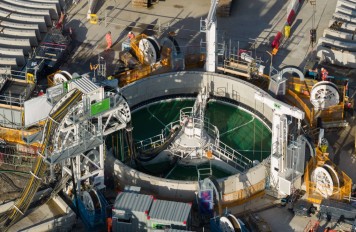
Norway hosts Europe’s first plasma-powered excavation trial
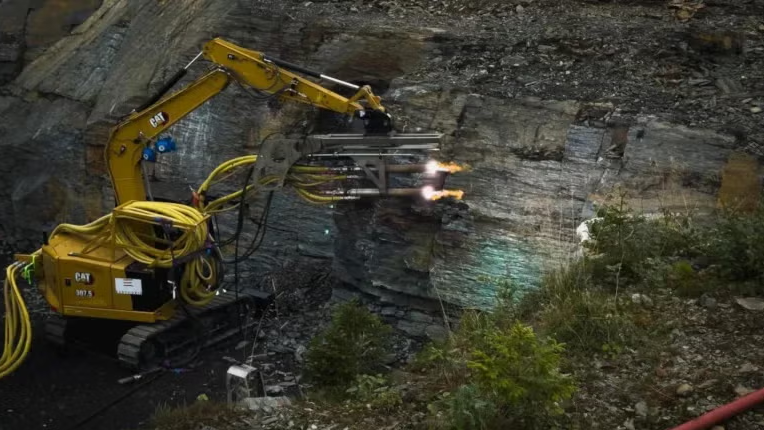
EarthGrid has successfully demonstrated its Plasma Excavation System (PES) in Norway, marking the first use of plasma-powered rock removal technology in Europe. Conducted in collaboration with the Norwegian power systems operator Statnett, the test campaign validated the ability of plasma technology to excavate hard rock without explosives, mechanical cutters, drilling chemicals, or vibrations. This vibration-free performance makes it particularly suitable for excavation near energized or sensitive facilities.
The demonstration took place in Klæbu, near Trondheim, under challenging geological conditions typical of the region’s hard rock formations. The PES uses controlled plasma arcs to fragment rock at high temperatures, offering a cleaner and more precise alternative to traditional excavation methods. According to Statnett’s R&D and innovation division, the trial achieved promising results and confirmed the system’s potential to shorten operational shutdowns while minimizing disturbance.
Norway’s energy grid modernization presents a unique opportunity for testing innovative excavation methods. The country’s terrain, characterized by rugged rock masses and environmentally sensitive areas, makes conventional drill-and-blast operations difficult to execute. Plasma excavation could streamline underground infrastructure projects by reducing safety risks, lowering environmental impact, and minimizing operational downtime.
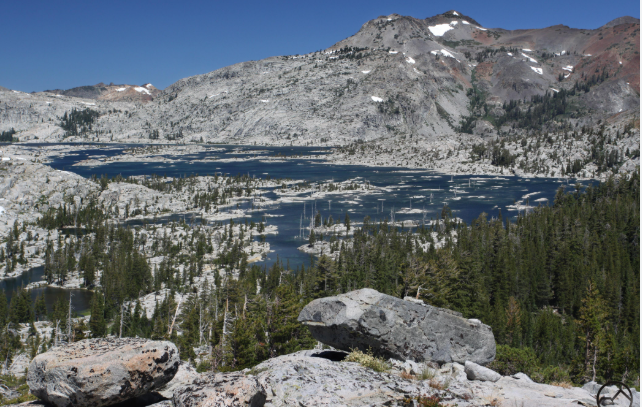
The technology had previously proven its efficiency in California’s Sierra granite, one of the hardest rock types in the United States.
Building on its Norwegian success, EarthGrid is preparing to launch a Tunnel Boring Robot (TBR) in early 2026. The robot will utilize the same plasma-boring technology to excavate a 10-meter test tunnel through solid granite, representing a scalable leap toward large-scale tunneling operations.
The company is now seeking pilot partners among European utilities, contractors, and infrastructure developers to expand plasma excavation applications across the continent. With its proven capacity to cut through rock efficiently and safely, the technology could transform how underground networks for power, communication, and transportation are built.
Sources: tunnelsandtunnelling.com, cbs42.com
Want to read more like this story?

Bentley Webinar Series | Rock Your Analysis with PLAXIS
Jan, 12, 2022 | EventRock engineering projects can be challenging. Engineers working on rock need to design solutions th...
Rock Mass Characterization
Mar, 18, 2020 | EducationRock mass is a matrix consisting of rock material and rock discontinuities. Its characterization...
Tunneling in Rock
Apr, 21, 2020 | EducationTunnels in rock-masses are usually constructed by the bored tunnel technique. Both the conventiona...
PLAXIS for Deep Underground Excavation in Rock Mass
Mar, 01, 2022 | NewsRock at depth is subjected to stresses resulting from the weight of the overlying strata and from l...

Bentley Coffee Corner: Geotechnical Analysis (AM) (PM) - PLAXIS for Rock Excavations: A Focus on Plastic Radius and Support System Design - Part I
May, 30, 2024 | EventDue to the complex behaviour of rock masses under stress, rock excavation projects present stabilit...
Principal Considerations in Rock Engineering Practice and Contributions from Africa
Nov, 10, 2022 | NewsIn the Introduction to this paper, many names are mentioned of those with African origins or associ...

Use of explosives in excavation of rock
May, 10, 2019 | EducationIn the photo you can see an exposure of rock excavated with the use of explosives. The bores used f...

A Legacy Carved in Stone: Celebrating the Life and Work of Dr. Evert Hoek
Mar, 04, 2025 | NewsDr. Evert Hoek (1933-2024), a name synonymous with rock mechanics and rock engineering, passed away...

Bentley Coffee Corner: Geotechnical Analysis - PLAXIS for Rock Excavations: The Plastic Radius and Support System Design - Part II
Jun, 20, 2024 | EventThis webinar is the second in a two-part series, focusing on understanding the plastic radius or th...
On This Day
August 26th 1833
READ MORE
Related Video

Trending
Seven Frequently Asked Questions about Helical Piles

Block caving: A new mining method arises

Categories of isolated foundation footings
Maharashtra's longest road tunnel to be completed soon

Carnian Pluvial Episode: That time when it rained for 1-2 million years
Emergency ground stabilisation protects rail works near Salford Central