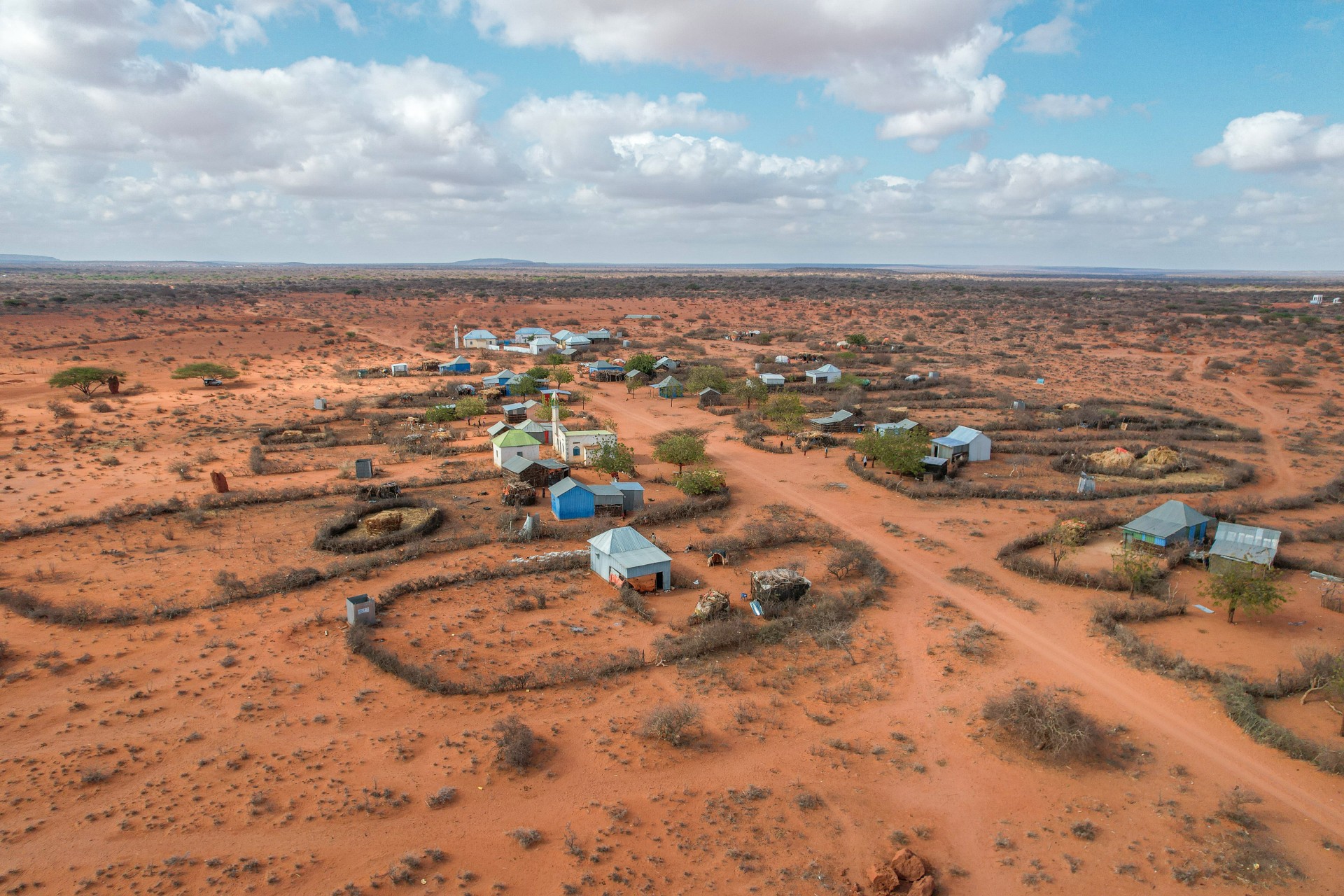
After years of destructive flash floods followed by scouring sandstorms, the village of Harqabobe in Somalia’s Middle Shabelle region says it has learned to live with the rain, by working with it, not against it.
“With every storm we worried what might come from the valley,” said resident Huria. “Would the water rise while we slept?” That fear has eased after a package of low-tech, community-built measures backed by the International Organization for Migration (IOM) and Somali non-profit Shaqadoon.
At the heart of the effort are flood-regulation structures along the wadi, a dry riverbed that fills rapidly during heavy rain, that now divert peak flows toward farmland and away from homes. “These structures help reduce flooding along the wadi bank,” said Mahdi, who helped coordinate the works. “They guide water where it can do good.”
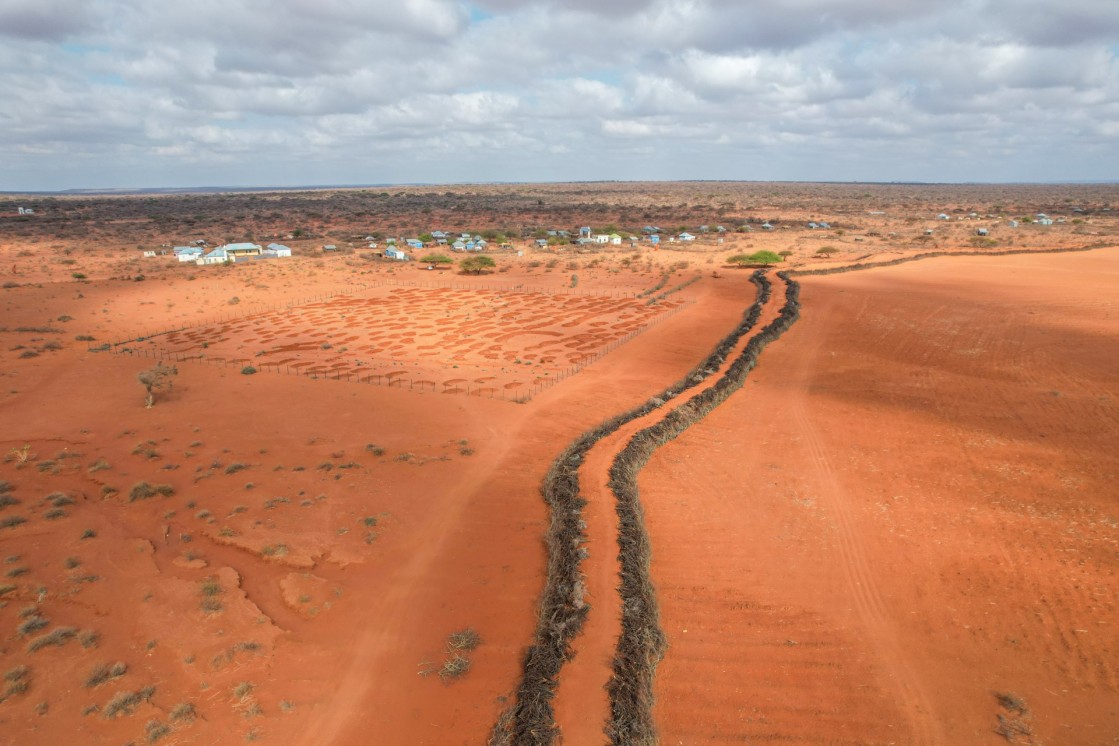
Residents were trained and carried out much of the work themselves. They planted a belt of drought-hardy trees between the village and the valley to act as a windbreak, reducing sandstorms that once stripped topsoil. “We planted trees that didn’t even need watering,” Mahdi noted.
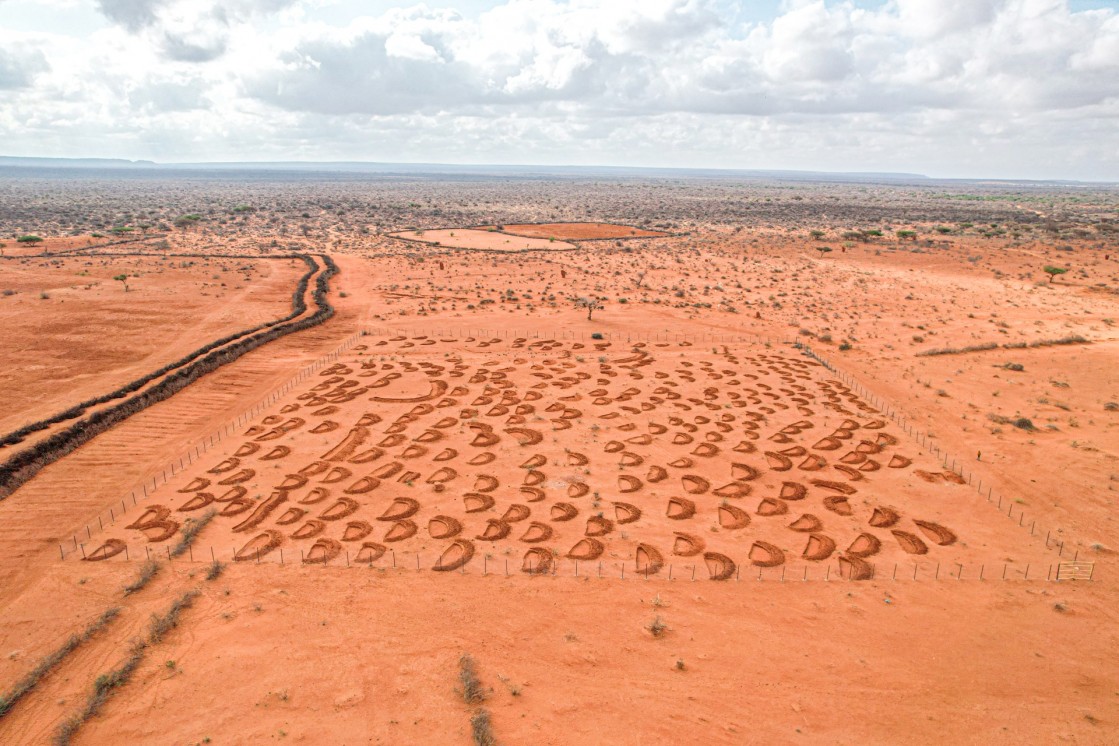
To capture and store more rainfall, villagers dug half-moon basins, semi-circular trenches that slow runoff and recharge soil moisture, and installed bioswales at a fenced pilot site to trap sediment and curb erosion. The community also adopted basic water and land-management practices, from efficient water use to selecting drought-resistant vegetation to stabilize silty soils.
Crucially, the planning process included women, youth, and elders, a shift locals say reduced conflict over water and land. “We learned about leadership, tree planting, wind control, and water management,” said Mahdi. “Now we know how to use water efficiently and prevent erosion.”
Early results are visible: floodwaters now spread gently across fields, crops are improving, dust is down, and formerly abandoned homes are reoccupied. “Before, the wind carried away our soil, our homes, and our peace,” Huria said. “Now, we’ve returned… There is peace. There is stability.”
Residents frame the change as part of a broader rethink in aid, from repetitive emergency repairs to prevention and resilience. “In the past, we always feared the floods would drive us away again. Now, we feel hope instead,” said Mohamed. “Instead of asking, ‘Will the flood come?’ the now ask, ‘Where should we guide it?’”
The initiative was funded by the European Union and implemented by IOM in partnership with Shaqadoon.
Source: IOM Storyteller
Want to read more like this story?

Nigerian community threatened by intense ground erosion
Jun, 06, 2019 | NewsA village in southern Nigeria is threatened as soil erosion has caused severe issues. People have...
Adelaide Hills dam: fears of collapse
Sep, 28, 2022 | NewsAn emergency flood warning has been issued for a South Australian town due to the “high risk” of a...

Soil hydraulic properties affected by climate change
Sep, 17, 2019 | NewsAccording to a new study, published in the journal Science Advances, soil hydraulic properties can...

Geology, Heavy Rainfall, and Warning Gaps: Unpacking the Deadly Texas Flood Disaster
Jul, 04, 2025 | NewsIn the early hours of July 4th, 2025, a powerful storm system swept across central Texas, dropping...

Lake Naivasha floods displace 7,000 in Kenya’s rift valley
Nov, 20, 2025 | NewsTourist boats on Kenya’s Lake Naivasha have been repurposed to evacuate residents after rising wate...

Village in Fiji relocated after landslide and cyclone disasters
Oct, 30, 2017 | NewsThe community of Tukuraki, in the highlands of Fiji, moved into their newly built, disaster resilien...

California is sinking
Aug, 26, 2015 | NewsCalifornia enters the fifth year of a drought and more and more water is pumped from the aquifer....

Flood in Colorado leads to 3 deaths and many disasters
Sep, 12, 2013 | NewsHeavy rain ended up to flood Colorado. Three deaths are reported and a woman is missing. Rescuers’ j...

New parameter in flood risk assessment recent study reveals
Jan, 28, 2015 | NewsWith half a million dollars spent to adress direct flooding costs in the U.S. in 2012, flood risk ev...
On This Day
August 11th 2012
READ MORE
Related Video

Trending

Tiebacks vs. soil nails: Choosing the right earth retention solution
When Dams Fail: The Growing Crisis of Tailings Management
Mexico City’s sinking crisis mapped by next-generation satellite
Landslide in Northern Peru Forces Evacuation of Over 170 Residents
Sinkhole outside home in Huntington Station, on Long Island: 3 fall into
Deadly mining landslide in Central African Republic raises safety concerns