
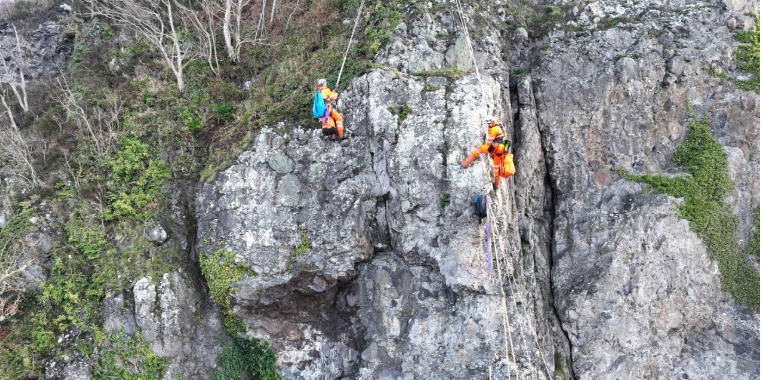
Geotechnical Expertise in Action: Stabilizing Scotland’s A828 Rockface
Sources: megaproject.com, ccemagazine.com, geplus.co.uk, newcivilengineer.com
Want to read more like this story?

Geotechnical challenges at Santorini port access road
Mar, 19, 2026 | NewsAccess to Santorini’s main port at Athinios has been temporarily suspended following a new rockfall...

Geotechnical Experts Warn of Ongoing Risks After Isle of Wight Rockfall
Mar, 07, 2025 | NewsA massive landslide struck the Isle of Wight’s Belgrave Road on Friday, March 7, sending hundreds o...
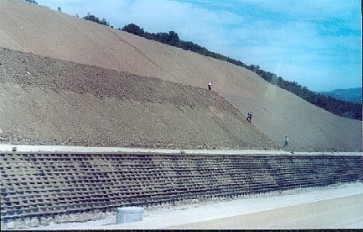
Slope Stabilization
Jun, 02, 2019 | EducationSlope stabilization refers to any implemented technique that aims to stabilize an unstable or ina...

Rockfall Hazard Mitigation
Jun, 22, 2023 | EducationIn general, protection measures can be distinguished into two main categories...

Rainfall triggered rockfall disrupts on Highway 18 in Southern California
Dec, 27, 2025 | NewsA recent rockfall incident on Highway 18 in San Bernardino County has highlighted the geotechnical...
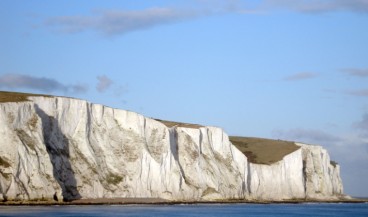
Safeguarding the Iconic White Cliffs of Dover: A Geotechnical Perspective
Aug, 26, 2024 | NewsThe White Cliffs of Dover are not just a symbol of the United Kingdom’s natural beauty but also a s...

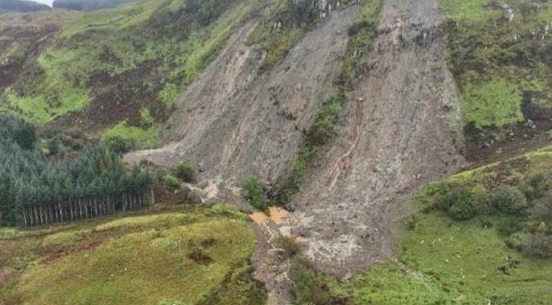
Landslide hits Argyll and Bute, Scotland: A83 road closed
Jan, 30, 2020 | NewsA83, a main roadway in the south of Argyll and Bute, Scottish Highlands, has been closed due to a l...
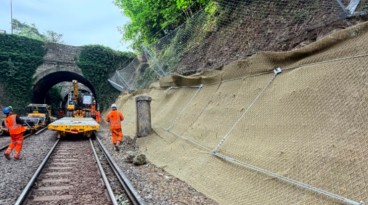
Maidstone East cutting shows importance of proactive slope management
Jan, 01, 2027 | NewsRailway cuttings can be among the most sensitive geotechnical assets on transport networks. They are...

Embankment Stabilization Success on Brighton Main Line
May, 08, 2025 | NewsIn January 2025, a landslip between Three Bridges and Gatwick Airport prompted immediate geotechni...
On This Day
August 18th 1887
READ MORE
Related Video

Trending

Chesapeake Bay Bridge-Tunnel: An ‘engineering wonder’ of the modern world

What controls the height of the world's mountains?

AI-enhanced landslide model ready for 2026 deployment in Hong Kong
Nepal’s Himalayan settlements face escalating flood and landslide threats