Fehmarnbelt tunnel advances with first element ready for immersion
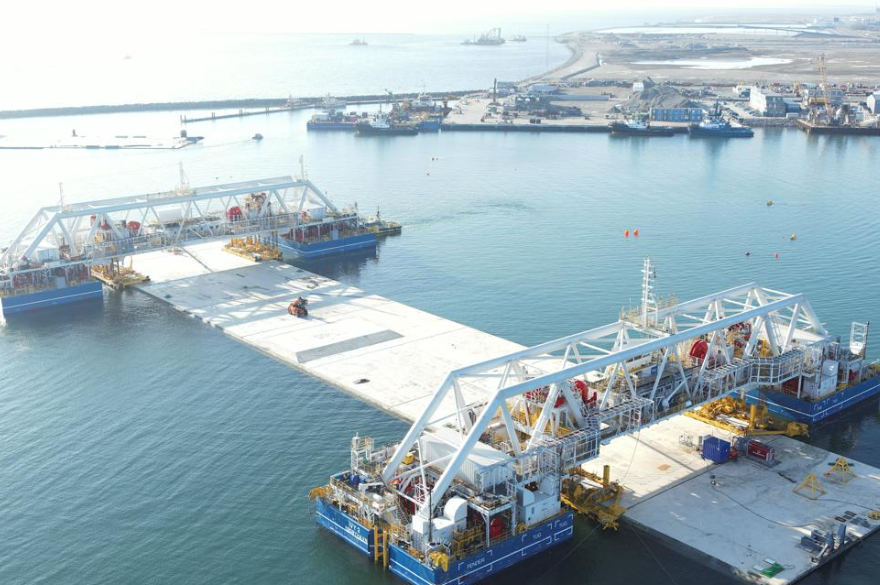
The Fehmarnbelt Fixed Link has reached an important milestone with the completion of ballast filling in its first tunnel element. This is the first of 89 elements that will form the immersed tunnel linking Lolland in Denmark with the German island of Fehmarn.
The element, initially weighing around 73,500 tonnes, has been filled with approximately 4,500 tonnes of ballast concrete. This process is essential, as it enables controlled submersion during the upcoming immersion phase. The work was carried out using a temporary internal access system consisting of five shafts connected to watertight steel bulkheads, supporting material transport, ventilation, and safe personnel access throughout the operation.
Once the ballast installation was completed, most internal equipment was removed and the bulkheads sealed. This prepares the element for tow-out from the production facility at Rødbyhavn to the installation site in the Baltic Sea.
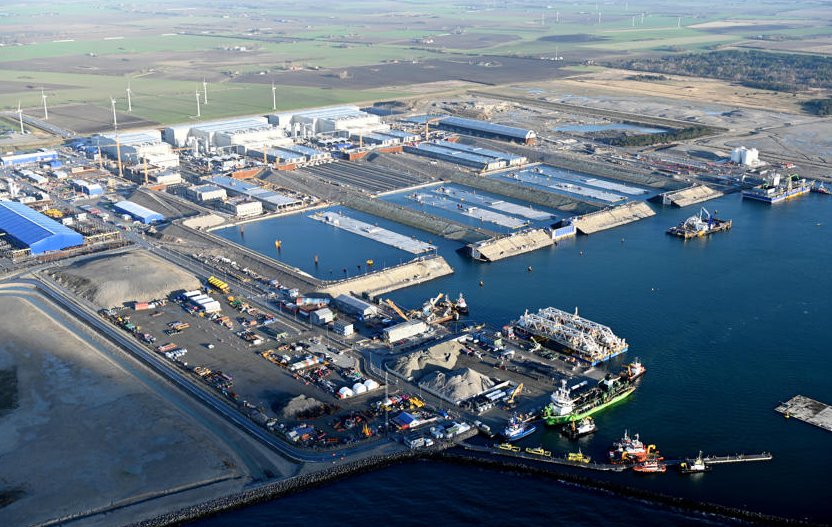
At the same time, offshore preparations are progressing. The trench that will receive the tunnel elements is being carefully shaped and lined with a gravel bed to ensure uniform support. The immersion operation will be carried out using the specialised vessel IVY, which is approaching operational readiness following earlier approval delays.
Supporting this operation is the heavy-lift vessel “Hebo Lift 9”, which will place eight anchors of 500 tonnes each on the seabed. These anchors are required to stabilise the immersion system during installation. After each element is placed, the anchors will be recovered and reused for subsequent sections.
So far, 15 tunnel elements have been cast, representing approximately 2.7 kilometres of the final tunnel length. The first immersion is expected in spring 2026.
Despite steady technical progress, the project timeline has shifted. Completion by 2029 is no longer considered realistic. A revised schedule is expected after the first immersion operations, with implications for both cost and delivery timelines.
Even with these adjustments, the project remains structured as a user-funded infrastructure link, with repayment expected through future traffic revenue.

Sources: tunnel-online.info, tunnelsandtunnelling.com, femern.com
Want to read more like this story?

Casting of Fehmarnbelt tunnel’s precast elements has began
Jul, 10, 2023 | NewsCasting of the elements for the Fehmarnbelt tunnel has now begun, as was announced on July 10. The...

Fehmarn Belt Tunnel: World’s Longest Immersed Tunnel Faces Delays
Aug, 22, 2025 | NewsThe Fehmarn Belt Tunnel, designed to connect Rødbyhavn in Denmark with Fehmarn in Germany, is one o...
Dredging of the 18 km-long Fehmarnbelt Tunnel trench completed
Apr, 16, 2024 | NewsIt was announced on April the 16th, 2024, that a major milestone was reached for the construction o...

The world's longest submerged tunnel will connect Denmark to Germany
Apr, 24, 2020 | NewsAccording to the government of Denmark, construction works on the longest immersed tunnel in the wo...

The PLAXIS Tunnel Engineer’s Toolbox: Everything You Will Need In One Place
Jun, 28, 2024 | NewsPLAXIS offers a wide range of tools to the Tunnel Engineer, which can be combined to generate almos...

8 new U.S. tunnels under way: fascinating and challenging
Jan, 10, 2014 | NewsWhether you live in the U.S. or not you will find the following tunnels that are currently being bui...

Model Structures and Visualize Structural Forces
Jun, 08, 2021 | NewsSoil-structure interaction is a crucial aspect for both geotechnical and structural fields. There i...

Bentley Webinar | Modeling With Tunnel Designer in PLAXIS 2D & 3D
Mar, 21, 2023 | EventTunnels are created to make it easier to navigate through challenging topographical and geological...

Photo gallery: 9 of the world's greatest tunnels!
Jul, 14, 2014 | News2014 is the year of the 20th anniversary of the opening of the Channel Tunnel linking France with th...
On This Day
August 7th 1995
READ MORE
Related Video

Trending
Dubai approves $9.2bn fully underground gold line metro

How to prevent copper wire theft from light poles
The quicksand of Morecambe Bay
Rapid Drawdown in Dam and Levee Design: A Hydrogeologic Perspective in Slide2

Unstable Ground: Lessons from the I-80 New Jersey Sinkhole Saga
Tailrace tunnel breakthrough advances Australia’s largest renewable project
A Legacy of Leadership, Mentorship & Service: Gary L. Seider P.E.