California reservoir needs to be drained due to risk of failure
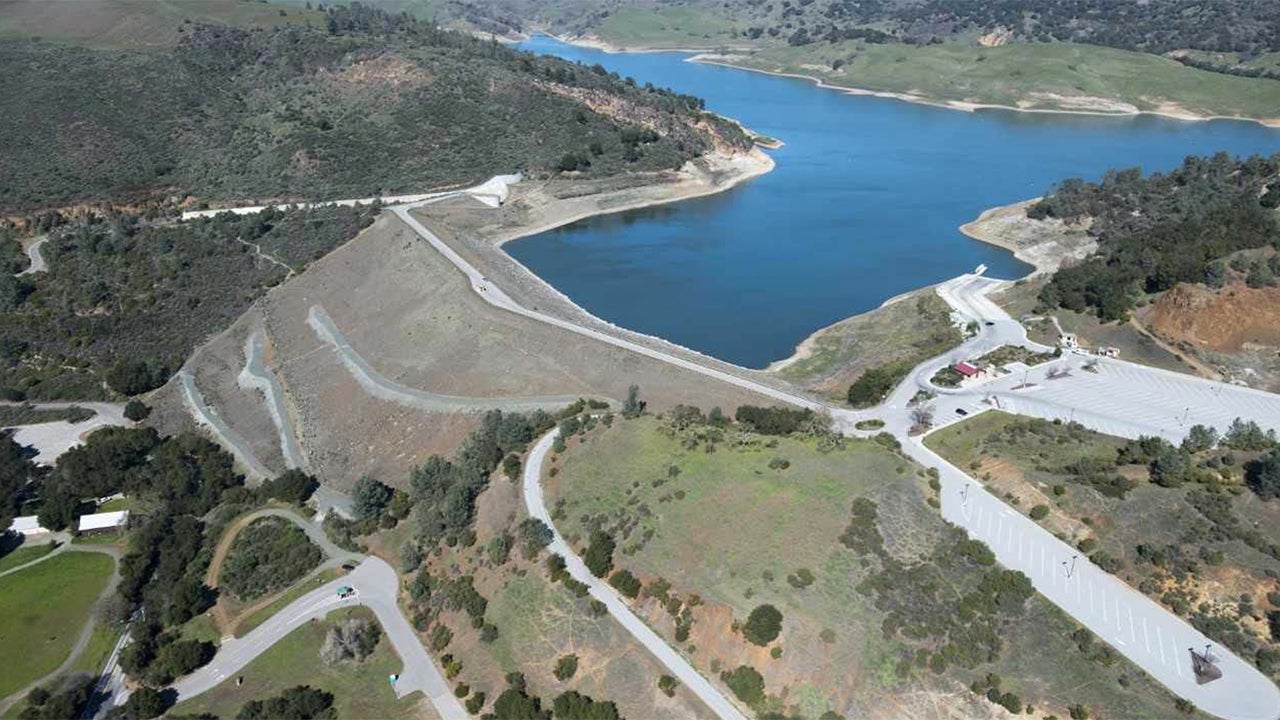
California officials decided to drain a reservoir as its dam could fail under a strong seismic event.
The Anderson reservoir, an artificial lake in Californian Santa Clara County, was created in 1950 by the construction of the Anderson Dam, an earth dam that reaches a height of 73 meters.
The volume of the lake is large in comparison to neighboring reservoirs. Its total volume is 111 million cubic meters accounting for 53% of the total district's capacity distributed in 10 reservoirs.
11 years ago, officials announced that the reservoir should not exceed 74% of its total capacity, as it is constructed along the Calaveras Fault, a major branch of the San Andreas Fault System, and, hence, a powerful earthquake (6.6 with the dam at the epicenter, or 7.2 within 2 kilometers of the dam) could potentially result in a dam collapse. In that scenario, a 10-meter height wave would strike Morgan Hill, a city in Santa Clara County, and another 2,4-meter height wave would hit San Jose.
Today, the reservoir is below 30% of its total capacity due to a drought period that has struck California. It has been deliberately kept below 45% since Autumn, 2019.
According to the Santa Clara Valley Water District, a plan to upgrade the Anderson Dam that would cost $563 million, was introduced in 2012. Reconstruction works would initiate in 2022, but, a lack of permits has delayed the procedures. “Valley Water has been working with several state and federal agencies through the years to secure the proper permits as the scope of the project has increased due to additional safety and design requirements,” Norma Camacho, Santa Clara Valley Water Chief Executive Officer, stated.
Given the delays, it was decided to drain the lake before the implementation of the retrofit project. The reservoir must be drained by October 1, 2020, according to the U.S. Federal Energy Regulatory Commission.
This decision can cause significant ramifications. According to Christopher Hakes, a Valley Water dam safety official, the water level in the reservoir provides a supporting effect for the dam's body. "Lowering reservoir levels beyond the current level would decrease the structural reliability of the intake structure and its protection against earthquakes," Hakes had mentioned back in December 2019.
Camacho also added that the drainage would impact the wildlife and severely reduce the water reserve which is significant given that drought periods in California have become very common.
A video showing what would happen if Anderson Dam failed is presented below.
Sources: USAtoday, Weather, Associated Press
Media
- What would happen if Anderson Dam failed
- Mercury News/Santa Clara Valley Water
Want to read more like this story?

Calaveras dam in San Francisco Bay Area is finally finished
Sep, 28, 2018 | NewsCalaveras Dam, the larger dam built in Bay Area in 20 years, is finally completed. The 220-foot t...

Dam Engineering
Apr, 10, 2020 | EducationA dam is an infrastructure system that consists of several structures with the intent to collect,...

How Do Dams Trigger Earthquakes?
May, 25, 2015 | NewsAccording to scientists, earthquakes are triggered by dams, since there are many cases giving eviden...

Exploring the World’s 10 Tallest Dams
Dec, 16, 2024 | EducationDams are among humanity's most remarkable engineering achievements, serving as vital infrastructu...

Aging dam infrastructure: A severe future threat
Jan, 22, 2021 | NewsAccording to a new report, issued by the United Nations University, aging water storage facilities...
History of the Hoover Dam
Jun, 30, 2020 | NewsIntroduction Hoover Dam is the tallest arch dam constructed in the United States and forms one of...

The Hoover dam reaches all-time low water level
Jun, 08, 2021 | NewsHoover Dam, one of the most iconic dams ever constructed, has reached its lowest water level in his...

China's Three Gorges Dam under pressure: Flood hazard downstream
Jul, 28, 2020 | NewsAs China has been devastated by heavy rainfalls, the Three Gorges Dam is under heavy flood pressure...

Potential dam collapse in U.K.: Authorities evacuated an entire town
Aug, 01, 2019 | NewsAuthorities have evacuated an entire town in Derbyshire, U.K., after a reservoir's dam suffered cri...
On This Day
August 7th 1976
READ MORE
Related Video

Trending

Stop Guessing, Start Designing: Introducing Support Designer in Slide2


Alert level is raised in Mexico as the Popocatépetl volcano spews ash and gas

Embankment Collapse on NH-66 in Kooriyad Triggers Engineering and Oversight Review

Stop Guessing, Start Designing: Introducing Support Designer in Slide2

Development program prepares new engineers for success