
Alaska rocked by M7.0 earthquake as aftershocks intensify, raising infrastructure risks

A magnitude 7.0 earthquake struck near Yakutat, Alaska, triggering more than 160 aftershocks within 24 hours and generating widespread ground shaking across southeastern Alaska and parts of Canada. The mainshock occurred at a shallow depth of approximately 10 kilometres, intensifying surface-level accelerations and increasing the likelihood of ground failures in susceptible terrain. Residents reported falling objects and interior damage, reflecting the strong ground motions associated with shallow crustal events. Seismologists classified the earthquake as a major seismic event capable of causing structural damage when located near populated corridors, although no casualties or severe structural failures have been confirmed.

The affected region contains steep slopes, glacial deposits and fractured bedrock, all of which are prone to instability during seismic loading. A sequence of aftershocks exceeding magnitude 5.0 suggests continued stress redistribution along the Pacific–North American plate boundary. These conditions may induce rockfalls, shallow translational slides and potential lateral spreading in saturated sediments. While early assessments have not identified major landslides, seismologists note that delayed failures remain possible, particularly in areas adjacent to river valleys, steep fjord walls and recent glacial retreat zones where unconsolidated deposits are common. The event highlights the need for enhanced geotechnical monitoring in remote regions where slope failures may go unreported for days.

Authorities and seismic networks are continuing to evaluate the aftershock sequence to determine whether ground deformation or localised damage develops over the coming days. The region’s history of major earthquakes, including the 1965 Rat Islands event and the 1964 magnitude 9.2 earthquake, underscores the persistent seismic hazard along Alaska’s plate boundary. Emergency services remain on alert while technical agencies assess potential impacts to roads, critical infrastructure and remote communities. The earthquake serves as a reminder of the engineering challenges associated with building and maintaining infrastructure in one of the most seismically active regions in the world.
Footage of the powerful quake in the following video.

Sources: newsweek.com, news.az, weather/topstories/
Want to read more like this story?

Study suggests that smaller earthquakes generate most strong ground motions
Jan, 04, 2021 | NewsAccording to a new study, smaller earthquakes have caused the strongest shaking incidents in the vi...

M 7.5 earthquake hit Alaska triggering tsunami warnings
Oct, 19, 2020 | NewsA tsunami warning was issued after a powerful earthquake hit Alaska's southern coast. The M 7.5...

Powerful 7.4-Magnitude Earthquake Strikes Kamchatka Peninsula
Sep, 12, 2025 | NewsA magnitude 7.4 earthquake struck off the east coast of Russia’s Kamchatka Peninsula on September 1...

Deep landslides triggered by the 1964 Alaska earthquake were not re-activated in the 2018 Anchorage earthquake
Oct, 29, 2019 | NewsAccording to a new study, published in Seismological Research Letters, the deep landslides that wer...
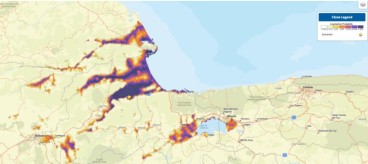
Landslide and liquefaction mapping becomes critical after major quakes
Jun, 29, 2026 | NewsRecent major earthquakes in Venezuela and the southern Philippines have highlighted an important les...

Two powerful earthquakes hit China: Reports of 3 people dead
May, 21, 2021 | NewsTwo separate, strong earthquakes that struck in China have resulted in, at least, 3 fatalities. The...

M8.2 earthquake struck off the coast of Alaska
Jul, 28, 2021 | NewsA massive earthquake struck off the coast of Alaska prompting a tsunami alert for a large part of t...

Powerful earthquake struck Mexico: At least one fatality
Sep, 08, 2021 | NewsAt least one person died after a M 7.0 earthquake hit southwestern Mexico on September 8, 2021. Th...
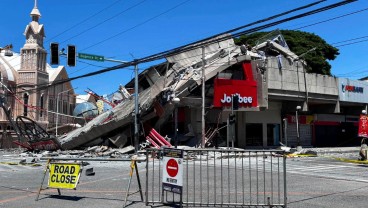
Major earthquake in southern Philippines causes deaths and widespread damage
Jun, 08, 2026 | NewsA powerful magnitude 7.8 earthquake struck off the coast of Mindanao in the southern Philippines, ki...
On This Day
August 26th 2017
READ MORE
Related Video

Trending
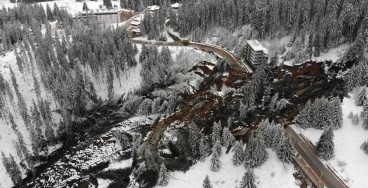
Active landslide threatens long-term connectivity in southern Bulgaria


PLAXIS example: Westergaard's added mass for hydrodynamic pressures

Rock Mass Classification Systems: A Global Review of Use and Dominant Approaches

How does the Leaning Tower of Pisa survive earthquakes
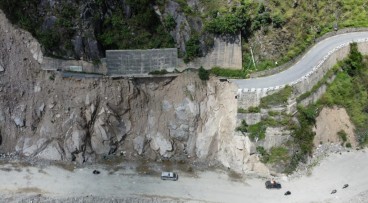
Nepal’s Himalayan settlements face escalating flood and landslide threats