
After four years of work, with 400 workers on site working 24/7, the Port of Miami Tunnel is about to open to public by the end of this month. With a budget of $915 million the tunnel will connect the Miami International Airport and Interstate 95 directly to PortMiami, bypassing the streets of downtown Miami, decongesting the heavy traffic caused by heavy trucks and cruise ship passengers. The idea of a port tunnel was initially conceived decades ago.
The idea of the Miami port tunnel is not new and it has been supported by the Miami Mayor Maurice Ferre, as well as late congressman Claude Pepper, who according to Ferre "saw the the wisdom of the project" and issued the Miami-Dade County, $2.5 million for a [tunnel] study. The report prepared in April 1983, for the Downtown Development Authority, was pointing out the importance of a tunnel in the alleviation of the traffic congestion caused by heavy trucks. Federal transportation authorities embraced the idea, however, a statement regarding the feasibility of the tunnel was issued in 2000. In the sequel, a partnership including the Florida Department of Transportation, Miami-Dade County and the city of Miami was formed to fund the project. Design and construction costs are equally split between the state and the Miami-Dade County and the City of Miami, while operation and maintenance costs are entirely covered by the state. The public-private partnership (PPP or P3) finally established, further includes Meridiam Infrastructure Finance and the French construction firm Bouygues Travaux Publics. A commercial agreement was reached in June 2009, while financially an agreement was closed on October 15, 2009. Construction works began on May 24, 2010, and the boring of the tunnel started on November 2011 and was completed on May 6, 2013.
Twin tubes inside the tunnel carry a two-lane road in each direction, with a 35-mph speed limit and a 5-degree grade.
The 4,200ft long tunnel consists of two tubes, with two lanes in each direction, and vehicles will move with 35-mph speed limit and at 5-degree grade. At its deepest point the tunnel is located 120ft below the ground surface and for the boring, a 43ft diameter TBM was constructed and used. Both the entrance and exit of the tunnel are equipped with 50-ton floodgates, which will seal the tunnel in case of a Category 3 or stronger hurricane. The ends of the tunnel were designed by Bernardo Fort-Brescia, head of the Miami firm Arquitectonica, to resemble Egyptian monuments.
Visit the following links for more information, videos and photos on this project!
Sources: miamiherald, portofmiamitunnel.com
Nearby News
Want to read more like this story?

8 new U.S. tunnels under way: fascinating and challenging
Jan, 10, 2014 | NewsWhether you live in the U.S. or not you will find the following tunnels that are currently being bui...

3 major East Coast tunnel, the Hudson Tunnel, the Howard Street Tunnel and the Chesapeake Bay Bridge Tunnel, projects move forward
Jan, 11, 2022 | NewsThree major tunnel projects that connect key transportation arteries on the East Coast are advancin...

Photo gallery: 9 of the world's greatest tunnels!
Jul, 14, 2014 | News2014 is the year of the 20th anniversary of the opening of the Channel Tunnel linking France with th...

Excavation of Virginia’s first-ever bored road tunnel completed
Apr, 17, 2024 | NewsIt was recently announced that a tunnel boring machine (TBM) named Mary made its final beak through...

Bentley Webinar | Modeling With Tunnel Designer in PLAXIS 2D & 3D
Mar, 21, 2023 | EventTunnels are created to make it easier to navigate through challenging topographical and geological...

World's Longest Tunnel Running Under Swiss Alps Opens
Jun, 01, 2016 | NewsOn June 1st, the Gotthard Base Tunnel was officially opened, making it the longest and deepest tunne...
Engineering Through Rock and Faults: Geotechnical Challenges of the Daliangshan Highway Tunnel
Oct, 19, 2024 | NewsIn an ambitious endeavor, engineers in Sichuan Province, China, are breaking new ground—literally a...

PortMiami Tunnel recognized as top100 urban infrastructure project!
Jul, 17, 2012 | NewsNicholson’s PortMiami Tunnel project has been included in KPMG International’s "Infrastructure 100:...

New tunnel in Swiss Alps changes railway transport in Europe
Sep, 04, 2020 | NewsA significant step has been made for the completion of a great railway project in Europe. The Cen...
On This Day

Related Video

Trending

Life after gINT - Rethinking geotechnical data management for a new era

Is Africa gradually splitting into two sections?
Stop Guessing, Start Designing: Introducing Support Designer in Slide2

Alert level is raised in Mexico as the Popocatépetl volcano spews ash and gas
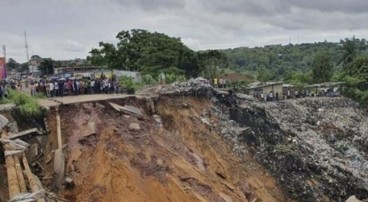
Deadly mining landslide in Central African Republic raises safety concerns