
Aquatic Phytoremediation
Contents [show]
- Aquatic Phytoremediation Used on Macronutrients
- Aquatic Phytoremediation Used on Metals
- Aquatic Phytoremediation Used on Hydrocarbons
- Aquatic Phytoremediation Used on Explosives
- Planting Systems
- Plant Species Suitable for Aquatic Phytoremediation
- Disposal of Phytoremediation Biomass
- Demerits/Issue Associated with Aquatic Phytoremediation
- Case Study #1: Iowa Army Ammunitions Plant
- Case Study #2: Aquatic Plant Harvesting in Casey Lake
- References
Aquatic Phytoremediation Used on Macronutrients
Uncontrolled runoff from various sources can cause eutrophication of aquatic ecosystems. High levels of nitrates and phosphates can be generated through both runoff and accumulation in soils from fertilizers (Barret 2012). Current practices for prevention include structural contaminant barriers and changing agricultural processes (Barret 2012). By contrast, phytoremediation practices--both aquatic and terrestrial--involve the use of hyperaccumulating species to uptake N and P compounds. This frees up the environment from overnutrition and eutrophication. Key parameters for a suitable test species are N and P tolerances as well as total uptake rate. After the uptake process has completed, the target plants should be harvested and disposed of (Auctherlonie 2021). Uniquely, phytoremediation of macronutrients necessarily includes an alternative disposal practice. Depending on the contents of the polluted media, the harvested biomass may be composted and reused as fertilizer for non-consumptive uses (Song 2012).
In aquatic phytoremediation, water hyacinth (Eichhornia crassipes) is a common species used in research. As a highly invasive species, its characteristics of rapid growth make it attractive for phytoremediation. Additionally, the water hyacinth does not suffer from stunted growth under nutrient rich and contaminated environments. This satisfies the requirement of high accumulation rates alongside resistance to contaminant toxicity (Auchterlonie 2021). However, the invasive potential of water hyacinth is described as a major detractor to the promise of the technology. Current attempts to control the growth of water hyacinth have found limited success, and it remains one of the most harmful species to freshwater ecosystems across the world (Auchterlonie 2021). Use of water hyacinth will only come with proper control measures in place before placement.
In terrestrial phytoremediation, focus should be placed on fast growing plants that have multiple harvests within the same season (Barret 2012). In an agricultural setting, the phytoremediation process can be applied to crops such as Bermudagrass, Ryegrass, and Crabgrass. The harvested biomass could potentially be used as animal feed or compost, depending on the presence of other contaminants (Barret 2012). Like other phytoremediation processes, these necessary characteristics of rapid growth and low toxic response make it only suitable for residual or low-level contamination near the surface of the soil layers.
Aquatic Phytoremediation Used on Metals
Heavy metal contamination is a serious issue and one of the most common contaminant classes found in soils and aquatic ecosystems (Monferran and Wunderlin 2013). Typical remediation methods for heavy metals include “pneumatic fracturing, solidification...excavation, and removal of contaminated soil layer, physical stabilization or washing of contaminated soils with strong acids” (Monferran and Wunderlin 2013). In aquatic ecosystems, remediation of heavy metals falls more clearly under the category of phytostabilization. In short, stabilizing and preventing the metals from travelling outside of the immediate sediment and plant systems (de Cabo 2015). Outside of aquatic environments phytoremediation efforts are often focused more on metal uptake, although specific partitions between root zones and plant mass above surface level remains a concern (Monferran and Wunderlin 2013). Disposal concerns are high for all metal phytoremediation, as the resulting biomass is often toxic.
Macrophytes treat heavy metals based on both avoidance and tolerance. Avoidance is the process by which plants prevent interaction with toxic compounds. Tolerance is the process by which plants deal with unavoidable contaminant uptake (de Cabo 2015). For aquatic plants, metals will end up concentrated in the rootzone and “belowground biomass” as a tolerance strategy (de Cabo 2015). Within the heavy metal classification there are differences in partitioning, with more essential metals (zinc and copper) found in higher concentrations above the soil level (de Cabo 2015). This process is also similar in floating plants, with the majority of uptake and immobilization occurring below the water level (de Cabo 2015).
By comparison, submerged macrophytes may be a better match for phytoremediation, as they have relatively higher rates of uptake. However, they still suffer from the same issue of low translocation to upper portions of the plant, meaning the contaminants will stay immobilized in the root zone alone (de Cabo 2015). While this rules out phytoextraction for aquatic plants, phytostabilization aligns well with macrophyte characteristics. The complex processes of macrophyte ecosystems offer many locations to stop the movement of metals and arrest them in either the root zone or in the sediments (de Cabo 2015).
Aquatic Phytoremediation Used on Hydrocarbons
Oil spills and hydrocarbon-based contamination poses a huge threat to wildlife, ecosystems, and humans. Biological and plant-based solutions to petroleum contamination are often “more environmentally friendly, cost-effective and...are not very prone to secondary contamination” (Shahsavari 2015). Additionally, these solutions are often more acceptable to the public as they align well with environmental goals.
While some light hydrocarbons can be released through phytovolatilization, the most promising area of phytoremediation lies in rhizoremediation and rhizodegradation (Shahsavari 2015). These processes rely on microbial degradation of the hydrocarbons, which are supported through a symbiotic relationship with the exudates of the root systems of plants (Chan-Quijano 2020). This interface between the bacteria and roots is crucial in remediation of hydrocarbons, as without degradation the contaminants can easily choke out the plant. Often, the result of remediation relies on the proper acclimatization of the plant to the oil hydrocarbon environment (Chan-Quijano 2020). At a conceptual level, the rhizodegradation process can be further explained by the massive surface area presented by the root systems of plants. This surface area provides nutrients, acting as biostimulation for the degrading bacteria (Yavari 2015).
Further research should be pursued in the area of aquatic macrophytes for hydrocarbon contamination, current understandings of the processes are as follows. The invasive water hyacinth has been found to reduce floating hydrocarbons as a floating species. This is most likely due to the dense and fibrous root systems that encourage the presence of bacteria in the root zone (Yavari 2015). Additionally, aquatic plants have the potential to hasten stabilization of hydrocarbons left in sediments. Rather than rely on anaerobic degradation of hydrocarbons, a healthy cover of aquatic plants transfers oxygen to the sediment. In some studies, this is the dominant process of hydrocarbon removal (Yavari 2015).
Aquatic Phytoremediation Used on Explosives
There are three types of explosive compounds contaminating the environment. They are: nitroaromatics, nitroamines, and nitrate esters. Nitroaromatics include TNT and its degradants DNT and ADNT. Nitroamines include RDX and HMX. Nitrite esters include GTN and PETN and are the least toxic type of explosive compound in the environment.
There are three processes by which phytoremediation can be used to mitigate contamination by explosive compounds. One way is by using the heightened microbial activity around roots to break down the explosive compound. This process is called rhizodegradation. Another way is through the retention of the compound in the area around the plants used for phytoremediation. This process is called phytostabilization and can make it more likely that the contaminant is taken into the plant’s cellular structures. The third phytoremediation process used is phytoextraction where the plants act as pumps pulling water from the soil and into the plant tissue. Nitroaromatic compounds tend to accumulate in the below ground, root structures of the plant, while nitroamines and nitrate esters tend to accumulate in the above ground, stem and leaf structures. (Via, 2020)
The best plant species for phytoremediation of explosives have rapid growth rates, dense root systems, and are tolerant to the stress brought upon by the explosive compound. A list of plant genera used in phytoremediation of explosive compounds in wetland and aquatic environments is presented in the table below along with their removal and uptake potential. (Via, 2020)
Removal - % of contaminant removed from growing media
High – 75 to 100% removed
Moderate – 50 to 75%
Low – less than 50%
Uptake – relative concentration in plant tissue compared to concentration in growing media
High – 80 to 100%
Moderate – 50 to 80%
Low – less than 50%
Contaminant | Genus | Removal | Uptake |
RDX | Ceratophyllum | - | High |
TNT | Ceratophyllum | High | - |
RDX/TNT | Charales | High | - |
RDX | Cyperus | - | High |
RDX | Myriophyllum | - | High |
TNT | Myriophyllum | High | - |
HMX | Myriophyllum | High | High |
RDX | Oryza | - | Low |
RDX | Phalaris | High | Moderate |
HMX/TNT | Phalaris | High | - |
RDX | Potamogeton | Low | Low |
TNT | Potamogeton | High | - |
RDX | Sagittaria | - | Low |
TNT | Sagittaria | High | - |
RDX | Stuckenia | High | High |
TNT | Stuckenia | High | - |
TNT | Alisma | High | - |
TNT | Carex | High | - |
TNT | Egeria | High | - |
TNT | Eleocharis | High | - |
TNT | Elodea | High | - |
TNT | Juncus | High | - |
TNT | Lolium | High | - |
TNT | Phragmites | High | - |
TNT | Polygonum | - | - |
TNT | Portieria | High | - |
TNT | Typha | High | - |
TNT | Vallisneria | High | - |
(Chart data from Via, 2020)
Planting Systems
Constructed Wetlands
Constructed wetlands are used for treatment of point source wastewater from stormwater systems, sewage, mine-tailing drainage, and landfill leachate treatment systems, but are most commonly used for sewage treatment and wastewater polishing before water is released to natural waterways. There are two types of constructed wetlands, free water surface flow wetlands (FWSF) and subsurface flow wetlands (SSF). FWSF wetlands consist of emergent, floating, and submerged macrophytes in shallow ponds or lagoon waters with sandy or organic soils that allow influent contaminated water to slowly flow through emergent macrophyte stems for pollutant uptake and degradation. FWSF wetlands are usually low-tech, gravity fed, and one hundred times smaller than SSF wetlands. SSF wetlands are the most common type of constructed wetland and consist of emergent macrophytes in a gravel matrix that allows water to come into direct contact with plant roots, rhizomes, and biofilms. SSF wetlands are frequently used to treat contaminants associated with sewage wastewater, such as biological oxygen demand, chemical oxygen demand, nitrogen, and phosphorus. SSF wetlands require more construction and management and are often separated into bund, requiring the use of electric pumps. The high cost of constructed wetlands limits their use to treatment of point source contaminants, such as sewage wastewater. (Fletcher, Willby, Oliver, & Quilliam, 2020)
The disadvantages associated with constructed wetlands include sediment clogs that are costly to fix, the large amount of space they take up, and that they create an ideal environment for mosquito propagation which can lead to the spread of malaria and other diseases in certain regions. Advantages of constructed wetlands, other than their ability to filter out pollutants, include the ecosystem services they provide. These services include sequestration of nutrients for reuse, enhanced biodiversity, pollination, and carbon sequestration from the atmosphere. (Fletcher, Willby, Oliver, & Quilliam, 2020)
Below is a diagram of the two different types of constructed wetlands. The top diagram is a FWSF type wetland. The bottom diagram is a SSF type wetland. Diagrams from (Fletcher, Willby, Oliver, & Quilliam, 2020)

Wild Macrophyte Harvesting
Wild macrophyte harvesting is the harvesting of already existing wild macrophytes from water bodies in order to remove nutrients such as nitrogen and phosphorus. Wild macrophyte harvesting relies on opportunistic and timely removal of the macrophyte biomass. Macrophytes can be removed by hand or mechanically by specialized boats equipped with a cutting or raking apparatus. Although removal of macrophytes by hand can be labor intensive, it allows for targeted macrophyte removal and minimizes disturbance to the ecosystem. Mechanical removal of macrophytes allows for more rapid and extensive removal, but is non-selective, can lead to high levels of turbidity through the re-suspension of sediments, can impact invertebrate and fish habitats, and can ultimately drive an ecosystem from a more desirable clearwater, macrophyte-dominated state to a potentially less desirable phytoplankton-dominated state. (Fletcher, Willby, Oliver, & Quilliam, 2020)
The effectiveness of harvesting wild macrophytes for nutrient removal can vary significantly depending on the amount of nutrient loading and the coverage of the macrophytes. In a study of wild macrophyte harvesting being used to remove phosphorus in a small, shallow urban lake, the harvesting of 3600 kg (dry weight) of American waterweed (E. Canadensis) resulted in 16.4 kg of phosphorus removal or 53% of the total phosphorus loading. Other studies have shown total phosphorus removal to be as low as 1.4% of the total phosphorus loading. Typically, extremely high amounts of nutrient loading have led to poor nutrient removal. The optimal amount of macrophyte coverage for nutrient removal is between 5 and 40% coverage. (Fletcher, Willby, Oliver, & Quilliam, 2020)
Although wild macrophyte harvesting is more expensive than chemical flocculation for nutrient removal, it is less expensive than many other best management practices and is often used for other purposes with nutrient removal being a secondary benefit. Other uses of macrophyte harvesting include navigation, drainage, aesthetics, and recreation. (Fletcher, Willby, Oliver, & Quilliam, 2020)
Plant Species Suitable for Aquatic Phytoremediation
Plant species suitable for aquatic phytoremediation must have a high bioaccumulation potential, the ability to transform or degrade nutrients, adsorption capacity for the contaminant of concern, high tolerance for pollution, and/or high biomass production rates. There are three types of aquatic plants used for aquatic phytoremediation. They are free floating plants, submerged plants, and emergent plants. Free floating plants float on the water surface. Submerged plants remain submerged under water. Emergent Plants are rooted underwater, but grow above the water surface. Below are tables of plant genera used in aquatic phytoremediation. (Dhir, 2013)
Free Floating (Dhir, 2013)
Common Name | Genus | Picture | Contaminants |
Duckweed | Lemna | 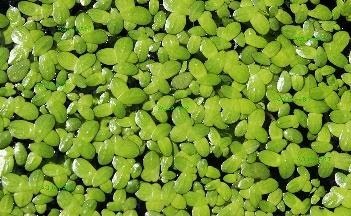 | Organics – Phenol, TCP Metals – As, Cd, Ni Radionuclides – La-140, Tc-99, Co-60 |
Duckweed | Spirodela | 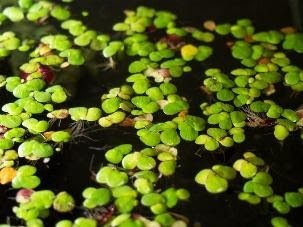 | Organics – o,p’-DDT, p,p’-DDT, chlorobenzenes Metals – As, Cr |
Water Hyacinth | Eichhornia | 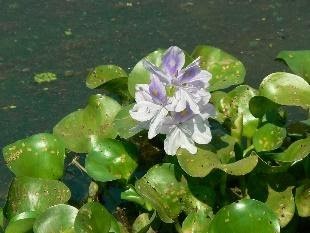 | Organics – Ethion, dicofol, cyhalothrin, pentachlorophenol Metals – Cr, Cu, Cd, Arsenite, Arsenate, Ni, Zn, Hg |
Water Fern | Azolla | 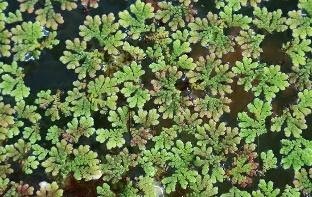 | Metals – Pb, Cd, Cu, Zn, Ni, Hg, Cr, As Radionuclides – Cs-137, Co-60 |
Water Lettuce | Pistia | Metals – Hg, Cr, Cu |

Submerged (Dhir, 2013)
Common Name | Genus | Picture | Contaminants |
Hornwort | Ceratophyllum | Organics – organophosphorus and organochlorine compounds, chlorobenzenes Metals – Ni, Arsenate, Arsenite, Pb, Cr Explosives – TNT, RDX Radionuclides – Cs-137, Co-60, P-32, Cs-134, Sr-89 | |
Podweed | Potamogeton | 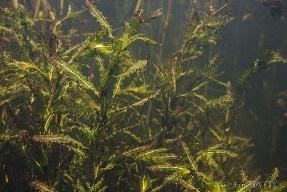 | Organics – phenol Metals – Cd, Pb, Cu, Zn, Mn Explosives – TNT, RDX Radionuclides – U-238, Cs-137, Sr-90, |
Water Milfoil | Myriophyllum |
| Organics – Simazine, o,p-2 DDT, p,p-2 DDT, HCA, perchlorate Metals – Co, Ni, Cu, Zn Explosives – TNT, RDX, HMX |
Esthwaite Waterweed | Hydrilla | 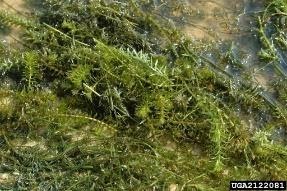 | Metals – Cu, As |
Waterweed | Elodea | 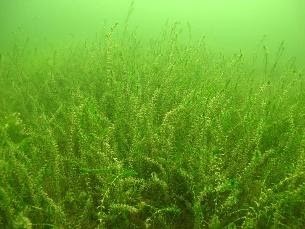 | Organics – phenanthracene, organophosphorus and organochlorine compounds, chlorobenzenes, HCA, DDT, carbon tetrachloride Metals - Hg Explosives – RDX, HMX Radionuclides – Cs-137, Sr-90, Am-241 |

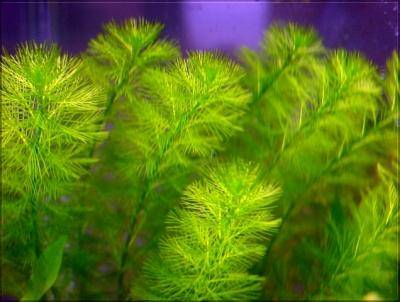
Emergent (Dhir, 2013)
Common Name | Genus | Picture | Contaminants |
Cattail | Typha | 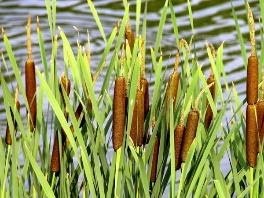 | Metals – As, Zn, Cu, Ni Explosives – TNT, RDX |
Reed | Phragmites | 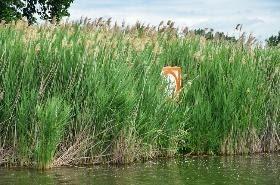 | Metals – As, Hg Explosives - TNT |
Bulrush | Scirpus |  | Organics - Phenanthracene Metals – As, Hg Explosives – TNT, RDX |
Cordgrass | Spartina | 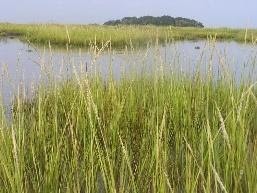 | Metals – As, Hg, Cu, Pb, Al, Fe, Zn, Cr, Se, Cd |
Canary-grass | Phalaris | 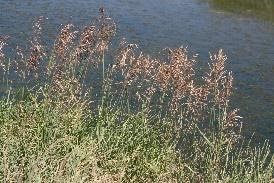 | Explosives – TNT, RDX |
Arrowhead | Sagittaria | 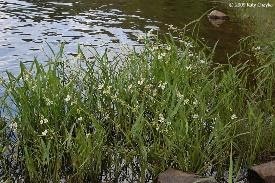 | Explosives – TNT, RDX |
Pickerel weed | Pontederia | 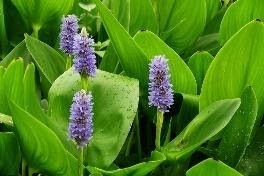 | Organics – oryzalin (herbicide) |
Disposal of Phytoremediation Biomass
Due to the high toxicity of the contaminants involved in phytoremediation, the disposal of the contaminants should take equal consideration in the assessment of the technology. Depending on the final fate of the harvested biomass, costs could increase greatly, especially if hazardous waste landfills must be used for disposal (Nowosielska 2004).
In general, the goal of post-harvest treatment is to reduce the overall volume of waste. This cuts down on transportation costs and can make endeavors such as phytomining more profitable (Nowosielska 2004). Some research has been done on composting as treatment for metal contaminated plants, with the findings pointing towards increased metal mobility and leaching capacity (Nowosielska 2004). Similar to composting in goal is compaction, where leachate is pressed out of contaminated biomass, removing some of the contaminants in the process. This however, is a relatively untested method (Nowosielska 2004). Finally, smelting and liquid extraction have promise as a phytomining technology. This involves either burning off plant matter or extracting the metals for eventual metal recovery (Nowosielska 2004). Additionally, some of the burned material could be used for energy production, although primary operation of the incinerator would be cost-prohibitive (Dickinson 2009).
As mentioned in the remediation of macronutrients, some biomass can be suitable for composting and application to stimulate plant growth. The compost must have contaminant levels below set limits. An ideal application for this process would be in phytoremediation of landfill leachate. This could then be composted and applied to the top of the cover to reduce erosion and complete the landfill capping process (Song 2016).
Demerits/Issue Associated with Aquatic Phytoremediation
Viewing the current state of research on phytoremediation there are some key qualifications that should be made. A large portion of studies are done based on small-scale, short-term experiments (Dickinson 2009). More field studies should be carried out to determine the true possibilities of this technology. In the same review of phytoremediation technology, Dickinson found that reported uptake levels of heavy metals varied not just across species of plants, but within different populations of the same plant. These concerns continue to downstream consequences of phytoremediation. Depending on the disposal method, secondary contamination and improper disposal pose a serious threat even after remediation is done. Similarly, the focus on increased contaminant uptake clearly poses a threat to the ecosystem as animals interact with the highly contaminated plants (Dickinson 2009).
For aquatic ecosystems, a major concern is the use of invasive species as the remediating species. Although the water hyacinth displays a great ability to clean up water, the entire process must be monitored as its destructive capabilities are great (Auchterlonie 2021). Additionally, control strategies have proven to be insufficient for water hyacinth. This includes mechanical, chemical, and predatory solutions to remove the plant from waterways (Patel 2012).
As seen throughout phytoremediation studies, the plants are only effective at shallow depths and over long periods of time. Depending on the extent of the contamination, phytoremediation may be woefully insufficient for contaminant stabilization and removal. Interactions with the local environment should be considered, and precautions should be taken if the technology is selected. Finally, the completion process should be planned thoroughly, as disposal costs and consequences can be great.
Case Study #1: Iowa Army Ammunitions Plant
Located in Burlington, Iowa, the army base had explosive contamination at several sites on location. With a total of 20,000 acres, approximately 8,000 were used for munitions production and testing. The location of the contaminants was a concrete impoundment for explosive contaminated wastewater. The primary remediation effort was removal of around 176,000 yd³ of soil from two different locations around the impoundment. The residual contamination was a relatively large concern, and phytoremediation was selected to manage the residual. “The wetlands were considered to be a means to remediate the collected groundwater, provide ecological enhancement of the area, and avoid the costs associated with backfilling” (Wetland Case Studies).
The decision was made to treat contaminated groundwater seepage with a constructed wetland. Test studies of target species generated 94-100% removal of TNT over a 10-day period (IAAP Screening). The second contaminant of concern was RDX. This test study narrowed down the target species to a reed canary grass (IAAP Screening). Additionally, the test study found that concentrations of above 5 mg L⁻¹ of explosives was toxic to the aquatic macrophytes, setting an upper limit for remediation potential (IAAP Explosives Removal). Finally, the recommendation was made that bio-augmentation was necessary to achieve sufficiently low levels of all explosives.
By the winter of the first year of the constructed wetland on Site 1, concentrations of the explosive RDX had increased. This was most likely due to desorption of the contaminant. Over the next year and a half the concentration steadily dropped until it was below the action level of 2 mg/kg. This same pattern held for Site 2, where the concentrations initially spiked before gradually making it to below the action level for the explosive contaminant (Wetland Case Studies).
Case Study #2: Aquatic Plant Harvesting in Casey Lake
Casey Lake is a small, shallow, urban lake located in the Ramsey-Washington Metro Watershed District in North St. Paul, Minnesota. The lake is located in a city park surrounded by residential suburban housing. As an urban lake, Casey Lake experiences persistent internal phosphorus loading that the watershed district continually manages. In 2013, the watershed district eradicated the invasive carp fish population considered damaging to the ecosystem. After this eradication, the lake became covered in aquatic plants. Eventually, the aquatic plants impeded lake recreational activities and were considered an aesthetic nuisance to the residents. In 2014, the watershed district mechanically harvested the entire lake surface. Concurrently, the watershed district was performing their regular plant and water quality sampling and phosphorus inflow and outflow modeling. It was found that a significant amount of phosphorus was removed from the lake as a result of the harvesting. Additionally, the cost of the removal was found to be less expensive per unit mass of phosphorus removed than the watershed district’s most cost effective best management practice and most common best management practice for removing phosphorus. The cost of the phosphorus removal via aquatic plant harvesting was found to be $670 per kilogram of phosphorus removed. The cost of the district’s most cost effective best management practice for phosphorus removal, alum injection, was $2800 per kilogram of phosphorus removed. The cost of the district’s most common best management practice for phosphorus removal, rain gardens, was $20500 per kilogram of phosphorus removed. Repeated plant removal can deplete phosphorus from bottom sediments reduce the amount of phosphorus released into the water from plant decomposition. It should be noted that the opportunity for phosphorus removal via aquatic plant harvesting can vary year-to-year. A phosphorus management plan that accounts for the possibility of future harvests is appropriate for urban lake similar to Casey Lake. (Bartodziej, Blood, & Pilgrim, 2017)
References
Barrett, M. J. (2012). Phytoremediation of Soil Phosphorous with Crabgrass http://hdl.handle.net/11244/9301
Bartodziej, W. J., Blood, S. L., & Pilgrim, K. (2017). Aquatic Plant Harveting: An Economical Phosphorus Removal Tool in an Urban Shallow Lake. Journal of Aquatic Plant Management, 26-34.
Chan-Quijano, J. G., Cach-Pérez, M. J., & Rodríguez-Robles, U. (2020). Phytoremediation of Soils Contaminated by Hydrocarbon. Phytoremediation (pp. 83-101). Springer International Publishing. 10.1007/978-3-030-00099-8_3
De Cabo, L., Serafini, R., Arreghini, S., & De Iorio, A. F. (2015). On-Site and Full-Scale Applications of Phytoremediation to Repair Aquatic Ecosystems with Metal Excess. Springer International Publishing. 10.1007/978-3-319-10969-5_3
Dhir, B. (2013). Phytoremediation: Role of Aquatice Plants in Environmental Clean-Up. New Delhi: Springer India.
Dickinson, N. M., Baker, A. J. M., Doronila, A., Laidlaw, S., & Reeves, R. D. (2009). PHYTOREMEDIATION OF INORGANICS: REALISM AND SYNERGIES. International Journal of Phytoremediation, 11(2), 97-114. 10.1080/15226510802378368
Elly P.H. Best. (a). Explosives Removal from Groundwater of the Iowa Army Ammunition Plant in Flow-through systems Planted with Aquatic and Wetland Plants.
Elly P.H. Best. (b). Screening of Aquatic and Wetland Plant Species for Phytoremediation of Explosives-Contaminated Groundwater from the Iowa Army Ammunition Plant.
Fletcher, J., Willby, N., Oliver, D. M., & Quilliam, R. S. (2020). Phytoremediation Using Aquatic Plants. In B. R. Schmaefsky, Phytoremediation: In-situ Applications (pp. 205-260). Cham: Springer Nature Switzerland.
Gupta, D. K., Corpas, F. J., & Palma, J. M.Heavy Metal Stress in Plants
Pascal Champagne.Wetlands. Natural Processes and Systems for Hazardous Waste Treatment (pp. 189-255). American Society of Civil Engineers.
Patel, S. (2012). Threats, management and envisaged utilizations of aquatic weed Eichhornia crassipes: an overview. Reviews in Environmental Science and Biotechnology, 11(3), 249-259. 10.1007/s11157-012-9289-4
The phytoremediation potential of water hyacinth_ a case study from Hartbeespoort Dam, South Africa _ Elsevier Enhanced Reader
Sas-Nowosielska, A., Kucharski, R., Małkowski, E., Pogrzeba, M., Kuperberg, J. M., & Kryński, K. (2004). Phytoextraction crop disposal—an unsolved problem. Environmental Pollution (1987), 128(3), 373-379. 10.1016/j.envpol.2003.09.012
Shahsavari, E., Adetutu, E. M., & Ball, A. S. (2015). Phytoremediation and Necrophytoremediation of Petrogenic Hydrocarbon-Contaminated Soils. Phytoremediation (pp. 321-334). Springer International Publishing. 10.1007/978-3-319-10969-5_26
Song, U., Kim, D. W., Waldman, B., & Lee, E. J. (2016). From phytoaccumulation to post-harvest use of water fern for landfill management. Journal of Environmental Management, 182, 13-20. 10.1016/j.jenvman.2016.07.052
Via, S. M. (2020). Phytoremediation of Explosives. In B. R. Shmaefsky, Phytoremediation: In (pp. 261-284). Cham: Springer Nature Switzerland AG.
Yavari, S., Malakahmad, A., & Sapari, N. (2015). A Review on Phytoremediation of Crude Oil Spills. Water, Air, and Soil Pollution, 226(8), 1-18. 10.1007/s11270-015-2550-z
 Ellen Jenay Mills Julian Falagan
Industry News



Enable true ground-informed design in Civil 3D
Events

19th European Conference on Soil Mechanics and Geotechnical Engineering, Istanbul, Türkiye
18th Asian Regional Geotechnical Engineering Conference
The 10th International Congress on Environmental Geotechnics

11th European Conference on Numerical Methods in Geotechnical Engineering

1st International Conference on Sustainability in Geotechnical Engineering (ICSGE 2027)

The 4th International Conference on Press-in Engineering 2027 (ICPE2027)

International Symposium on Cone Penetration Testing (CPT'27)

Rocscience International Conference 2027: Geotechnics, Structures & Hydro in the Age of AI
IS-GI Lyon 2027: International Symposium on Ground Improvement






4 COMMENTS
Charles Malachy Okechukwu NWAIWU*
May, 07, 2021 This is very well done. If it is possible, a case study of phyto-remediation of nitrate contaminated water can be included. Ellen Jenay Mills
May, 11, 2021Thank you for your comment. I can see how a case study on how aquatic phytoremediation has been used to clean up nitrate contamination would nicely complement this report.
Edit Comment
Dalayna Williams
Sep, 25, 2023 Thank you so much for sharing this. Can't tell you how grateful I am for words to help describe some of what we do to others. I am a 'folk' inventor in SW Missouri. We have created a harvester that allows for the targeted removal of entire plumes in deeper waters (more efficient harvesting of 'critical mass') and dewaters the material at the same time. We are able to 'weed' a lake rather than just 'mow' it. Although we are still working on our 'retail' version of the machine, our prototype and processes minimize the negative impacts research has shown 'traditional' harvesting does. We use Permaculture principles to guide our process development. Hope we can be helpful soon. Nice to know so many of us are working in the same direction. Thanks again.Vincen
Jul, 01, 2023 Thanks for that well documented article. I'd already learned a lot about phytoremediation in the past, but as water environments are fragile and threaten with climate changes, it's good new to learn about what can be done to secure these specific environments.I also learned about rhizomediation and rhizodegradation that bring good news.
Keep on the good work.
LEAVE A COMMENT