Study reveals evidence of massive floods in a Martian crater
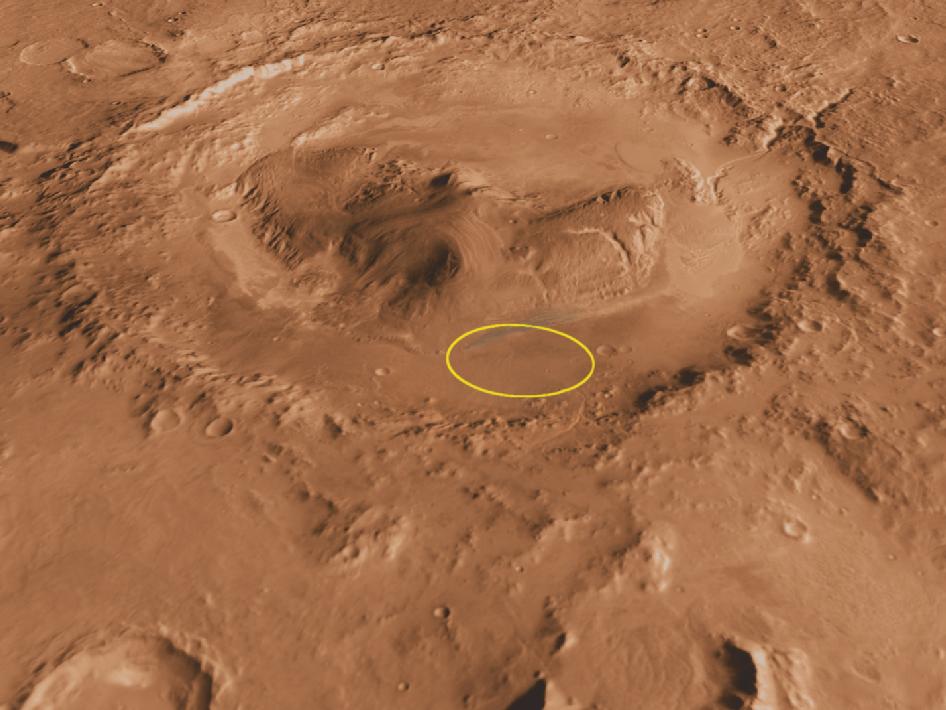
According to a new study, a crater on Mars has experienced extensive floods around 4 billion years ago.
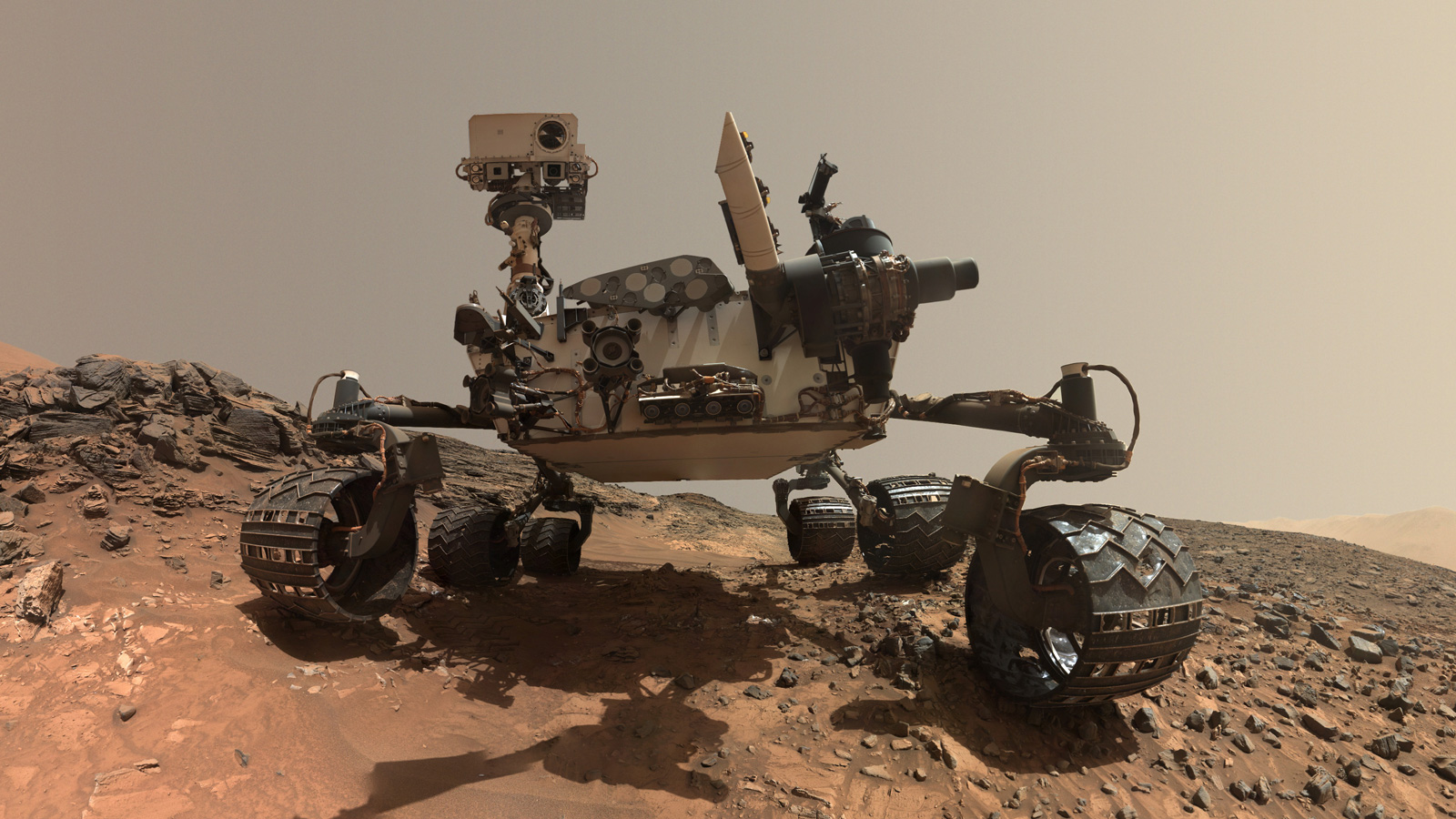
Whether Mars was ever occupied with water and potentially with some primitive types of life is still questioned. However, science has made huge steps to find evidence of the Red Planet's past. NASA has sent the fabled curiosity rover to explore the Gale crater and to provide researchers with new data. Curiosity rover landed on the crater in 2017 and is currently operational collecting more data.
According to scientists from NASA's Jet Propulsion Laboratory, the University of Hawaii and the Jackson State University, Cornell, some of the data retrieved by the rover showed a sedimentary sequence of the crater that suggests large floods occurred within it. “We identified megafloods for the first time using detailed sedimentological data observed by the rover Curiosity. Deposits left behind by megafloods had not been previously identified with orbiter data,” Alberto G. Fairén, co-author of the study and a visiting astrobiologist in the College of Arts and Sciences, stated. The findings were published in early November in Nature Scientific Reports.
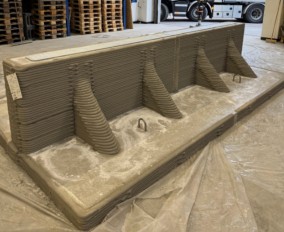
In particular, the team found the existence of antidunes around 9 meters high distanced about 140 meters apart. Antidunes are sedimentary formations that emerge in streams and rivers when the flow of water is supercritical (the flow speed is higher than the wave velocity). Those formations are indicative of large floods.
The research team suggests that the floods may have been caused by a meteor that impacted the terrain and unleashed the ice that existed underground of the Martian surface. The heat transmitted to the ground by the impact probably sublimed the ice which was transformed into water vapor. The impact probably caused a release of carbon dioxide (CO2) and methane (CH4) which along with the water vapor were combined and produced a series of rainfalls that resulted in large floods.
It is probable that those rainfalls impacted the entire planet. However, the duration of this wet period cannot still be quantified yet.
It is crucial to understand that Martian geological processes do not resemble the current ones on Earth. Our planet consists of tectonic plates that shape the surface of the ground. Moreover, erosion processes from which sedimentary formations develop are mainly triggered by water and air action. Those processes have been completely halted on Mars for billions of years, hence, its geological features have frozen in time.
The new question that needs to be answered is whether any type of life (probably microbial) could have been supported on Mars in the aforementioned period. Evidence revealed that there was water on the planet some billion years ago and Mars was capable of hosting some kind of primitive organisms.
Source: Cornell University
Image Gallery
Media
- Curiosity Mars Rover snaps high-resolution panorama in Gale crater
- NASA Jet Propulsion Laboratory
Want to read more like this story?

NASA launches new rover mission to planet Mars: Soil and rock samples will be retrieved and sent back to Earth
Jul, 30, 2020 | NewsOn Thursday, July 30, 2020, NASA launched a rover mission to Mars that will retrieve soil and rock...

New findings about Martian landslides
Oct, 25, 2019 | NewsA new study, published in Nature Communications, reveals new evidence about Martian landslides. Th...

Organic matter found on Mars by Nasa's rover
Jun, 15, 2018 | NewsNasa's Curiosity rover found organic matter buried and preserved in ancient sediments that formed a...

NASA plans to transfer rock and soil samples from Mars to Earth
May, 21, 2018 | NewsNASA is willing to collect and transfer soil and rock samples from Mars to Earth. Their examinati...

New theory on Martian landslides
Feb, 03, 2021 | NewsA new study suggests a theory on the triggering factors of specific Martian landslides. It has been...
Curiosity observations linked to subsurface water flow beneath Martian dunes
Nov, 21, 2025 | NewsResearchers at New York University Abu Dhabi (NYUAD) report evidence that water once moved beneath...

Mega-tsunami generated by an ancient landslide in Mars
Apr, 16, 2020 | NewsAccording to research from the University of Milan “Bicocca” in Italy, a mega-tsunami was generated...

China’s Mars rover confirmed dormant on the Red Planet
Apr, 25, 2023 | NewsChina’s Mars rover, Zhurong, was confirmed to still be dormant on the Red Planet’s surface, after f...

Huge meteor crater discovered in Greenland
Nov, 23, 2018 | NewsGeologists have discovered a massive crater beneath the ice sheet of Greenland. The crater was fo...
On This Day
August 26th 2017
READ MORE
Related Video

Trending

China's Three Gorges Dam under pressure: Flood hazard downstream

Functional requirements of foundation structures


Landslide in Papua New Guinea: At least 12 people dead

Stop Guessing, Start Designing: Introducing Support Designer in Slide2
Development program prepares new engineers for success