
Satellite isotope landscapes reveal how rivers and snowmelt recharge aquifers in cold catchments
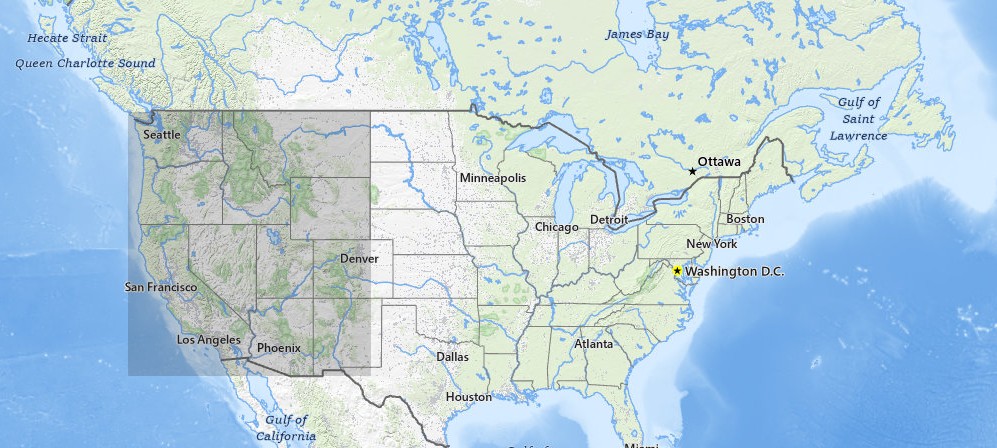
A recent study published in Communications Earth & Environment shows that snowmelt and surface-water systems play a dominant role in recharging groundwater in mountain catchments of the western United States, using innovative “isoscape” methods (spatial isotope mapping) to trace water flows.
Researchers analyzed tritium age-dating and stable isotope signatures of streamflow, snowmelt, and groundwater across 42 mountain catchments. They found that during snowmelt periods, the average age of stream water was 5.7 ± 4.3 years, while groundwater averaged 10.4 ± 4.5 years, indicating that approximately 58% (±34%) of snowmelt runoff was sourced from groundwater storage rather than direct surface flow.
The findings challenge the conventional assumption that snowmelt immediately contributes to runoff. Instead, they show that older stored groundwater mediates streamflow during melt seasons, highlighting the importance of subsurface storage in supporting river systems during dry or warming periods.
Geologic characteristics of the catchments influenced results: low-permeability hard-rock or shale basins exhibited younger water ages, smaller storage, and more efficient streamflow generation, whereas higher-permeability sandstone/clastic basins had older waters, larger storage, and slower flow paths.
The authors argue that for accurate water-resource prediction and planning in snow-dominated mountainous regions, especially under climate change, groundwater dynamics and snowmelt-aquifer coupling must be integrated into hydrologic models. They caution that declining snowpack, shifting melt timing, and warming temperatures will influence both surface water supplies and underlying subsurface storage.
This research underscores the value of isoscapes, maps of isotope distributions in hydrological systems, as a tool for deciphering the hidden pathways of water between snow, rivers, and aquifers. Such insight can guide adaptations in water supply management, particularly in regions where mountain snowmelt supports downstream populations and ecosystems.
Want to read more like this story?
Study presents new insights about the depletion of the world's groundwater storages
Aug, 27, 2020 | NewsAccording to a new study, the vast proportion of groundwater stores has not changed in recent years...

Water storage after fracking related to seismic hazard
Dec, 13, 2018 | NewsNew study shows that the storage of water produced from oil and gas exploitation using hydrauli...

Research finds humans exceed climate as the main driver of Arizona’s groundwater loss
Oct, 17, 2025 | NewsA recently published study indicates that human groundwater extraction in Arizona has become a grea...

Groundwater Project Showcase at Bangladesh Cox's Bazar Refugee Camp
Nov, 18, 2022 | NewsJo Knight from Seequent and Geraint Burrows from Groundwater Relief, presented a very interesti...

Video: Do Changes in Groundwater Levels Affect Streamflow?
May, 14, 2015 | NewsIn the Buffalo National River, somebody can hear the running water and the next minute the wate...

How to Perform Dewatering in PLAXIS
Jun, 11, 2021 | NewsThe problem of changing water conditions is omnipresent in geotechnical engineering. Groundwater is...

The Rising Threat of Groundwater Flooding: Risks and GeoEngineering Solutions
Feb, 28, 2025 | NewsGroundwater flooding is an often-overlooked hazard, but as climate change intensifies, its risks ar...

California is sinking
Aug, 26, 2015 | NewsCalifornia enters the fifth year of a drought and more and more water is pumped from the aquifer....

Riverton Redevelopment Groundwater Treatment Project of the Year Award
Feb, 11, 2025 | NewsKeller received the 2024 Groundwater Treatment Project of the Year award from The Dewatering Instit...
On This Day
August 13th 1868
READ MORE
Related Video

Trending
Seven Frequently Asked Questions about Helical Piles

Block caving: A new mining method arises

Categories of isolated foundation footings
Maharashtra's longest road tunnel to be completed soon

Carnian Pluvial Episode: That time when it rained for 1-2 million years
Nepal’s Himalayan settlements face escalating flood and landslide threats