
Rock Mass Classification Systems: A Global Review of Use and Dominant Approaches
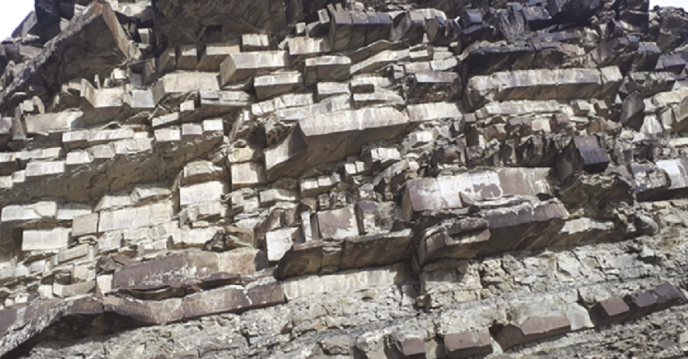


- The Q-System was introduced in the 1970s by Barton et al. and is widely used in tunnelling design. It relies on six input parameters including rock quality designation (RQD), joint set number, joint roughness, joint alteration, water conditions, and stress reduction factor. By combining these values into a quantitative index, the Q-system provides a reliable measure of the rock mass’s overall quality. It is particularly well-suited for determining support requirements in underground excavations.
- Rock Mass Rating (RMR), developed by Bieniawski in 1973, also uses six parameters, including RQD, joint spacing, joint condition, groundwater conditions, and orientation of discontinuities. RMR provides a numerical rating of the rock mass that can be correlated to suitable support types and excavation methods. The system is used in a variety of applications, with applications ranging from tunnels to foundations and slopes.
- The Geological Strength Index (GSI) was introduced by Hoek and Brown in 1997 as a more qualitative approach. Unlike the Q-system and RMR, GSI is primarily based on visual assessments of rock structure and surface conditions. It serves as an input for the Hoek-Brown failure criterion and is widely used in both slope stability analysis and underground design. GSI is designed to be adaptable and suitable for situations where detailed measurements are not available.


Sources: tunnelsandtunnelling.com, researchgate.net, tu-freiberg.de, civilblog.org
Want to read more like this story?
Rock Mass Characterization
Mar, 18, 2020 | EducationRock mass is a matrix consisting of rock material and rock discontinuities. Its characterization...

A Legacy Carved in Stone: Celebrating the Life and Work of Dr. Evert Hoek
Mar, 04, 2025 | NewsDr. Evert Hoek (1933-2024), a name synonymous with rock mechanics and rock engineering, passed away...
Principal Considerations in Rock Engineering Practice and Contributions from Africa
Nov, 10, 2022 | NewsIn the Introduction to this paper, many names are mentioned of those with African origins or associ...

Mecrocce3
Apr, 14, 2021 | Software
How RS2 Validated the Tunnel Support Design of the Jakarta-Bandung Railway
Aug, 19, 2024 | NewsWhen it comes to tunnel support design in complex terrains, empirical methods alone are often not e...
CLASROCK
Jun, 13, 2023 | Software
PLAXIS for Deep Underground Excavation in Rock Mass
Mar, 01, 2022 | NewsRock at depth is subjected to stresses resulting from the weight of the overlying strata and from l...

How to Model Rock Engineering Problems in PLAXIS Geotechnical Analysis Software
Jan, 21, 2022 | NewsRock engineering projects can be fascinating. Engineers working on rock need to design solutions th...

Rock Your Underground Construction With PLAXIS
Jun, 24, 2024 | NewsUnderground construction is a complex endeavour. Leveraging rock masses as engineering materials...
On This Day
August 7th 1927
READ MORE
Related Video

Trending

Dubai approves $9.2bn fully underground gold line metro

How to prevent copper wire theft from light poles
The quicksand of Morecambe Bay

Model Structures and Visualize Structural Forces
Rapid Drawdown in Dam and Levee Design: A Hydrogeologic Perspective in Slide2
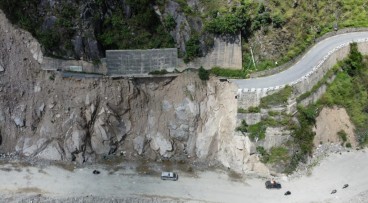
Nepal’s Himalayan settlements face escalating flood and landslide threats