Evaluating the Efficiency of Room and Pillar Mining in Greece using RS3 Sponsored
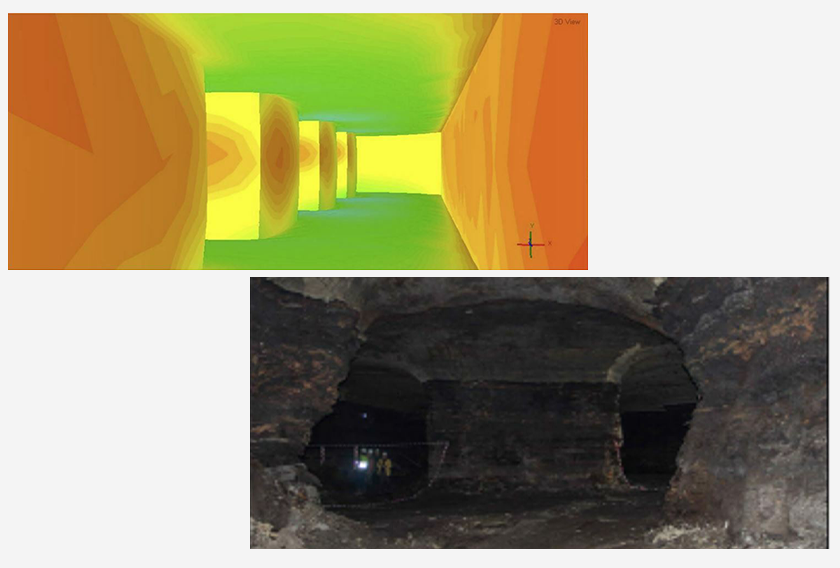
Underground mining of unexploited coal reserves is on the rise in Greece, due to its heavy dependency on lignite resources for electricity. The room and pillar approach for underground mining is a conventional method that follows material extractions by creating horizontal arrays of rooms while the pillars remain untouched to support the roof overburden. This method can be economical and effective, but its implementation depends on its stability, which should be evaluated through detailed stress analysis and rock mass characterization.
This study evaluated the feasibility of the room and pillar method for a pilot-scale underground coal mine project in Northern Greece. For a comprehensive 3D numerical analysis, RS3's 3D Finite Element Analysis (FEA) was used. To optimize the design and mining operations, the excavation stages were modeled in RS3 and the stability conditions of the mine were analyzed. The findings were further compared to the actual excavation responses to verify the accuracy of RS3’s 3D modeling and analysis capabilities.
The Unexplored Coal Reservoir Underneath Prosilio Open Pit Mine
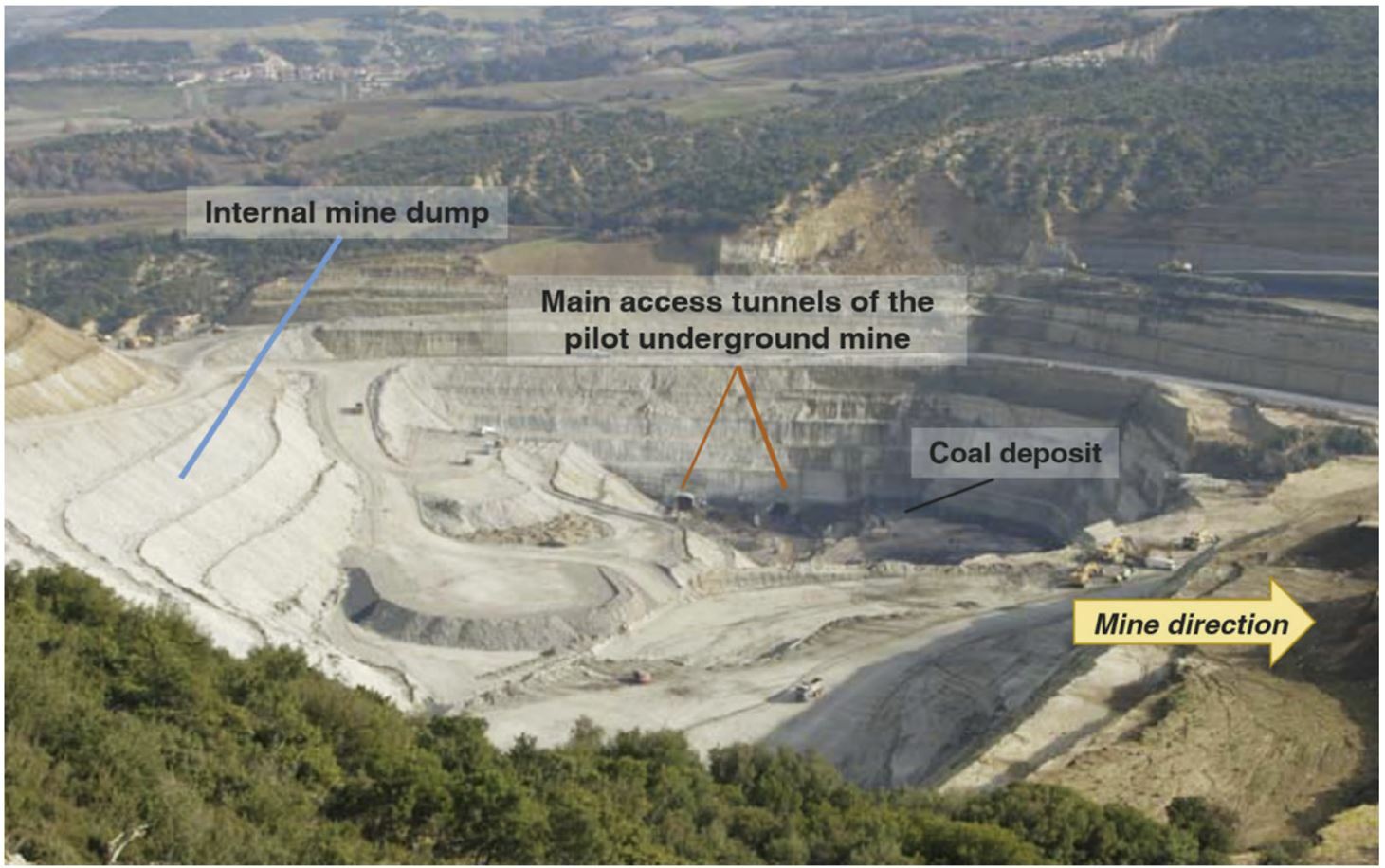
The Prosilio mine site in northwestern Greece, consisted of an unexploited reserve that had about a 5.5m thick coal strata layer which was of a good calorific value, and superior in quality to other lignite deposits in the area.
Initially, exploitation of the mine started with an open pit excavation, but to maximize coal extraction and investigate further potential of this underground coal body, the coal deposit extracted directly from the pit bottom seemed like an ideal approach for this project.
Mine Design: Understanding pillar performance through 3D Finite Element Analysis (FEA)
The aim of this analysis was to evaluate the effectiveness of the room and pillar mine design by analyzing the pillar performance and support requirements using RS3.
When it comes to safe and economical room and pillar mining, defining the right coal pillar dimensions is the key to maintaining stability during excavation. In this case, RS3 was used to accurately capture the strength characteristics of rock mass in the Prosilio exploitation, while providing pillar design recommendations.
Model creation and RS3’s 3D numerical analysis
- Information on geotechnical properties including coal orebody and the surrounding strata was collected from previous investigation records.
- The rock mass found in the area consisted of brown coal orebody (5.7 m thick) and marl formation in the hanging wall and footwall.
- Geotechnical properties (Table 1) selected for this analysis were based on field observations and lab testing of the Prosilio mine.
- Mohr-Coulomb failure criterion was used to describe the behaviour of both lignite and marl
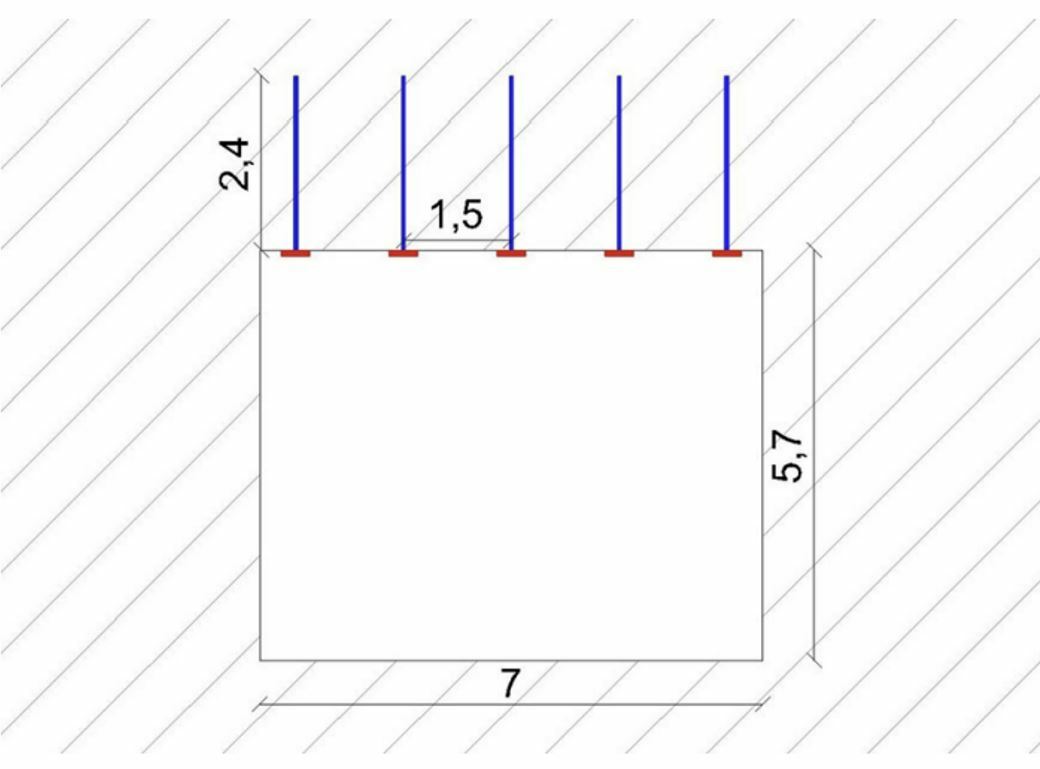
- Two primary access tunnels (X1, X2) were designed through which the main part of the pilot mining would be developed.
- This included two additional galleries (Z1, Z2) parallel to the main access tunnels and four horizontal cross-cuts (Z1, Z2, Z3 and Z4) that eventually developed a total of nine coal pillars (shown in Figure 2.)
Table 1: Rock mass geotechnical parameters
Depth | σci (MPa) | mi | Ei (MPa) | GSI | c (MPa) | Φ (ο) | |
Upper marl | 55 | 3.3 | 7 | 450 | 70 | 0.18 | 37 |
Middle marl | 10 | 3.3 | 7 | 450 | 60 | 0.14 | 34 |
Lignite | 5.70 | 5.3 | 20 | 380 | 75 | 0.25 | 53 |
Lower marl | 30 | 3.3 | 7 | 450 | 60 | 0.14 | 34 |
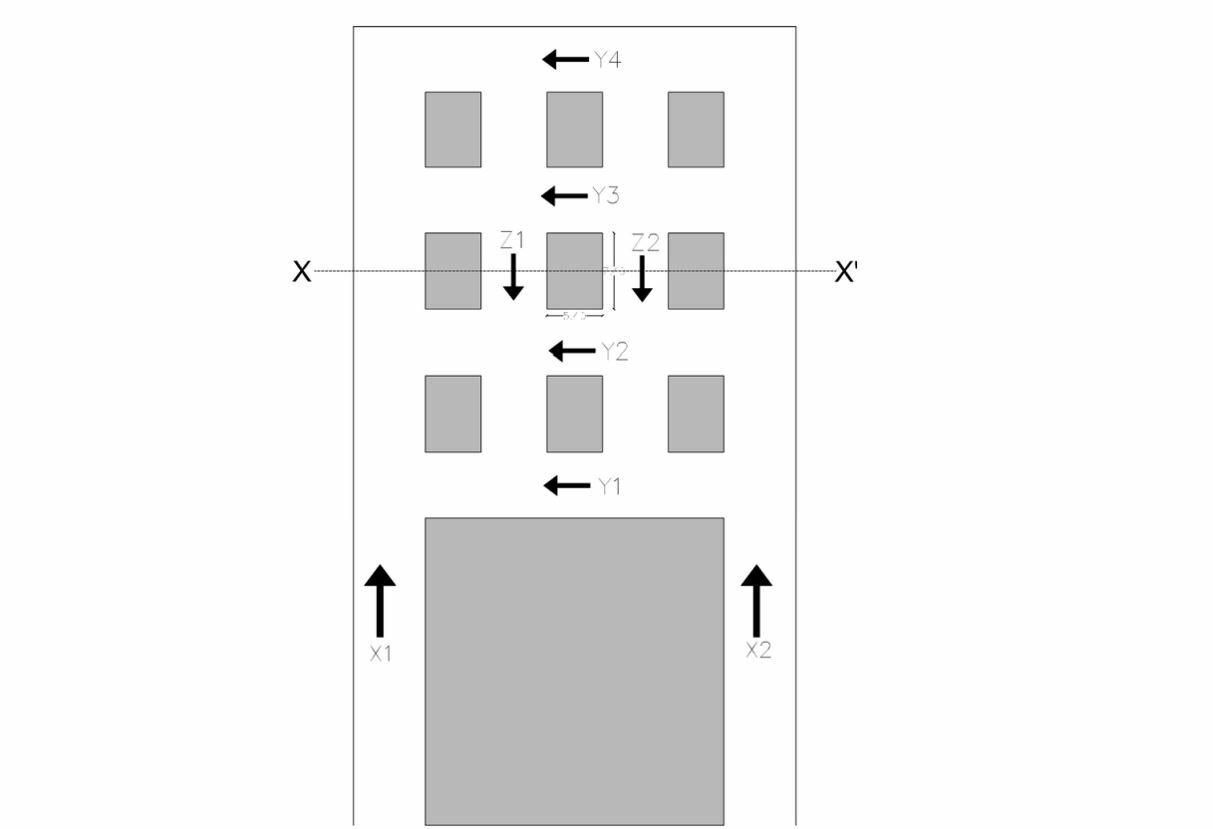
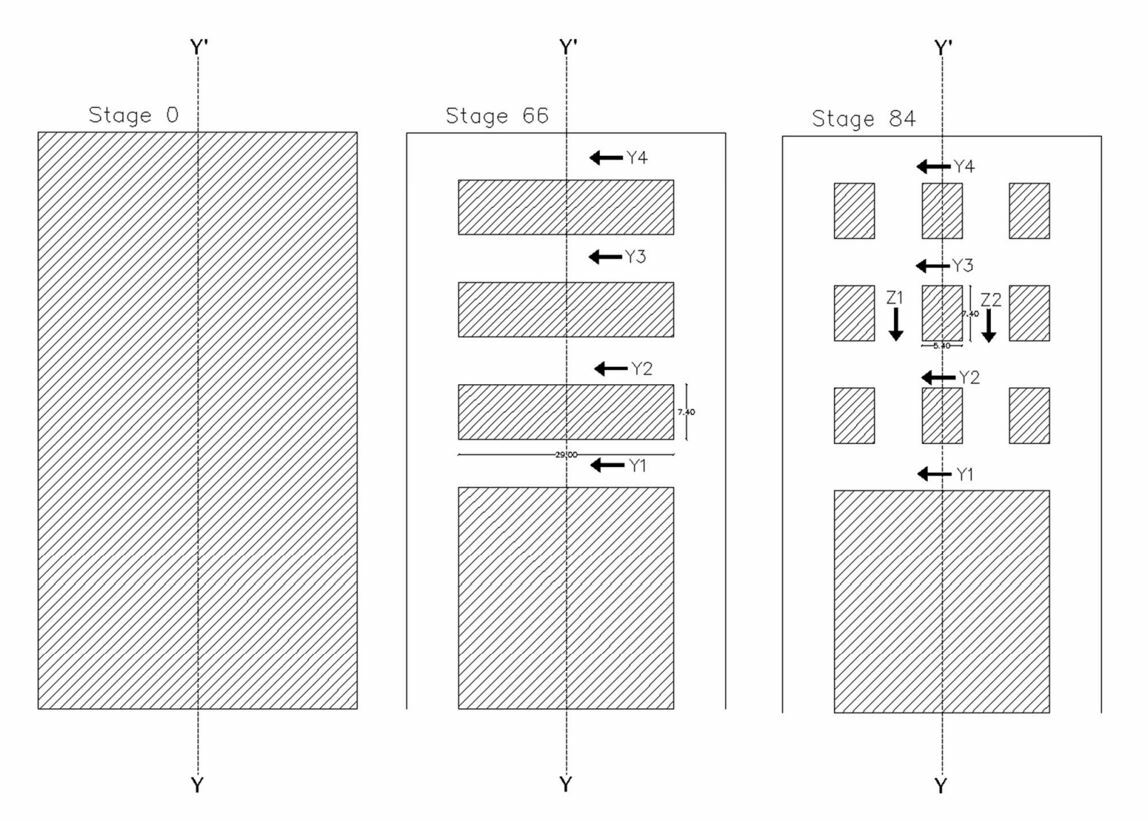
84 excavation stages including the complete layout, dimensions, and roof reinforcements, were defined in the program. Then, the main tunnel access entries (X1 and X2) were simultaneously excavated, followed by the stopes Y1-Y4 and Z1-Z2 (shown in Figure 4).
What were their insights?
- A good agreement was found between the results of the FEA analysis and the actual measurements of the mine (pillar loading, effective stress at different stages of excavations, etc.).
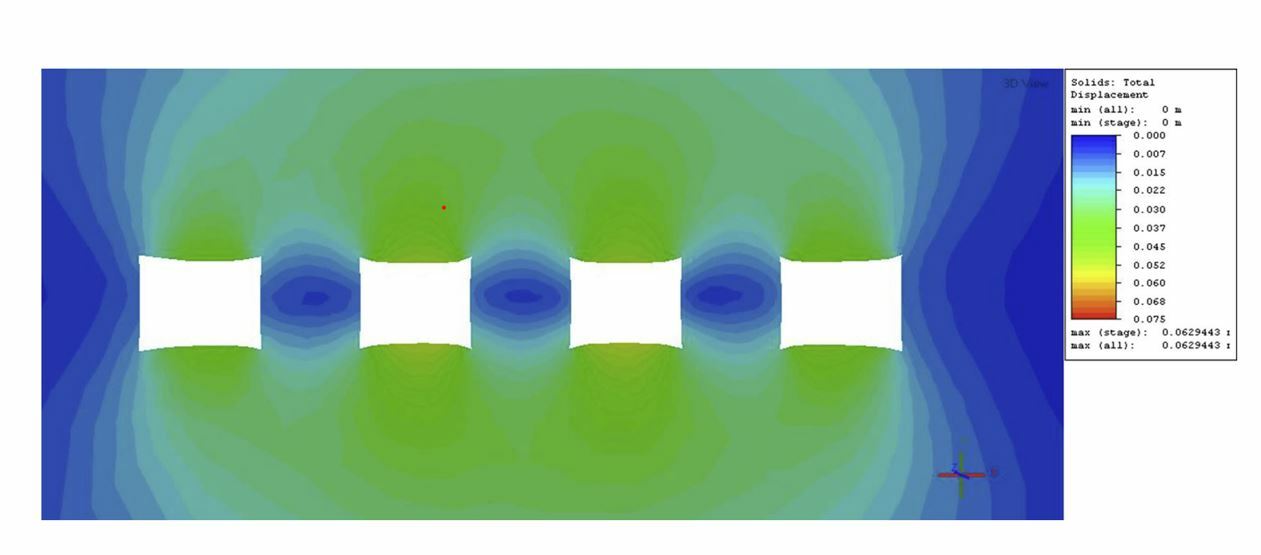
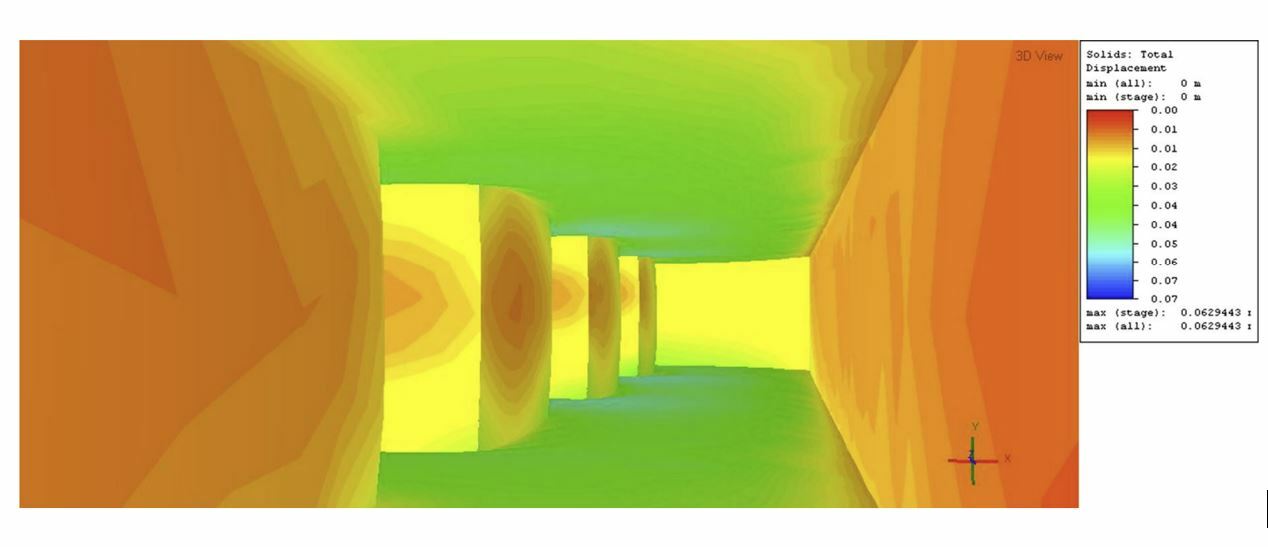
- The finite element analysis showed maximum displacement values in the middle of the excavated rooms and the centre of the mine, ranging from 50 mm to 70 mm.
- The roof displacements seemed to have lower values (40 mm) at the main access of rooms (X1 and X2) and the back of the mine (Y4).
- Both FEA and field observation showed similar pillars deformation in three main axes.
- Finite Element Analysis also confirmed that the overall stability of pillars and their responses to overburden loads were sufficient, which was verified by the actual performance of the pillars.
- Failure in pillars were observed when less number of rock bolts were used in numerical modeling.
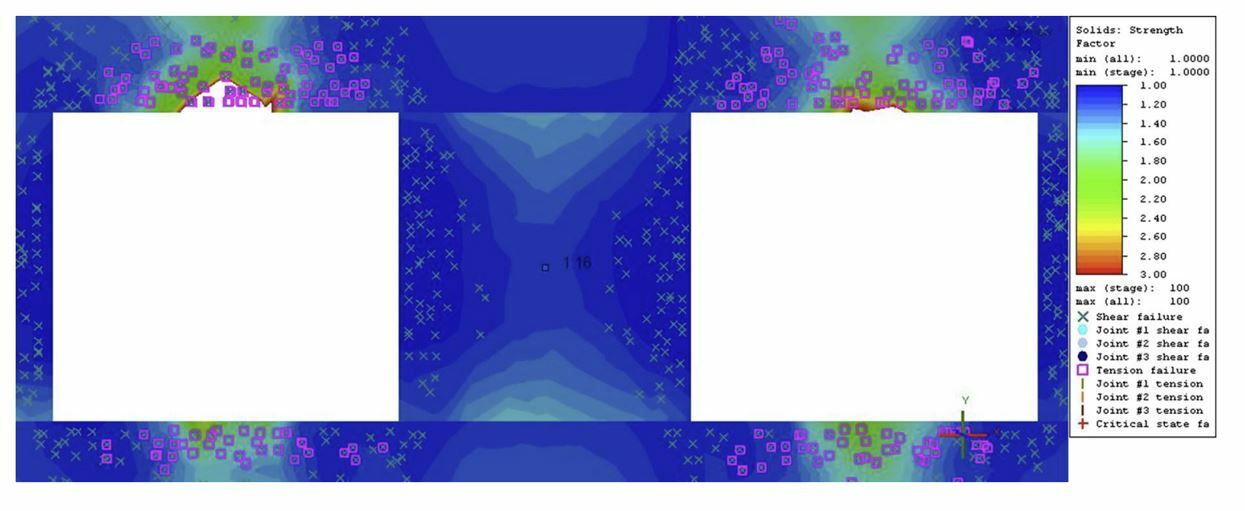
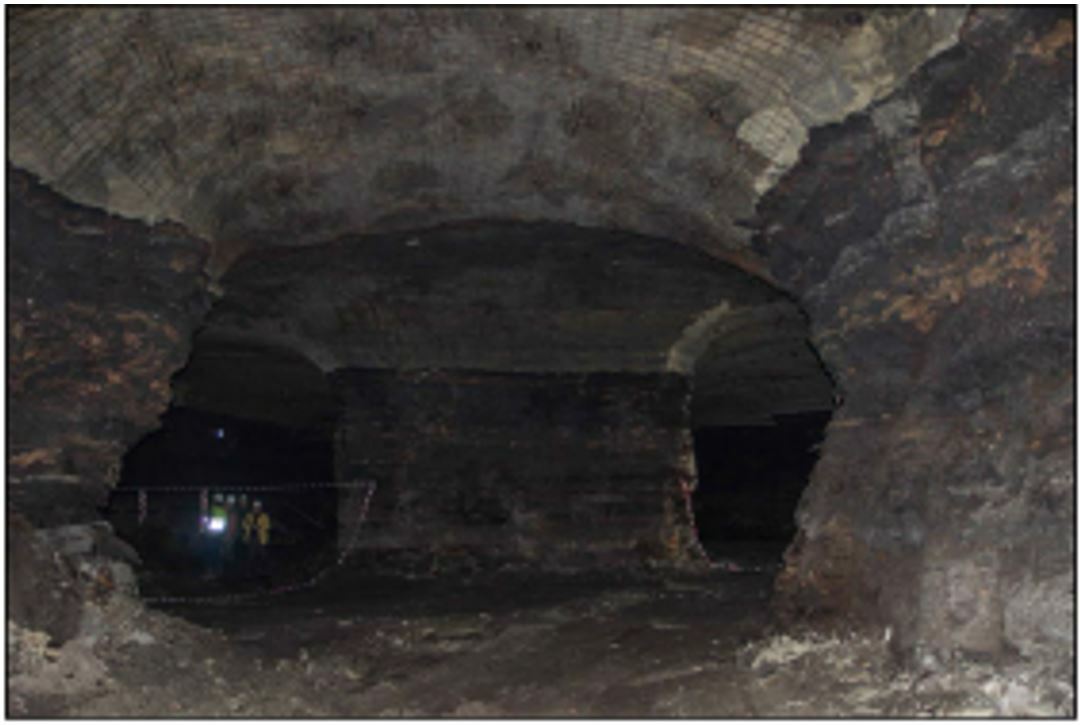
- During the underground mining period, limited cracking was observed at the excavation’s corners as a result of local shear failures. Furthermore, at the main body of two pillars, a limited surficial spalling was observed, as it was seen in the 3D analysis at the yielded areas of the pillars.
Note: The figures below present the total displacement (Figures 5-8), strength factor and failure zones around the excavation (Figure 8) calculated by RS3.
The takeaway from RS3’s Finite Element Analysis of Prosilio Underground Exploitation
RS3’s Finite Element Analysis (FEA) was helpful in evaluating the stability conditions of the Prosilio room and pillar pilot mining project. When combined with field observations, FEA reached a good agreement with the actual conditions of the underground exploitation by accurately capturing the excavation responses.
In conclusion, RS3 played an important role in helping engineers reduce the risk of structural failure and ensure a successful mine excavation while using an efficient mining method like the room and pillar approach.
For more details about this interesting project, read the complete paper.
RS3's 3D Finite Element Analysis
Understand the needs of your underground mining projects and make more informed decisions with in-depth 3D Finite Element analysis!
Start a Free Trial of RS3Want to read more like this story?
S-Pillar - Software for Stone Mine Pillar Design
Sep, 18, 2023 | Software
3D Finite Element Analysis of a Deep Excavation & Ground Response Evaluation
Jun, 13, 2022 | NewsSignificant ground movements due to deep surface excavations can seriously impact neighbouring infr...

RS3
Oct, 02, 2020 | SoftwareARMPS - Analysis of Retreat Mining Pillar Stability
Sep, 18, 2023 | SoftwareGround Control Software Toolbar
Sep, 18, 2023 | Software
How Geotech’s can overcome time crunch: UAV Photogrammetry and 3D LEM Analysis
Aug, 23, 2022 | NewsWhen it comes to open pit mines, generally, the steeper the slopes, the greater the ore extraction,...

3D Finite Element Analysis of a Contiguous Pile Wall
Sep, 13, 2021 | NewsBy Ian Williams, Ph.D. Introduction This article provides a brief summary of a 3D finite eleme...
ACPS
Sep, 18, 2023 | Software
Rocscience | Geotechnical Software for Open Pit Mining
Aug, 22, 2022 | NewsSurface mining, whether you call it open pit, opencast, or open cut is a common method of extractin...
Form
Looking for more information? Fill in the form and we will contact Rocscience Inc. for you.
On This Day
August 13th 1916
READ MORE
Related Video

Trending
Active landslide threatens long-term connectivity in southern Bulgaria


PLAXIS example: Westergaard's added mass for hydrodynamic pressures

Rock Mass Classification Systems: A Global Review of Use and Dominant Approaches

How does the Leaning Tower of Pisa survive earthquakes
Tailrace tunnel breakthrough advances Australia’s largest renewable project

A Legacy of Leadership, Mentorship & Service: Gary L. Seider P.E.