Advancing Tunnel Sustainability with Fibre-Reinforced Shotcrete
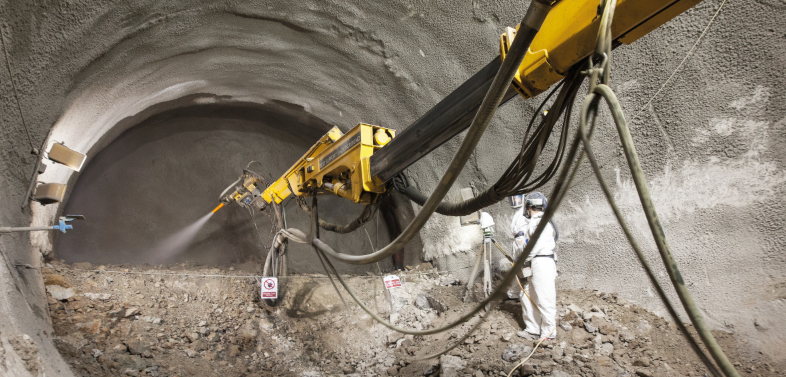
Recent advancements in sprayed fibre-reinforced concrete (SFRC) technology are reshaping the way tunnels are designed and constructed. With nearly 70% of a tunnel’s embodied carbon coming from concrete linings, a transition from traditional cast-in-place (CIP) methods to Permanent Sprayed Concrete Linings (PSCL) offers a significant step forward in reducing environmental impact.
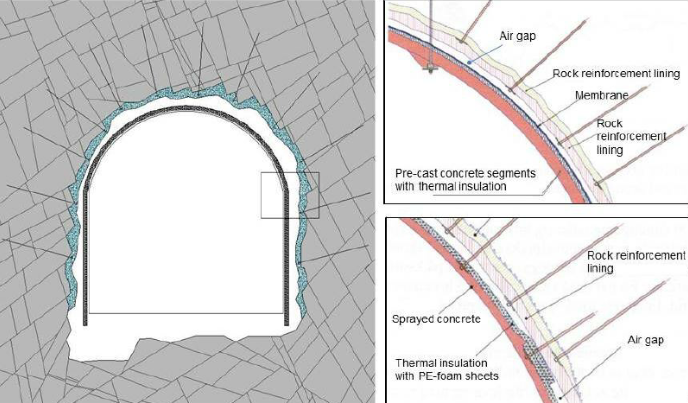
By adopting PSCL which is also known as the Single Shell Method, tunnel projects can reduce material-related CO₂ emissions by up to 75%. This approach eliminates the need for a separate permanent CIP layer and replaces conventional steel reinforcement with high-performance steel fibres, reducing concrete volume, reinforcing steel, and overall construction time. The result is a lighter, more sustainable structure that maintains high mechanical strength and long-term durability.
To ensure the structural reliability of fibre-reinforced sprayed concrete, testing standards have evolved alongside the technology. The EN 14488-3 Method B now provides an improved approach to determining residual strength through three-point bending tests on sprayed panels rather than cut beams.
Studies conducted by the Universitat Politècnica de Catalunya (UPC) demonstrated that sprayed panels reinforced with 40 kg/m³ of Dramix 4D 65/35BG steel fibres achieved strength class 3c with lower variability compared to traditional cast beams. Further research presented by CETU highlighted that strength class 4c can be achieved using advanced high-tensile fibres. This development confirms that PSCL can meet both service and ultimate limit states required for long-term tunnel support.
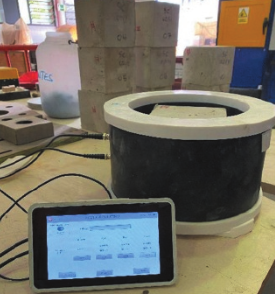
Modern SFRC systems now integrate digital quality assurance tools such as the eyeD® Inspector, an inductive device that measures steel fibre content and orientation in situ. This allows for more accurate verification of fibre distribution before large-scale applications.
Steel remains the most recycled material worldwide, and the use of remelted fibres enhances sustainability while avoiding microplastic pollution associated with polymer fibres. With governments increasingly banning plastic-based reinforcement, the use of steel fibre reinforced shotcrete aligns with new environmental standards and circular economy principles.
Sources: tunnelsandtunnelling.com, researchgate.net, tunnel-online
Want to read more like this story?
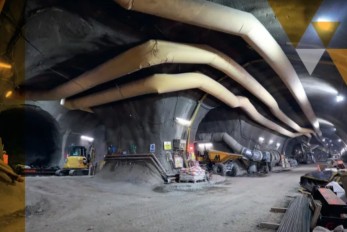
New sprayed concrete lining guide reshapes soft-ground tunnelling standards after decades of lessons
May, 03, 2026 | NewsThe publication of a new best-practice design guide for sprayed concrete linings (SCL) in soft groun...

BETONexpress
Oct, 15, 2013 | Software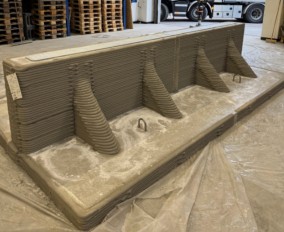
3D printed concrete sleepers to support Teesside carbon capture pipeline
Apr, 29, 2026 | NewsA major carbon capture project in Teesside is set to use 3D-printed concrete components to support p...

I-70 twin tunnels to be lined with concrete
Sep, 17, 2014 | NewsThe Colorado Department of Trasportation is going to line the I-70 twin tunnels, near Idaho Springs&...

Tunneling
Apr, 24, 2020 | EducationA tunnel is an underground structure which is constructed through the surrounding mass of soil or...

PLAXIS 2D – Traditional Tunnelling Method: Application Of MTM
Jun, 05, 2024 | NewsThe Traditional Method of Madrid is a method for tunnel construction that has been used for tunnell...

The PLAXIS Tunnel Engineer’s Toolbox: Everything You Will Need In One Place
Jun, 28, 2024 | NewsPLAXIS offers a wide range of tools to the Tunnel Engineer, which can be combined to generate almos...
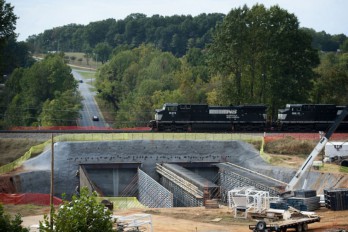
$7million concrete tunnel under railroad lines at Liberty University, Lynchburg, Va.
Feb, 13, 2014 | NewsThe four-lane tunnel is constructed under the active Northern Southern Railroad Tracks - also u...

Bentley Webinar | Modeling With Tunnel Designer in PLAXIS 2D & 3D
Mar, 21, 2023 | EventTunnels are created to make it easier to navigate through challenging topographical and geological...
On This Day
August 10th 1856
READ MORE
Related Video

Trending

New crustal stress map of North America

Using Terzaghi’s Equation in Foundation Design

Parameters Variation: Model Customization and Sensitivity Analyses

UK geothermal projects expand from Cornwall power to Birmingham heating

A Legacy of Leadership, Mentorship & Service: Gary L. Seider P.E.
Inter Helix Spacing: A Historical and Technical Review