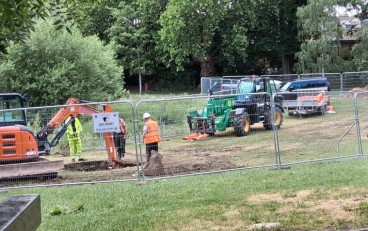
Panama Canal Expansion - Jan De Nul NV
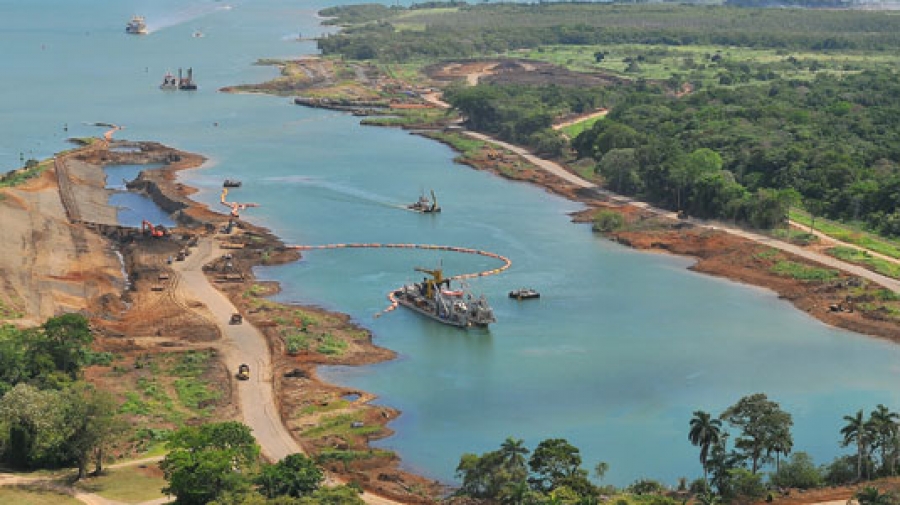
The price for dredging projects is calculated according to the type and volume of material as well as whether the material is below or above sea level. The ability to calculate accurate material volumes is advantageous when competing for projects awarded to the lowest bidder, which was the case here.
For these projects there are more than 10 different types of materials and methods of removal. Jan De Nul used gINT to store and analyze geological data and then used MXROAD to build 3D models of the material profiles. This enabled the group to calculate accurate volumes for each type of material that had to be removed. The 3D models were also used on site for machine control.
Want to read more like this story?
Material Reuse
Jun, 05, 2019 | EducationOne of the main targets of worldwide environmental policies is to reduce landfilled waste volumes....

Material Reuse through geoBIM at HS2 Phase 1 – Area North Earthworks: Winner of Bentley Systems Going Digital Awards on Geotechnical Engineering
Nov, 24, 2022 | NewsThe 90-kilometer HS2 Phase 1 rail route has approximately 25 million cubic meters of material ear...

Engineering new materials to replace diamonds for drilling
Aug, 02, 2019 | NewsDiamond drilling was a break-through approach mostly used in mining industry to exploit deposits th...

Leapfrog Works
Dec, 29, 2022 | Software
GeoStudio 2022.1 new release is here!
Oct, 27, 2022 | NewsIn the latest GeoStudio version, you’ll notice improvements to speed up your geotechnical 3D workfl...

New major release PLAXIS CONNECT Edition V22.00 is out!
Jan, 28, 2022 | NewsPLAXIS V22 brings a major overhaul to the data structure of the material database and a more flexib...

Introducing RSData - Material Models Made Easy
Dec, 21, 2020 | NewsIntroducing the newly revamped program, RSData. Formerly know as RocData, RSData is Rocscience’...

How to create 3D dykes using SOIVISION 3D extrusion tools
Sep, 04, 2020 | NewsAdvanced 3D tools such as SVDESIGNER offer a lot of power to the user, but such power is not alw...

3D Terrain Model Supports the City of Coatesville’s Brownfield Redevelopment Planning
Aug, 22, 2017 | NewsCEDARVILLE Engineering Group (CEDARVILLE) was tasked to provide 3D design and conceptual planning se...
On This Day
August 11th 1988
READ MORE
Related Video

Trending

Life after gINT - Rethinking geotechnical data management for a new era

Is Africa gradually splitting into two sections?
Stop Guessing, Start Designing: Introducing Support Designer in Slide2

Alert level is raised in Mexico as the Popocatépetl volcano spews ash and gas
Deadly mining landslide in Central African Republic raises safety concerns