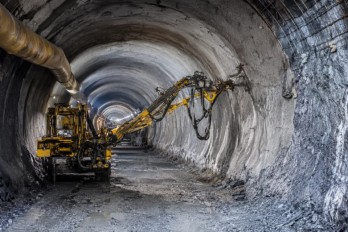
Maximize your gINT and HoleBASE SI Geotechnical Data Archive by Keynetix Sponsored

Companies often believe their historic project knowledge gives them competitive advantage but, at the same time, make it difficult for staff to access and use that information.
The availability of Digital Mapping data has advanced considerably in the last 10 years, and the speed of change is getting faster every year. These changes have given geotechnical companies a fantastic opportunity to make their data archive spatially aware and far more useful (and allows me to indulge in my love of Maps!)
Fortunately, there are five simple steps that can be taken to ensure the maximum benefit is gained from this valuable resource.
Step 1: Centralize knowledge
Step 2: Ensure teams are spatially aware
Step 3: Include the most important information on the map
Step 4: Remove the concept of a geotechnical archive to improve desk studies
Step 5: Ensure easy access and no learning curve
Read full article here
Source: Keynetix
Want to read more like this story?
Other Geotechnical
Jun, 04, 2019 | Education

Data-rich, insight-poor? It’s time to tame your geotechnical data chaos
May, 20, 2026 | NewsIn ground engineering, we have never generated more data. Advanced investigation techniques are crea...

Bentley’s OpenGround Cloud Platform: Increase the Value of your Geotechnical Data
Jul, 21, 2020 | NewsOpenGround Cloud, Bentley's secure enterprise cloud collaboration platform for geotechnical data ma...

The Evolution of Geotechnical Information Management: Why Cloud-Based Management is Growing Fast
Apr, 05, 2022 | NewsAll earth scientists know the geological time scale. From the Archean era of the Earth’s formation...

Mitigating Risk: Disparate Data in the Mining Industry
Aug, 12, 2024 | NewsWith operations often spread across various locations and the involvement of multiple teams, data c...

Going digital: US Army Corps of Engineers turns $500k into $500m data asset
Mar, 05, 2025 | NewsDataforensics unlocked incredible value for the US Army Corps of Engineers by moving subsurface dat...

Life after gINT - Rethinking geotechnical data management for a new era
Mar, 26, 2026 | NewsA turning point for the industry gINT has long been the backbone of geotechnical data management....

Keynetix Release Standalone Data Entry Module for HoleBASE SI
Apr, 04, 2014 | NewsKeynetix are pleased to announce the release of the Data Entry Tool and standalone Data Entry Module...

ACCELERATE: Your Digital Geotechnical Data Journey
Aug, 14, 2020 | EventManaging and accessing current and historical geotechnical data plays an integral part of geotechni...
Form
Looking for more information? Fill in the form and we will contact Bentley for you. Alternatively, you can visit Bentley's website and speak with a Bentley Geotechnical Expert.
On This Day
August 12th 1978
READ MORE
Related Video

Trending

Scripting Comes to RS3: Automate, Customize, and Accelerate Your 3D Modelling

2D and 3D Analysis of Retaining Systems

Mine waste dam failure in Myanmar caught on video

Chesapeake Bay Bridge-Tunnel: An ‘engineering wonder’ of the modern world

Major earthquake in southern Philippines causes deaths and widespread damage

Port of Tilbury demonstrates hydrogen as diesel alternative