10,000 homes could be damaged by earthquake-induced landslides in Wellington, NZ
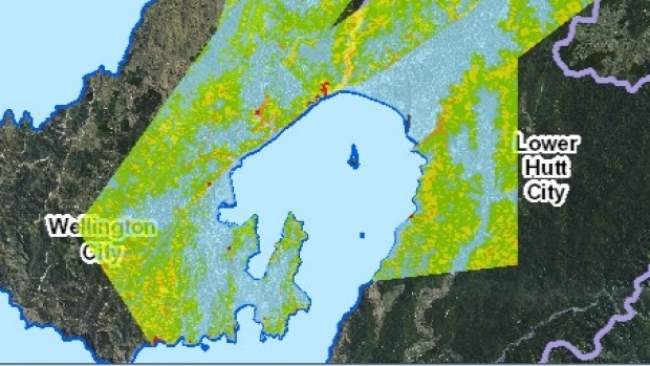
Up to 10,000 houses of Wellington, New Zealand are threatened by damage due to landslides, if a big quake strikes the region, according to QuakeCoRE, New Zealand's centre for earthquake resilience.
Brendon Bradley, deputy director at QuakeCoRE, estimated that approximately 30,000 Wellington homes lay on hilly ground, and up to 10,000 could expect damage from landslides triggered by earthquakes.
Damage would vary, according to Mr. Bradley, as some houses may just sink a bit, causing the floor to tilt by two or three degrees, while others may drop substantially, or be hit by slips from above. He also stated that the parts of Wellington's hilly terrain that are man-made, such as houses built on flattened hillside sections or roads where the hillside had been cut into, are much more susceptible to landslides.
The danger posed by earthquake–induced landslides in Wellington has also been highlighted by the GNS Science Research Institute. The institute recorded 70 slides across the Wellington region the day after the 7.8 Magnitude Kaikoura Earthquake in November 2016, following heavy rains.
With most of Wellington's hills being between 200m and 400m high, the slips would probably resemble the one seen in the suburb of Kingston after Cyclone Debbie hit this month. That slip, pictured in the following photo, was about 150m long and 40m wide, and forced the temporary evacuation of three homes. But an earthquake-induced landslide could be even bigger compared to ones caused by rain, according to GNS engineering geologist, Sally Dellow.

The damage to Kaikoura's roads after the November 2016 earthquake indicates that Wellington's Ngauranga Gorge and Rimutaka Hill road are also at risk from landslides, with the size and clean up time dependent on the size of the quake. According to New Zealand Transport Agency Wellington highways manager, Neil Walker, the agency was investigating the stability of the Ngauranga Gorge, and expected to complete stabilisation improvements within two years. Roads around Wellington are also being looked at.
The Wellington City Council appears keen to invest in solutions, like retaining walls, but needs to gather more information on at-risk slopes to figure out where best to spend its money, according to its chief official.
A research project to evaluate Wellington's modified slopes is already under way, according to Sally Dellow, but it will take an extra funding of 5$ million for the project to be completed in 4 years.
Source: Stuff.co.nz
Nearby News
Want to read more like this story?

Wellington CBD road: landslide block part of the road - 12 homes evacuated
Aug, 08, 2022 | NewsTwelve households have been evacuated after a landslide blocked part of The Terrace in central Well...

Earthquakes triggered by landslides
Jul, 02, 2020 | NewsIt is widely known that earthquakes can trigger disastrous landslides but, what about the opposite?...
Landslides
Oct, 31, 2019 | Education

Deep landslides triggered by the 1964 Alaska earthquake were not re-activated in the 2018 Anchorage earthquake
Oct, 29, 2019 | NewsAccording to a new study, published in Seismological Research Letters, the deep landslides that wer...

Massive earthquake struck off the coast of New Zealand
Jun, 18, 2020 | NewsA M 7.4 earthquake struck off the coast of New Zealand raising concerns about a potential tsunami....

New study shows 16 earthquakes were triggered by landslide
Jan, 06, 2014 | NewsThe landslide at the Bingham Canyon copper mine that occurred last April, near Salt Lake City in Uta...

Shallow, Magnitude 5.9 earthquake triggers landslides and damages infrastructure in Cephalonia, Greece
Jan, 26, 2014 | NewsAccording to the Athens Geodynamic Institute, a 5.9 magnitude earthquake struck the island...

Two powerful earthquakes hit China: Reports of 3 people dead
May, 21, 2021 | NewsTwo separate, strong earthquakes that struck in China have resulted in, at least, 3 fatalities. The...
Landslide and liquefaction mapping becomes critical after major quakes
Jun, 29, 2026 | NewsRecent major earthquakes in Venezuela and the southern Philippines have highlighted an important les...
On This Day
August 11th 1979
READ MORE
Related Video

Trending

Tiebacks vs. soil nails: Choosing the right earth retention solution
When Dams Fail: The Growing Crisis of Tailings Management

Mexico City’s sinking crisis mapped by next-generation satellite
Landslide in Northern Peru Forces Evacuation of Over 170 Residents
Sinkhole outside home in Huntington Station, on Long Island: 3 fall into
Deadly mining landslide in Central African Republic raises safety concerns