Events



Webinars

WEBINAR EN VIVO Monitoreo de vibraciones producto de voladuras: protección de la infraestructura minera crítica y las comunidades cercanas
Las voladuras durante las actividades mineras pueden tener impactos significativos en la infraestructura minera crítica e incluso en las comunidades cercanas. Los impactos pueden incluir daños estru...
Read More
Part 4: Optimizing Predicted Soldier Pile Wall Displacements in PLAXIS: DRS Engineering’s Smart Choices for Cost-Effective Results
- Webinar Earth Retaining Structures Deep Excavations Numerical & Constitutive Modeling Visualization
- Authored by: Geoengineer.org
Soldier pile-supported excavation is a standard practice in geotechnical engineering, but the focus remains on conducting faster analyses and minimizing material usage, such as steel piles, timber, a...
Read More
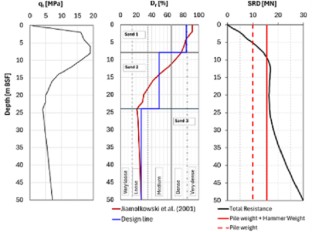
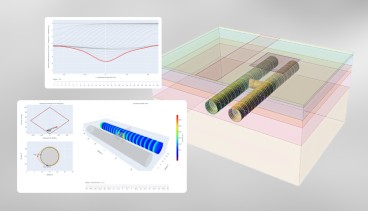
Coffee Corner: Geotechnical Analysis - Engineering Monopiles: Smarter design with PLAXIS Monopile Designer
- Webinar Offshore Geotechnics Energy Geotechnics Pile Foundations Numerical & Constitutive Modeling
- Authored by: Geoengineer.org
PLAXIS 3D, combined with PLAXIS Monopile Designer, empowers engineers to model complex soil-structure interaction and deliver optimized monopile designs that meet both performance and safety standard...
Read More
Subsurface Informed Infrastructure Series: Subsurface data management and 3D modelling
- Webinar Visualization Site Characterization & In-Situ Testing (General) Data Management
- Authored by: Geoengineer.org
Join us for an online workshop where you'll learn how Seequent solutions can enable your team to connect, integrate, visualize, evaluate, and share geoscience data throughout your entire ground inves...
Read More
Part 3: Thurber Engineering: Design and Optimization of an Anchor-Shotcrete System using PLAXIS 2D and 3D
- Webinar Mechanically Stabilized Earth (Mse) Walls Earth Retaining Structures Numerical & Constitutive Modeling Slope Stability
- Authored by: Geoengineer.org
Soil anchors and shotcrete are widely used in geotechnical engineering to ensure the stability of construction, slopes, and excavations. However, the design process can be complex, frequently resulti...
Read More
Bentley Webinar: Designing with Groundwater in PLAXIS
Simulating real-world groundwater conditions is critical for safe and efficient geotechnical design. In this session, learn how to go beyond steady-state assumptions and accurately model transient gr...
Read More
PLAXIS for Hydropower Infrastructure: Tackling Stability, Seepage & Underground Challenges
In this webinar series on Green Energies, first we will focus on the geotechnical analysis and design aspects of the Hydropower project infrastructures like dams, spillways, embankments, underground...
Read More
Coffee Corner: Geotechnical Analysis (AM & PM) – Advanced Tunnel Support Systems in Squeezing Ground: Practical Modelling with PLAXIS 2D & 3D
- Webinar Numerical & Constitutive Modeling Underground Structures Rock Engineering Tunneling
- Authored by: Geoengineer.org
This webinar explores how PLAXIS 2D and 3D can be used together to simulate complex tunnel excavations and design effective support systems in weak, deformable ground. Through interlinked case studie...
Read More
RSWall Webinar Series: Part II - Reinforced Soil Earth Retaining Structures
Join us for an in-depth session on the design and practical construction of soil earth retaining structures, presented as part of the RSWall Webinar Series. This event brings together geotechnical ex...
Read More
Part 2: Optimizing Sheet Pile Support Systems with PLAXIS 2D – Static and Seismic Analysis Made Simple
- Webinar Deep Excavations Earth Retaining Structures Soil Dynamics Numerical & Constitutive Modeling
- Authored by: Geoengineer.org
Support of excavation (SOE) using sheet piles is a common and proven technique in geotechnical engineering. Yet, engineers today face increasing pressure to speed up design workflows while minimizing...
Read More