
2003 Tokachi earthquake
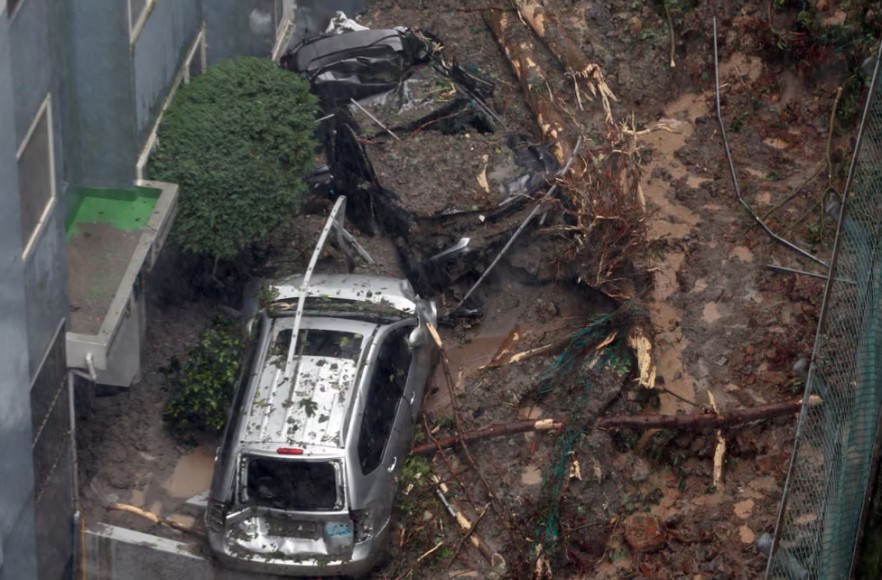
The 2003 Tokachi earthquake, scientifically named the 2003 Tokachi-Oki earthquake, occurred off the coast of Hokkaido, Japan. At a focal depth of 27 km (17 mi), this great undersea earthquake measured 8.3 on the moment magnitude scale, making it the most powerful earthquake of 2003, as well as one of the most intense earthquakes to hit Japan since modern record-keeping began in 1900. The Hokkaido earthquake caused extensive damage, destroying roads all around Hokkaido, and triggered power outages and extensive landslides. Over 800 people were injured. The earthquake also caused a tsunami reaching 4 meters in height. The earthquake's presence was felt throughout Japan, stretching all the way to Honshu and Tokyo.
William Le Baron Jenney was born
William Le Baron Jenney as an American architect and engineer who is known for building the first skyscraper (the ten-story Home Insurance Building in Chicago). The building was the first fully metal-framed building and it was built from 1884 to 1885, enlarged by adding two stories in 1891, and demolished in 1931. In his designs, he used metal columns and beams instead of stone and brick to support the building's upper levels.
Jean-Baptiste Élie de Beaumont was born
Jean-Baptiste Armand Louis Léonce Élie de Beaumont was a French geologist. In 1861 he became vice-president of the Conseil-General des Mines and a grand officer of the Legion of Honour. His growing scientific reputation secured his election to the membership of the Academy of Berlin, of the French Academy of Sciences, of the Royal Society of Edinburgh (1845), of the Royal Society of London, as a foreign member of the Royal Swedish Academy of Sciences (1848), and as an international member of the American Philosophical Society (1860). Élie de Beaumont's name is widely known to geologists in connection with his theory of the origin of mountain ranges, first propounded in a paper read to the Academy of Sciences in 1829.