
Hurricane Ike
Hurricane Ike was a powerful tropical cyclone that swept through portions of the Greater Antilles and Northern America in September 2008, wreaking havoc on infrastructure and agriculture, particularly in Cuba and Texas. Ike developed from a tropical wave west of Cape Verde on September 1 and strengthened to a peak intensity as a Category 4 hurricane over the open waters of the central Atlantic on September 4 as it tracked westward. Ike was blamed for at least 195 deaths, the second-costliest in United States history at the time.
Hurricane Gilbert
Hurricane Gilbert was the second most intense tropical cyclone on record in the Atlantic basin in terms of barometric pressure, only behind Hurricane Wilma in 2005. Gilbert wrought havoc in the Caribbean and the Gulf of Mexico for nearly nine days. In total, it killed 318 people and caused about $2.98 billion (1988 USD) in damages along its path.
1986 Kalamata earthquake
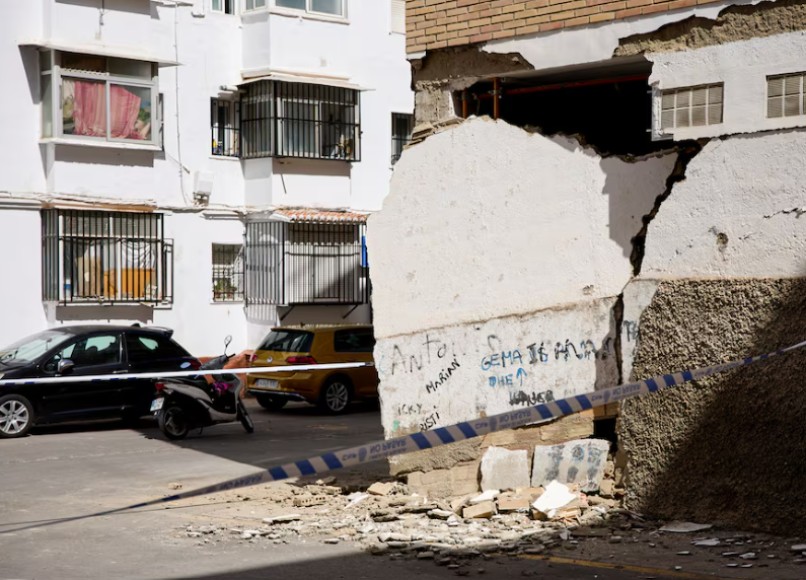
The 1986 Kalamata earthquake struck the southern Peloponnese Region of Greece on September 13 at 20:24 local time. The 12.5 km (7.8 mi) deep moment magnitude (Mw) 5.9 earthquake had an epicenter near the coastal city of Kalamata and was assigned X (Extreme) on the Mercalli intensity scale. The earthquake was the result of normal faulting along a northwest-dipping fault and produced surface ruptures. Extensive damage was reported in Kalamata and Elaiochori. At least 20 people died and 330 were injured. Survivors sought refuge at campsites and reconstruction work lasted five years.
Eastern Flevoland Polder dike closed
The Zuiderzee Works is a man-made system of dams and dikes, land reclamation and water drainage work, in total the largest hydraulic engineering project undertaken by the Netherlands during the twentieth century. Construction of the Eastern Flevoland encircling dike began to take form in 1951. It progressed until the North Sea flood of 1953 struck the south-western Netherlands. Workers and machinery were transferred there for repair work. Work on Eastern Flevoland resumed in 1954 and the dike was closed on September 13, 1956. The pumping stations started draining the polder that same day, completing the task in June 1957.