
Yekaterinburg Metro opened
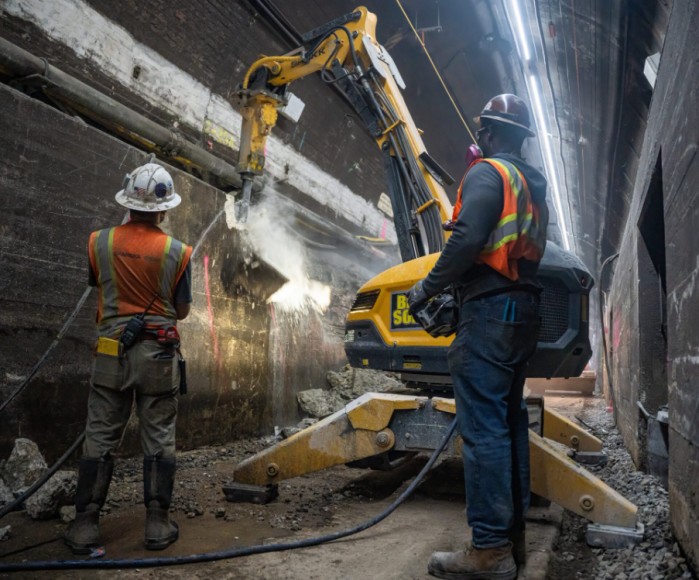
Serving the city of Yekaterinburg, Russia, Yekaterinburg Metro is the 13th and last metro to open in the USSR. It is 12.7 kilometres (7.9 mi) long and serves 9 stations.
Chernobyl disaster
The Chernobyl disaster was a nuclear accident that occurred on 26 April 1986 at the No. 4 reactor in the Chernobyl Nuclear Power Plant, near the city of Pripyat in the north of the Ukrainian SSR in the Soviet Union. The accident occurred during a safety test and it led to steam explosions and the melting of the reactor core. Called the world's worst-ever civil nuclear incident, it is one of only two nuclear energy accidents rated at seven - the maximum severity - on the International Nuclear Event Scale, the other being the 2011 Fukushima nuclear disaster in Japan.
Corinth Canal bridge was destroyed
On 26 April 1941, during the WWII Battle of Greece between defending British troops and the invading forces of Nazi Germany, the Corinth Canal bridge was destroyed by retreating British troops. The bridge was replaced by a combined rail/road bridge built in 25 days by the IV Ferrovieri Battalion, of the Royal Italian Army's Ferrovieri Engineer Regiment.
Memorial Stadium (Lincoln) broke ground
Memorial Stadium, nicknamed The Sea of Red, is an American football stadium located on the campus of the University of Nebraska-Lincoln in Lincoln, Nebraska. Memorial Stadium was built in 1923 at a cost of $450,000 and a capacity of 31,080, with further expansions raising the stadium's capacity to 85,458.
John Metcalf died
John Metcalf, known as Blind Jack of Knaresborough or Blind Jack Metcalf, was the first professional road builder to emerge during the Industrial Revolution. Blind from the age of six, Metcalf had an eventful life, which was documented by his own account just before his death. He was an accomplished diver, swimmer, card player and fiddler, but was better known for the period between 1765 and 1792 when he built about 180 miles (290 km) of turnpike road, mainly in the north of England and as such, he became known as one of the fathers of the modern road. His work on the roads in the north has been commemorated in a pub named after him, a statue in Knaresborough town centre and part of the A658 in Harrogate being named John Metcalf Way.