
1960 Agadir earthquake
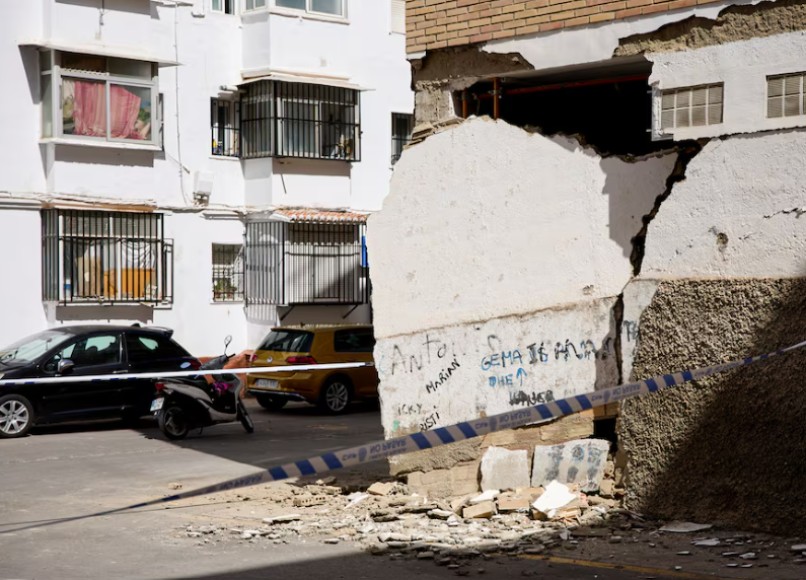
The 1960 Agadir earthquake occurred on 29 February at 23:40 Western European Time near the city of Agadir, located in western Morocco on the shore of the Atlantic Ocean. Despite the earthquake's moderate Mw scale magnitude of 5.8, its relatively shallow depth (15.0 km) resulted in strong surface shaking, with a maximum perceived intensity of X (Extreme) on the Mercalli intensity scale. Between 12,000 and 15,000 people (about a third of the city's population of the time) were killed and another 12,000 injured with at least 35,000 people left homeless, making it the most destructive and deadliest earthquake in Moroccan history.
Adolphe Appia dies
Adolphe Appia was a Swiss architect and theorist of stage lighting and décor. He was the son of Red Cross co-founder Louis Appia and he is best known for his many scenic designs for Wagner's operas. His theories, especially on the interpretive use of lighting, helped bring a new realism and creativity to 20th-century theatrical production.
Caleb Vance Haynes Jr. was born
Caleb Vance Haynes Jr., is an archaeologist, geologist and author who specializes in the archaeology of the American Southwest. Haynes revolutionized the fields of geoarchaeology and archaeological geology. He is known for unearthing and studying artifacts of Paleo-Indians including ones from Sandia Cave in the 1960s, work which helped to establish the timeline of human migration through North America. Haynes coined the term "black mat" for a layer of 10,000-year-old swamp soil seen in many North American archaeological studies.
The Piedra Movediza (Moving Stone) of Tandil falls and breaks
La Piedra Movediza ('Wobbly stone') was a balancing rock located in Tandil, Buenos Aires Province, Argentina. Its weight was about 300 tons. It was particularly interesting not only because of the way it balanced on the face of the hill, but also because it rocked from morning to evening in a very slow fashion (imperceptible to the eye). The stone fell and broke on 29 February 1912.
St. Petersburg, Florida incorporated
St. Petersburg is a city in Pinellas County, Florida, United States. As of the 2020 census, the population was 258,308, making it the fifth-most populous city in Florida and the second-largest city in the Tampa Bay Area, after Tampa. It is the largest city in the state that is not a county seat. St. Petersburg was incorporated as a town on February 29, 1892, when it had a population of 300 people.