Uncovering Earthquake Energy: New Insights from Laboratory “Mini-Quakes”

Recent research led by geologists at MIT has provided new understanding of how energy is partitioned during an earthquake. By creating miniature seismic events in controlled laboratory conditions, often referred to as “lab quakes,” the team quantified the complete energy budget of these events. The findings show that only about 10 percent of an earthquake’s energy translates into the ground shaking commonly felt at the surface. Less than 1 percent contributes to fracturing rock and generating new surfaces. The overwhelming majority, averaging around 80 percent, dissipates as heat near the fault zone. In some experiments, temperatures spiked rapidly enough to briefly melt the rock, producing glassy textures.
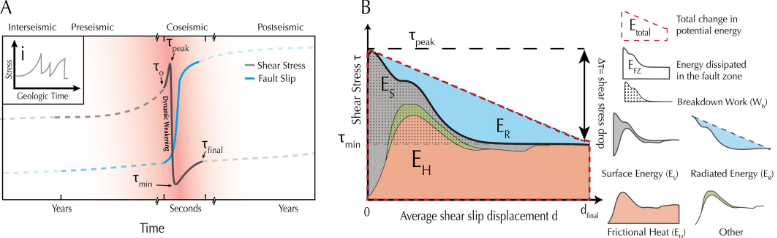
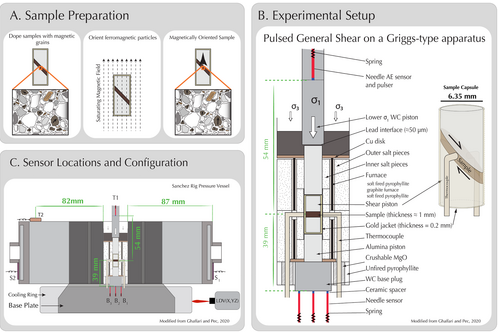
The experiments used granite samples, representative of rocks in the seismogenic layer of Earth’s crust, where most tectonic earthquakes occur. The samples were crushed into powder and embedded with magnetic particles that acted as thermometers. Under steadily increasing pressures replicating fault zone conditions, some samples slipped suddenly, producing micro-earthquakes. Custom sensors measured shaking, while microscopic analysis revealed how grain structures changed after failure. Results indicated that the distribution of energy was strongly influenced by deformation history from the record of stresses and shifts that rocks had previously experienced. This means that a region’s past tectonic activity plays a significant role in determining how destructive future earthquakes might be.
Although simplified, these laboratory-scale tests capture essential physics of fault rupture. They provide a rare view into processes that occur kilometers below the surface, beyond the reach of seismometers and other instruments. The research suggests that traditional observations, focused mainly on ground shaking, only reflect a fraction of earthquake energy. Understanding the thermal and fracturing components is critical for refining models of earthquake dynamics and improving hazard assessments. By linking energy partitioning to deformation history, the study also highlights the importance of geological memory in assessing seismic vulnerability.
Sources: news.mit.edu, gizmodo.com, agupubs.onlinelibrary.wiley.com
Want to read more like this story?

Study suggests that smaller earthquakes generate most strong ground motions
Jan, 04, 2021 | NewsAccording to a new study, smaller earthquakes have caused the strongest shaking incidents in the vi...
New AI method to detect microearthquakes
Dec, 07, 2020 | NewsScientists from Stanford University and Georgia Institute of Technology in the United States, intro...

Earthquakes triggered by landslides
Jul, 02, 2020 | NewsIt is widely known that earthquakes can trigger disastrous landslides but, what about the opposite?...

How Do Dams Trigger Earthquakes?
May, 25, 2015 | NewsAccording to scientists, earthquakes are triggered by dams, since there are many cases giving eviden...
Geotechnical Earthquake Engineering
Apr, 21, 2020 | Education
A new underlying mechanism in deadly 7.1R quake in Taiwan in 1906 has been uncovered
Jun, 11, 2018 | NewsThe earthquake was one of the deadliest to ever strike the country The earthquake was one of the...

Massive earthquake struck off the coast of New Zealand
Jun, 18, 2020 | NewsA M 7.4 earthquake struck off the coast of New Zealand raising concerns about a potential tsunami....

Best Alternatives for Fossil Fuels
May, 24, 2021 | NewsThe issue of climate change is becoming more and more relevant every year. Of course, it should’ve...

New research shows how faults warn us before a big earthquake
Jan, 14, 2014 | NewsA new research published in the Geophysical Research Letters journal last November, provid...
On This Day
August 12th 1848
READ MORE
Trending

How to prevent copper wire theft from light poles
The quicksand of Morecambe Bay

Model Structures and Visualize Structural Forces
Rapid Drawdown in Dam and Levee Design: A Hydrogeologic Perspective in Slide2

Unstable Ground: Lessons from the I-80 New Jersey Sinkhole Saga
Emergency ground stabilisation protects rail works near Salford Central