Helical pile solution for dense or rocky soil Sponsored
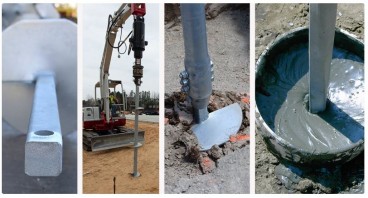
The wear-resistant, offset carbide tip designed to break through even the toughest soil conditions… and we tested it on the toughest soil on Earth!
Whether you are trying to build in the dense rock of Charleston, West Virginia or Denver, Colorado or if you are encountering permafrost in Alaska or Canada, you have probably encountered tougher-than-most soil conditions, making it nearly impossible to lay the deep foundation that would give your building project the best start.
Dense, rocky, high blow count, and permafrost soils can pose problems when installing a standard helical pile, a tested, proven, and widely accepted deep foundation solution. Installers were finding that some conditions required pre-drilling a pilot hole in order to complete a job. Unexpected obstructions were also known to slow down installation, and Chance® engineers, the leaders in helical pile technology, worked to find a solution.
Their research led them to the solution of a welded carbide tip designed to break through even the toughest conditions. To be sure, they field tested the design in the caliche soil, which has a natural cement-like consistency, of the Atacama Desert of Chile.
Testing ROCK-IT
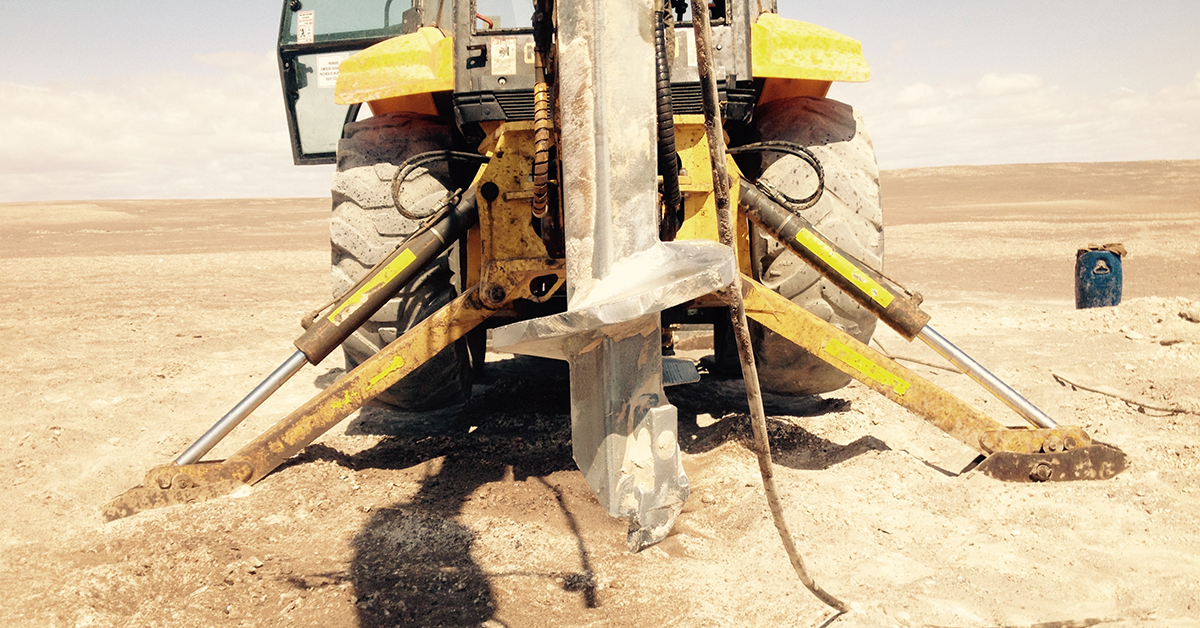
A backhoe was brought in to test the hardness of the soil, but the operator was only able to dig a shallow hole, a little over a foot deep in the caliche, before abandoning the effort.
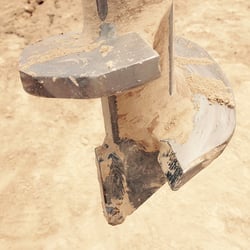
The standard, square shaft helical pile also failed to penetrate the caliche. Finally, after these two (anticipated) failures, the ROCK-IT 3-helix (6-8-10) square shaft pile was ready to be tested. The ROCK-IT lead section successfully penetrated the extremely dense, rock-like topsoil. Additionally, it was backed out and the same pile was able to be reinstalled in multiple locations throughout the testing.
Installation Advantages
It was no accident that engineers chose a square shaft helical pile as the base for the ROCK-IT helical pile design. Unlike round shaft, also known as pipe shaft, the square shaft pile is made from low-alloy, high-strength, solid steel. Due to their low displacement shaft and higher helix-to-shaft diameter ratio, solid square shaft is better for tough soil conditions than larger displacement piles of comparable capacity.
The carbide tip reduces spiking of torque and chatter during installation for better pile performance and safer installation.

Proving ROCK-IT
Since the initial, successful field testing the ROCK-IT lead section has been used and proven in helical pile applications around the world. According to Tim Ashenbrenner of Dynamic Helical, Inc., a Chance distributor in Homer, Alaska, “The ROCK-IT lead sections have allowed us to use helical foundations where we would otherwise not be able to due to permafrost conditions. This product is able to effectively penetrate through the frozen soil to significant depths without the need to predrill a pilot hole which is costly and time consuming.”
Another installation team, this one in Texas, uses ROCK-IT to get past shallow limestone layers. Having the option of the carbide tip allows helical piles to be a versatile solution in any type of soil condition.
Learn more about how ROCK-IT can save you time and money in the toughest soil conditions.
Ready for a quote? Contact your local distributor!
Source: CHANCE Foundation Solutions Blog
Want to read more like this story?

Helical Piles Case Study on Weathered Rock Construction
Jun, 15, 2022 | NewsThis interesting case study features the use of helical piles for a deep foundation on a new constr...
Seven Frequently Asked Questions about Helical Piles
Apr, 29, 2026 | NewsHelical piles are a proven deep foundation solution used across commercial, industrial, utility, and...

High Capacity Helical Piles
Apr, 05, 2021 | NewsWhen it comes to deep foundations and high capacity piles in general, helical piles are often overl...
Which Helical Pile Type to Choose & Why: Square, Round, Combo or Displacement
Mar, 21, 2025 | NewsHelical piles are screw anchors that are widely used in applications where unstable soils require e...

The 2 Questions a Helical Pile Engineer Will Ask
Oct, 26, 2022 | NewsThe two questions every helical pile engineer should ask when starting a new project are: What are...
Deep Foundation “Feedback”: Valuable Early Data From The Jobsite
Dec, 20, 2021 | NewsLearn how Geotechnical Engineers use valuable jobsite data to validate their recommendations for de...

Helical Pile vs Driven Concrete Pile Foundation: Golf Coast New Construction Residence Project
Mar, 22, 2023 | NewsSituated on the sandy shores of the Gulf Coast, this new construction residence required a foundati...

Hubbell Power Systems: ROCK-IT™ Helical Lead Section Penetrates High Blow Count Soils
Jun, 29, 2016 | NewsHubbell Power Systems is delighted to present Rock-It, company's new product ! The ROCK-IT™ Lead...

Monticello High School Rehabilitation Project
Sep, 02, 2022 | NewsBuilt in 1852, the Monticello High School (also known as the Jefferson Academy and Jefferson County...
Form
Looking for more information? Fill in the form and we will contact CHANCE Foundation Solutions for you.
On This Day
August 10th 1825
READ MORE
Related Video

Trending
How to prevent copper wire theft from light poles
The quicksand of Morecambe Bay

Model Structures and Visualize Structural Forces
Rapid Drawdown in Dam and Levee Design: A Hydrogeologic Perspective in Slide2

Unstable Ground: Lessons from the I-80 New Jersey Sinkhole Saga
Stop Guessing, Start Designing: Introducing Support Designer in Slide2
Development program prepares new engineers for success