
Cologne Archive Collapse: How a 0.6m Void Led to Germany’s Costliest Construction Failure

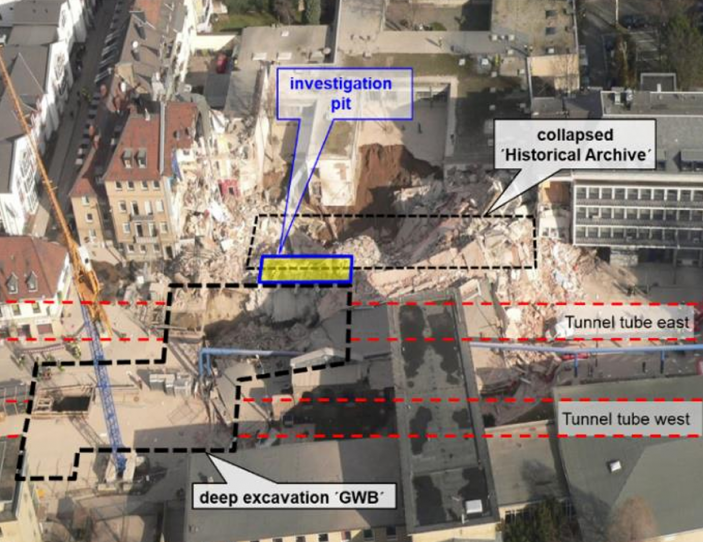
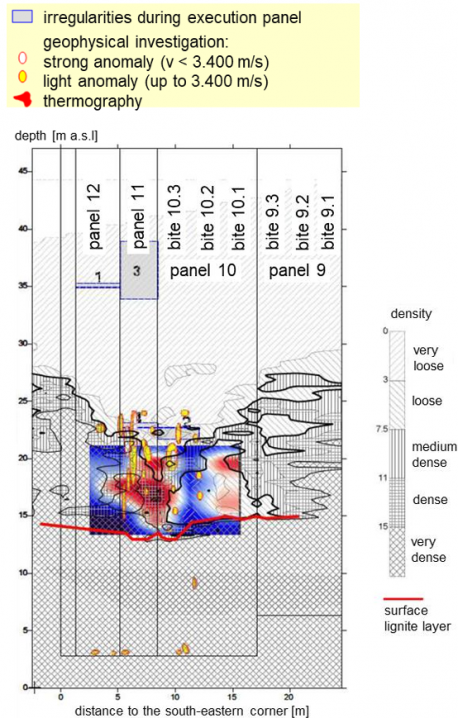
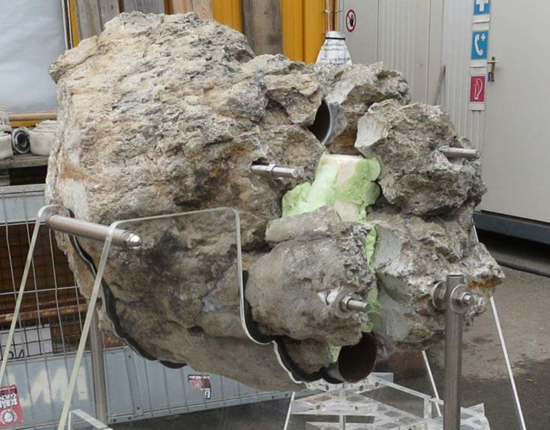
The void was ultimately traced to a construction oversight involving a large trachyte boulder encountered during excavation. When the boulder obstructed excavation of panel #10, it was partially displaced into the alignment of panel #11. To bypass the obstruction, the grab shell width was reduced from 3.4m to 2.8m, leaving a 0.6m-wide section unexcavated and subsequently filled with unconsolidated material. This unintentional gap, though limited in area, proved critical.
Further analysis confirmed no evidence of vertical soil ingress from the base, disproving earlier theories involving base failure or venting through the lignite layer. Instead, the collapse stemmed from execution-related error during diaphragm wall construction, exacerbated by limited field response to obstruction and absence of compensatory ground treatment like jet grouting.
The Cologne incident highlights the importance of implementing comprehensive quality control measures during deep excavation works, especially in urban environments with soft alluvial soils. It highlights several geotechnical and procedural lapses:
-
Defect Oversight: The 0.6m void, while narrow, allowed significant soil ingress due to high hydraulic gradients and loose granular fill.
-
Lack of Real-Time Correction: Despite recorded anomalies during excavation, no corrective action was undertaken before concrete pouring of panel #11.
-
Soil and Water Management: Over-pumping of groundwater beyond permitted limits likely contributed to soil destabilization, though not the primary cause.
-
Reinforcement Shortfalls: Investigations revealed missing reinforcement, with rebar reportedly sold as scrap on nearby sections. Though not directly linked to this panel, it suggests potential issues in site supervision practices.
Additionally, post-failure remediation efforts were described in technical reports as among the most complex undertaken for an excavation failure in Germany. These included underwater excavation supported by frozen ground techniques and installation of secant pile walls, all to enable access to the diaphragm wall joint for confirmation and sealing.
The collapse led to an out-of-court settlement in 2020, with the contractor joint venture agreeing to pay €600 million and reconstruct the damaged zone at their expense. Remedial works are projected to continue through 2033.
This case has been cited in technical literature as emphasizing the role of independent geotechnical review and execution monitoring. Regular communication between the client, designers, contractors, and external inspectors is indispensable for early detection and mitigation of excavation-related anomalies.
Sources: researchgate.net, geplus.co.uk, dw.com
Want to read more like this story?

Deep Supported Excavation in Urban Environment
May, 09, 2019 | Education"Measured vs. Predicted behavior", Degree thesis of Dimitris P. Zekkos, Civil Engineering Departmen...

3D Finite Element Analysis of a Deep Excavation & Ground Response Evaluation
Jun, 13, 2022 | NewsSignificant ground movements due to deep surface excavations can seriously impact neighbouring infr...

Response of Piled Buildings to the Construction of Deep Excavations
Apr, 16, 2014 | NewsIOS Press, a valued Geoengineer.org sponsor, published last year a book by Mandy Korff based on a re...

Rocscience | Undrained analysis of a deep excavation in clayey soils using PLAXIS Hardening Soil model in RS2
Apr, 28, 2023 | NewsWhen analyzing a geotechnical problem, different design parameters are utilized depending on draine...

Urban Excavation Analysis
Aug, 22, 2022 | NewsVertical excavations are common in urban environments due to the lack of available space for gentle...

Protecting Toronto’s Port Lands
Jan, 21, 2022 | NewsThe potential of the Port Lands waterfront has long been unrealized and under threat from flooding....

Deep Excavation supported by Berlinoise-type system in Chania, Greece
May, 09, 2019 | EducationThe photos below were provided by Nicoletta Konstantinidou as part of her thesis on Berlinoise-type...
Deep Excavations
Apr, 22, 2020 | EducationExcavation is a procedure that involves soil or/and rock removal in order to form a cavity and cre...
Road collapse in Rize shows the risk of unsupported excavation near urban buildings
Jul, 11, 2026 | NewsA road collapsed suddenly in Rize, Turkey, after ground movement developed beside an active building...
On This Day
August 12th 1953
READ MORE
Related Video

Trending
Brownfield success: Engineering excellence starts below ground

Scripting Comes to RS3: Automate, Customize, and Accelerate Your 3D Modelling

2D and 3D Analysis of Retaining Systems

Mine waste dam failure in Myanmar caught on video
Asbestos remains a deadly infrastructure risk across the UK
Major earthquake in southern Philippines causes deaths and widespread damage