
Bhutan’s extreme rainfall triggers floods and landslides: Regional impacts and Tala Dam safety concerns
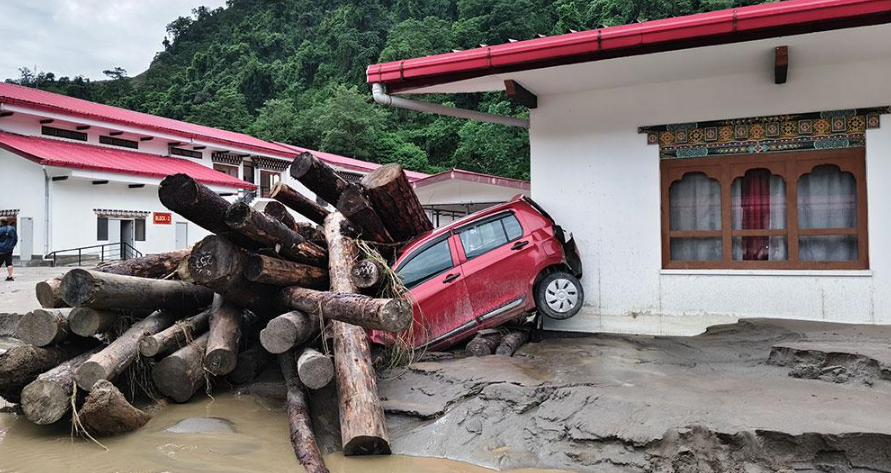
A powerful low-pressure system that originated in Nepal and moved across the Himalayas into Bhutan on October 5 has brought severe rainfall, flooding, and landslides across the region. Southern Bhutan recorded some of the heaviest rainfall in recent memory, with Samtse receiving 302 mm and Phuentshogling 285 mm within 24 hours. The National Centre for Hydrology and Meteorology (NCHM) confirmed that the storm, fueled by moisture-laden winds from the Bay of Bengal, intensified rapidly and overwhelmed drainage systems.
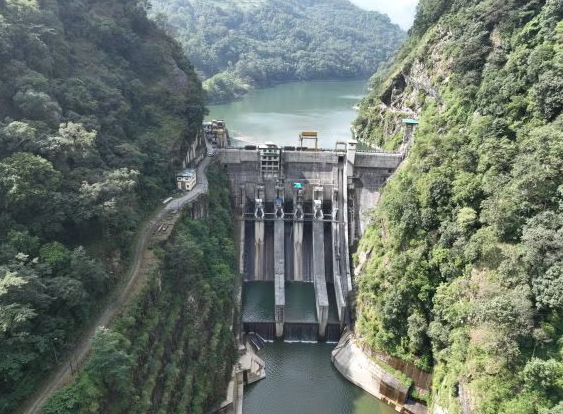
The Tala Hydropower Dam along the Wangchhu River faced a critical situation as overflow reports emerged when dam gates failed to open, prompting emergency alerts downstream. Washed-out bridges, blocked roads, and damaged homes have cut off access to several communities. Rescue operations led by the Royal Bhutan Army and Desuups remain ongoing, as authorities urge residents to avoid travel in landslide-prone zones.
The same weather system caused destructive flooding across eastern Nepal and northern India. In West Bengal’s Jalpaiguri and Alipurduar districts, floodwaters from Bhutan submerged nearly 30 tea gardens, damaging roads, culverts, and footbridges. Banarhat and Nagrakata recorded 350 mm of rainfall in just 12 hours, leaving thousands stranded. Soil scientists have expressed concern over dolomite-rich floodwater from Bhutan, which can alter soil chemistry and reduce fertility in affected tea estates.
Bhutan’s recent rainfall highlights growing vulnerabilities in hydropower operations and dam management amid intensifying climate patterns. Experts stress the need for real-time inflow monitoring, rapid gate operation protocols, and improved coordination between meteorological and hydropower authorities. As rainfall patterns shift toward shorter, more intense events, adaptive planning will be essential to prevent overtopping, downstream flooding, and infrastructure loss.
The following video depicts the flooding extent at the streets of Bhutan.

Sources: hindustantimes.com, asianews.network, kuenselonline.com, timesofindia, waterpowermagazine.com
Want to read more like this story?

Rainfall saturation triggers deadly hillside collapses in Ethiopia
Mar, 13, 2026 | NewsAt least 102 people have been killed after a series of landslides and floods struck the Gamo Zone i...

BRACE project aims to build resilience against earthquakes in Bhutan
Feb, 07, 2017 | NewsLed by a group of researchers at the University of Bristol, BRACE project – standing for Building Bh...

Nairobi dam at risk of breach as rising water levels trigger mass evacuations
Mar, 22, 2026 | NewsAuthorities in Nairobi have issued urgent evacuation orders for multiple downstream neighbourhoods...

Record floods and landslides devastate Southeast Asia as death toll surpasses 600
Nov, 30, 2025 | NewsSoutheast Asia is facing one of its most severe flood–landslide seasons in recent years, with more...

China devastated by extreme rainfalls: Dam destroyed to alleviate flooding
Jul, 19, 2020 | NewsChina decided to demolish a dam in order to reduce the upstream flooding and prevent further distra...
On This Day
August 11th 1979
READ MORE
Related Video

Trending

Brownfield success: Engineering excellence starts below ground


Scripting Comes to RS3: Automate, Customize, and Accelerate Your 3D Modelling

2D and 3D Analysis of Retaining Systems

Mine waste dam failure in Myanmar caught on video

Tailrace tunnel breakthrough advances Australia’s largest renewable project

A Legacy of Leadership, Mentorship & Service: Gary L. Seider P.E.