Mumbai subway goes beneath Mithi River
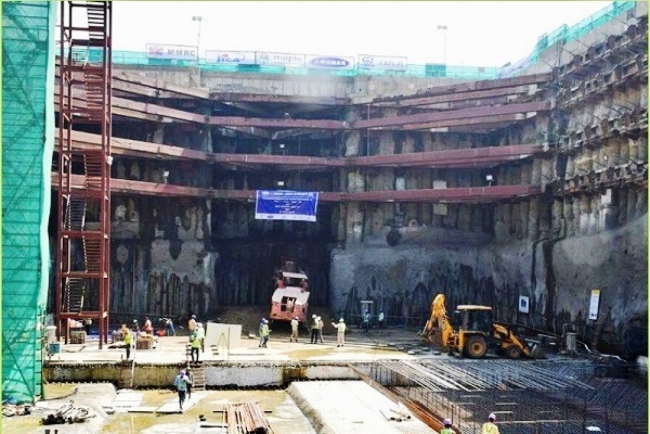
The construction of a 153-meter long metro tunnel below the Mithi River in Mumbai has begun.
The project is carried out by Mumbai Metro Rail Corporation (MMRC), the contractor of Colaba-Bandra-Seepz Metro 3 corridor. This metro line, stretching for 33.5 km., will be India's 2nd to have a tunnel under a river after Kolkata's subway that passed beneath the Hooghly river.
The New Austrian Technology Method (NATM) will be utilized and the excavation will be conducted in three phases (top heading, benching and invert). The project will have to tackle severe issues including poor soil conditions and water table. "The NATM tunneling will be carried out in three parts — top heading, benching and invert. The first step includes creating a support system by using various ways, to stabilize the rocks. The situation in this area is different from other areas due to the water above," said S.K. Gupta, MMRC director. According to officials, the construction will be completed in 8 months.
During monsoon period, the river overflows and causes floods. To ensure the operations will be conducted normally and the water pressure will not dramatically increase, MMRC will make the facility waterproof and will install pumps to drain water. "When the water level is high, hydrostatic forces are high and the tunnel design accounts for these factors. The tunneling will be watertight, as will the station. Entry and exit points will be above the highest flood level margin in this area. Therefore, water cannot come in from anywhere. However, even after this, if some water does enter the station, a small network of the drains will carry it to the pump, which will throw out the water."
The ground under the river consists of soil and weak rock which could result in instabilities and water leaks due to high permeability. MMRC will install an "umbrella" of steel bars above the excavation to support the ground that will also be strengthened by grouting to reduce permeability.
Two more tunnels are going to be constructed in the area but Tunnel Boring Machines (TBMs) will be used instead of NATM. In this case, "the TBM will be deployed with the earth pressure boring machine, with foam that will form a paste. The paste will create positive pressure on the face of the rock and as a water barrier and maintain the pressure," Mr. Gupta stated.
Sources: Freepressjournal.in, TimesofIndia.com
Want to read more like this story?
Metro Vancouver completes tunnelling under Fraser River for Annacis Water Supply Tunnel project
Oct, 17, 2025 | NewsMetro Vancouver has completed the tunnelling phase of the AnnacisWater Supply Tunnel, marking a maj...
India’s largest rail TBM begins tunnelling beneath Mumbai
Jul, 06, 2026 | NewsIndia’s Mumbai-Ahmedabad high-speed rail project has reached a major underground construction milest...

China’s TBM rescue beneath the Yangtze
Jan, 12, 2026 | NewsDuring construction of the Jiangyin–Jingjiang Yangtze River Tunnel, a 6.4 km road tunnel beneath th...

Yangtze River high-speed rail tunnel completed after record underwater TBM drive
Apr, 07, 2026 | NewsChina has reached a major tunnelling milestone with the completion of the underwater section of the...

8 new U.S. tunnels under way: fascinating and challenging
Jan, 10, 2014 | NewsWhether you live in the U.S. or not you will find the following tunnels that are currently being bui...
Tunneling in Soils
Apr, 21, 2020 | EducationThe construction of tunnels in soils has traditionally been a challenging task as these excavation...
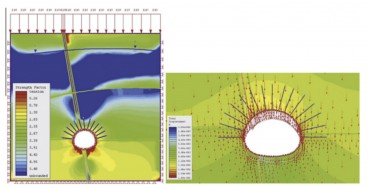
Izmir Metro Tunnel: How Geological Factors Can Impact Your Tunnel Construction
Nov, 14, 2022 | NewsThe population of the world has grown rapidly, and advanced infrastructure like metro tunnels has b...

New tunnel upgrades Hetch Hetchy water system
Oct, 08, 2013 | NewsThe construction of a new tunnel replacing the old Hetch Hetchy water system was completed last Tues...

Tunneling
Apr, 24, 2020 | EducationA tunnel is an underground structure which is constructed through the surrounding mass of soil or...
On This Day
August 11th 1988
READ MORE
Related Video

Trending

Lake Chippewa’s floating island that has to be boat-pushed every year
How to Model Piles in PLAXIS

3 Types of Retaining Walls and Revetments


How Do Dams Trigger Earthquakes?
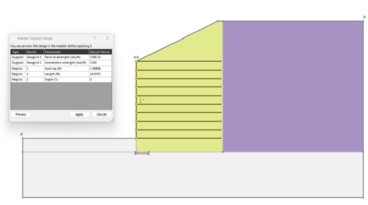
Stop Guessing, Start Designing: Introducing Support Designer in Slide2
Development program prepares new engineers for success