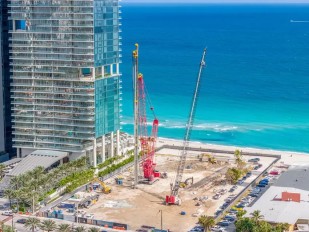

Foam blocks were used for the foundation of the Salmon Creek Interchange Project highway, on the westside bridge approach to the new 139th Street overpass in Vancouver, Washington.
The geofoam used to make the blocks, is expanded polystyrene with increased strength, density and uniformity, according to Andrew Fiske, a geotechnical engineer with the Washington State Department of Transportation. He also stated that geofoam was used instead of gravel or earthen fill since geofoam is lighter and less likely to settle in case of an earthquake. WSDOT estimates that more than 31.000 cubic yards of geofoam and almost 8.000 geofoam blocks will be used in the project. Leon Winger, an area engineer, said that concrete walls will enclose the foundation after it is set. The project is scheduled to be completed by next year.
Source: The News Tribune/The Columbian
Nearby News
Want to read more like this story?
Tunnel becomes safe with the usage of Polystyrene blocks
May, 31, 2018 | NewsAn old and non-operational railway tunnel that lies underneath the approach roads north of the...

Block Model Import & Slope Analysis in Slide3
Jul, 02, 2021 | NewsThe industry insight you have as a practicing engineer is valuable. At Rocscience, we are always op...

The effect of rock shape on rockfall risk assessment
Sep, 20, 2021 | NewsA new study from ETH Zurich university and the WSL Institute for Snow and Avalanche Research SLF sh...

50 Years of Chance Instant Foundations
Jan, 20, 2026 | NewsIn February 1976, the Chance Tips newsletter featured an article titled "Chance Streetlight Foundat...
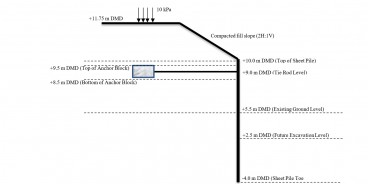
Numerical Analysis and Analytical Calculations of 3D Effects on Pullout Capacity of Anchor Blocks: Case Study in Dubai, United Arab Emirates
Dec, 14, 2021 | NewsIt is very common in practice that geotechnical engineers design earth retaining structures c...
Shallow Foundations
Apr, 29, 2020 | EducationShallow foundations, often called footings, are situated beneath the lowest part of the structure...

RocTunnel3
Apr, 08, 2025 | Software
Foundation Design / Construction
Apr, 29, 2020 | EducationFoundation is the lowest part of a structure which transfers loads from the superstructure to the...

RocTunnel3; Your New Software for 3D Underground Rock Stability Analysis and Design
Jul, 09, 2024 | NewsLooking for a more intuitive way to model complex underground geometry? It’s about to get easier...
On This Day

Related Video

Trending

Quick Clay Failure on Norway’s E6 at Levanger

Keller North America announces recent leadership changes

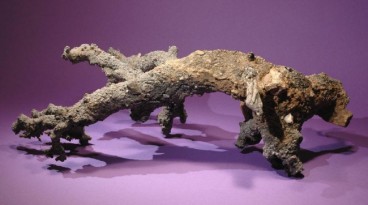
Fulgurite: A rare phenomenon
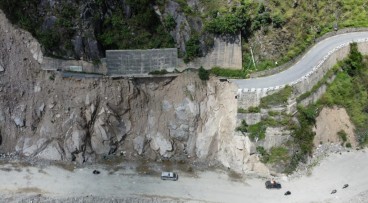
Nepal’s Himalayan settlements face escalating flood and landslide threats