Technology brings new knowledge about rockfalls
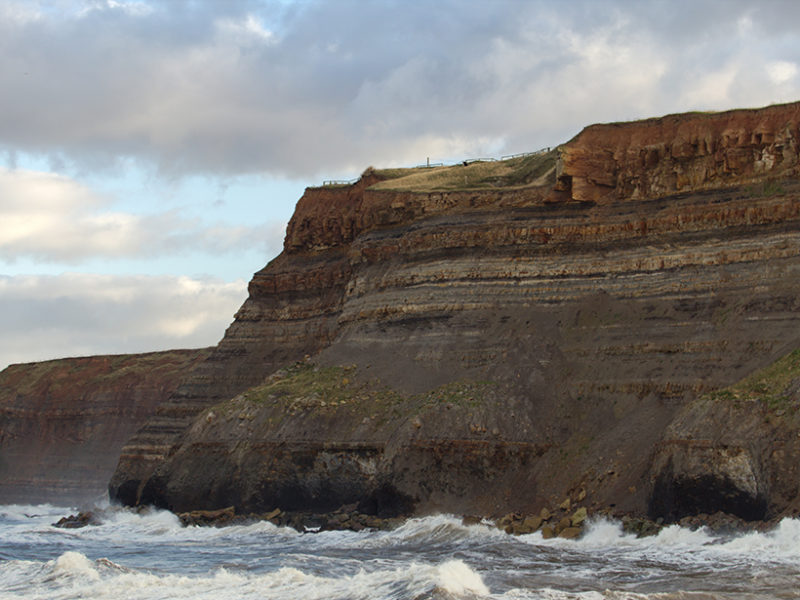
Technological development and advances in remote sensing have brought new data about rockfall incidents.
A rockfall occurs when small to large rock fragments detach from slopes and fall downslope. They constitute a hazardous type of landslide that may result in severe infrastructure damage or even casualties. Therefore, understanding and quantifying these incidents are of high scientific importance.
Researchers are currently capable of thoroughly studying rockfalls. New technological features, including remote sensing and computing power, have enabled better monitoring of a slope to detect successive rockfall incidents.
Until recently, scientists would monitor a slope to detect new rockfalls once every month in the best case. Unfortunately, this time period between two consecutive evaluations leads to less accurate results. In theory, the number of large rockfalls is overestimated while the small rockfall incidents are underestimated (due to the fact that small incidents may be misinterpreted as a large one).
According to a new study, recently published in the Journal of Geophysical Research: Earth Surface, the monitoring interval (the time period between two consecutive data measurements) significantly alters the knowledge on rockfalls.
"A primary challenge occurs when neighboring events within a single monitoring interval are recorded as one, producing ambiguity in event location, timing, volume, and frequency. Identifying measurement intervals that minimize these uncertainties is therefore essential," the study states.
Scientists focused on a cliff located in the town of Whitby, UK. The cliff that consists of sandstones, shales and mudstones, is prone to rockfalls due to coastal erosion. Small rockfall incidents are more common than large ones. The research team consistently collected data for 10 months using terrestrial lidar and derived the changes of the cliff caused by rockfalls.
The findings of the survey show that altering the monitoring interval highly affects the number and the volume measurements of rockfalls. In particular, when monitoring was conducted on an hourly rate, 61 rockfall incidents per day were recorded. On the contrary, only 6 rockfalls per day were assumed when monthly investigations were carried out.
Scientists mention that the rates increased for intervals shorter than 12 hours whereas for those larger than 12 hours, the rates were practically the same.
Authors suggest that the observed increase in rockfall rate has a crucial impact that should be incorporated in hazard prediction models.
Source: EOS
Want to read more like this story?

Rainfall triggered rockfall disrupts on Highway 18 in Southern California
Dec, 27, 2025 | NewsA recent rockfall incident on Highway 18 in San Bernardino County has highlighted the geotechnical...

Swiss Alps are destabilizing due to global warming
Oct, 09, 2019 | NewsRockfall incidents are starting to increase as a result of temperature rise and glacier melting in...

Massive rockfall in U.K. documented on camera
Dec, 17, 2018 | NewsA huge rockfall in Cornwall, U.K., was caught on camera by a woman. The cliff collapsed and fell...

Geotechnical challenges at Santorini port access road
Mar, 19, 2026 | NewsAccess to Santorini’s main port at Athinios has been temporarily suspended following a new rockfall...
Rockfall in New Zealand's road: One driver dead
Nov, 13, 2019 | NewsA rock boulder detached from a slope near a road hitting a car and killing its driver in New Zealan...
Severe landslides and rockfalls in Peloponnese, Greece
Feb, 04, 2019 | NewsIntense rainfalls have provoked severe landslides and rockfalls in south Peloponnese and particularl...

The impact of precipitation on mountains' landform
Oct, 16, 2020 | NewsIn a new study, scientists focus on how precipitation impacts erosion rates in mountainous terrains...

Rockfall Hazard Mitigation
Jun, 22, 2023 | EducationIn general, protection measures can be distinguished into two main categories...

Rockfalls struck the Island of Lesvos, Greece, again
Dec, 17, 2018 | NewsThe region of Plomari in the Island of Lesvos, Greece, was struck by rockfalls for the second time i...
On This Day
August 7th 1995
READ MORE
Related Video

Trending
Brownfield success: Engineering excellence starts below ground

Scripting Comes to RS3: Automate, Customize, and Accelerate Your 3D Modelling

2D and 3D Analysis of Retaining Systems

Mine waste dam failure in Myanmar caught on video
Stop Guessing, Start Designing: Introducing Support Designer in Slide2
Development program prepares new engineers for success