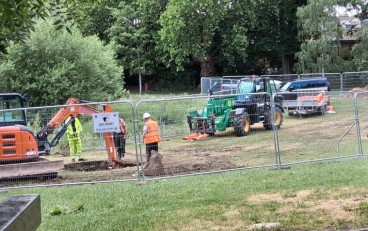

In mainstream applications, slope stability analysis is generally a choice between limit equilibrium or finite element. PLAXIS demonstrates that finite element can be a more straight forward and less error prone path through the complex interactions of mechanical and hydraulic behaviors within slope stability.
The below on demand webianr tests PLAXIS on a French research project case study of an experimental seven-meter soil-nail wall – a system so fragile that "a flap of a butterfly wing" could result in local failure. Follow how PLAXIS continues to reliably predict its behavior as the experiment is thrown every challenge, from water infiltration to a pause in construction during a bitterly cold winter.
Want to read more like this story?
Slope Stability Analysis
Jun, 02, 2019 | EducationAssessing a slope’s stability is a challenging yet important aspect of civil engineering. In its...

Solving Complex Geotechnical Analysis Challenges
Aug, 31, 2022 | NewsGeotechnical challenges are everywhere, starting from the soil interaction with the foundation of o...

Bentley Webinar: Reliable slope-stability analysis for open-pit mines
Mar, 12, 2021 | EventSlope stability is a challenging aspect of open-pit mining projects. If not performed properly, slo...

Bentley Coffee Corner: Geotechnical Analysis - From Theory to Practice: FEM and LEM in Rock Slope Stabilisation
Aug, 14, 2024 | EventIn this webinar, we will explore the interoperability between the Finite Element (PLAXIS 2D) and Li...

Bentley Webinar: Meet PLAXIS LE: Your Tool for Slope Stability Analysis
May, 10, 2021 | EventSlope stability analysis is one of the most common activities in geotechnical engineering practice,...
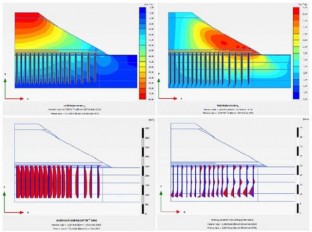
Optimizing Soil Improvement with PLAXIS: Techniques and Benefits
Nov, 12, 2024 | NewsSoil improvement refers to the process of modifying the physical properties of soil to improve its...

Bentley Webinar | Building Resilience: Strengthen Your Slopes with PLAXIS FEM's State-of-the-Art Reinforcements
Apr, 29, 2023 | EventJoin us for an in-depth exploration of slope stability analysis using PLAXIS FEM software. As civi...

Bentley Webinar: FE and LE solution for Geotechnical Projects using PLAXIS WorkSuite
May, 11, 2022 | EventPLAXIS 2D/3D WorkSuite is the most comprehensive option of PLAXIS which includes PLAXIS 2D/3D Ultim...

Bentley Webinar | Rainfall Induced Slope Failure Part 1: PLAXIS
May, 03, 2024 | EventDuring monsoon period, frequent rainfalls are very common and specific to the hilly region, where r...
Form
Looking for more information? Fill in the form and we will contact Bentley for you. Alternatively, you can visit Bentley's website and speak with a Bentley Geotechnical Expert.
On This Day
August 11th 1979
READ MORE
Related Video

Trending

Dubai approves $9.2bn fully underground gold line metro
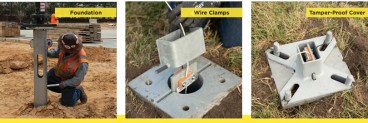
How to prevent copper wire theft from light poles
The quicksand of Morecambe Bay

Model Structures and Visualize Structural Forces
Rapid Drawdown in Dam and Levee Design: A Hydrogeologic Perspective in Slide2
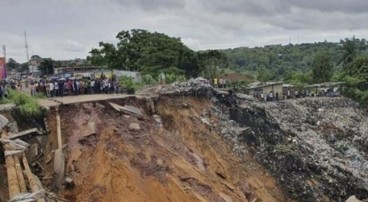
Deadly mining landslide in Central African Republic raises safety concerns